China shapes the future architecture of the SCO


Editor's note: Seymur Mammadov, a special commentator for News.Az, is the director of the international expert club EurAsiaAz. The article reflects the author’s personal opinion and does not necessarily represent the views of News.Az.
The 24th meeting of the Council of Heads of Government of the Shanghai Cooperation Organization (SCO), held on November 18 in Moscow, marked an important stage in institutionalizing the new processes that gained clarity and direction after the September summit in Tianjin. If the meeting in China set the ideological framework for the SCO’s next decade, Moscow became the platform where this framework began taking shape in practical terms.
The conclusion of Russia’s chairmanship and its handover to Tajikistan comes amid a rapidly shifting global balance of power and growing interest in the SCO as an alternative platform for international cooperation — not confrontational, but integrative.
The decisions made in Moscow signal the organization’s transition to long-term planning in trade, digitalization, energy, logistics, financial mechanisms, and innovation. The joint communiqué and accompanying documents reflect the shared position of member states on developing an open, equitable, and non-discriminatory global trading system — language closely aligned with China’s vision for reforming global governance.
Importantly, this formulation is no longer merely declarative: the SCO is demonstrating increasing synchronization of member states’ economic strategies and the emergence of a cohesive Eurasian cooperation architecture.
The agenda included discussions on the SCO budget, a railway integration roadmap through 2027, and new mechanisms for implementing the SCO Development Strategy until 2035. Yet the most important message was different: member states now share a common understanding that true economic integration requires its own financial infrastructure. Russia proposed creating a working group to develop independent settlement instruments, while Belarus called for accelerating the transition to national currency settlements and establishing mechanisms resilient to external sanctions pressure. The cornerstone of the future architecture, however, remains the SCO Development Bank, an initiative formally institutionalized for the first time in the Tianjin Declaration.
 Photo: sectsco.org
The statements made in Moscow were backed by figures that underscore the scale of ongoing transformation: SCO countries account for one-fifth of global exports and roughly one-third of global GDP, a figure expected to rise to 35% by the end of this year. The organization’s geography now spans nearly the entirety of Eurasia — from Belarus to the Indian Ocean, from the Arctic to South Asia. At this scale, any mechanism — financial, transport, or technological — inevitably becomes more than regional and evolves into a trans-systemic structure.
Against this backdrop, the speech by Chinese Premier Li Qiang stood out. Unlike many other speakers, he did not limit himself to current topics but instead returned to the ideological foundation set in Tianjin. Li Qiang reiterated that President Xi Jinping’s vision for global governance does not seek to dismantle the existing international order but to modernize it based on equality, mutual respect, and a refusal of politically conditioned economic dependence. This approach, rooted in the SCO’s “Shanghai Spirit” — mutual trust, benefit, and equality — was received not as an abstract declaration but as a model the organization is ready to implement.
The Tianjin summit marked the moment when the SCO demonstrated its renewed role. The participation of a record number of heads of state, including leaders from outside the organization as well as the UN Secretary-General, led experts to compare the SCO to the G20 in political weight, though with a fundamentally different philosophy: not competition between power centers, but compatibility between them. The decision to establish the SCO Development Bank became the key institutional result, a step that defines the parameters of the future financial ecosystem and could eventually form the basis for a new Eurasian currency space.
Equally important was China’s economic contribution: Beijing announced ¥2 billion in grant support for member states and opened a ¥10 billion credit line under the SCO interbank mechanism. These steps demonstrate a shift from political commitments to practical economic action. China is not only proposing strategy, it is providing the financial tools needed to execute it.
Moscow continued this trajectory: not changing direction, but reinforcing the instruments. Among the decisions was the further development of transport corridors, directly linked to China’s Belt and Road Initiative. Railway integration within the SCO is no longer viewed as an internal project but as a component of a wider Eurasian transit system. Interest in creating a unified transit space was expressed not only by Russia and China; Belarus, Kazakhstan, Uzbekistan, and Pakistan also reaffirmed their readiness to help build a transcontinental corridor that could become an alternative to existing global routes.
Despite the economic emphasis, security issues remained on the agenda. Participants reaffirmed their commitment to countering terrorism, extremism, and drug trafficking, and agreed on joint responses to artificial intelligence risks and support for digital sovereignty. These measures directly follow the strategic framework established in Tianjin, where mechanisms for protecting the digital space independent of external governance centers were proposed.
Based on the results of the Moscow meeting, it is clear that the SCO is entering a new stage — one defined by institutional consolidation and the practical implementation of structural decisions made under the renewed strategic concept. The organization is transforming from a platform for political dialogue into a space for shared economic and technological development. China remains the key driving force — not only as the organization’s largest economy but as the source of a conceptual vision for a future global system built on balance rather than dominance.
 Photo: iStock
Next year, Kyrgyzstan will host the anniversary summit under the motto: “25 Years of the SCO: Together Toward Sustainable Peace, Development, and Prosperity.” This summit will test the organization’s maturity. Yet already today, the trajectory is clear: outlined in Tianjin, confirmed in Moscow, and now moving toward implementation.
Just a few years ago, the SCO was perceived primarily as a political format without a unified economic foundation. Today, that reality is changing, and China is the main force behind this transformation. It is Chinese initiatives — from the SCO Development Bank to national currency settlement systems and transport-logistics corridors — that are shifting the organization from political dialogue to a functionally self-sufficient economic ecosystem. Beijing does not simply propose ideas — it backs them with financial instruments, infrastructure development, investment frameworks, and a systemic vision of global governance.
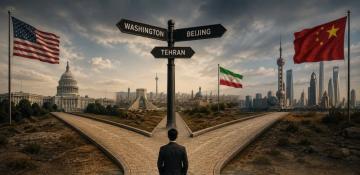
Amid global economic transitions, China’s model of pragmatic, non-intrusive, and resilient cooperation has proven most suitable for a framework uniting countries with diverse political systems, economic capacities, and geopolitical weight. Unlike bloc-based approaches built on rivalry and division, China promotes a model of mutual inclusion, where the growth of one member strengthens the entire system. This philosophy is particularly valuable amid global volatility and changing trade rules.
Tianjin and Moscow demonstrated that SCO members are ready to build a financial, technological, and infrastructure ecosystem where principles of equality and mutual benefit become practical instruments rather than slogans. Today, the question is no longer whether the SCO will implement its stated agenda, but how quickly, at a “Chinese pace”, it will evolve into a full-fledged Eurasian center of economic gravity, with its own institutions, logistics, financial systems, and governance standards, forming a sustainable alternative to existing global structures.
(If you possess specialized knowledge and wish to contribute, please reach out to us at opinions@news.az).


Similar news