China’s nuclear buildup is not about numbers – it is about reshaping global power


.png)
Editor's note: Faig Mahmudov is a journalist based in Azerbaijan. The views expressed in this article are his own and do not necessarily reflect those of News.Az.
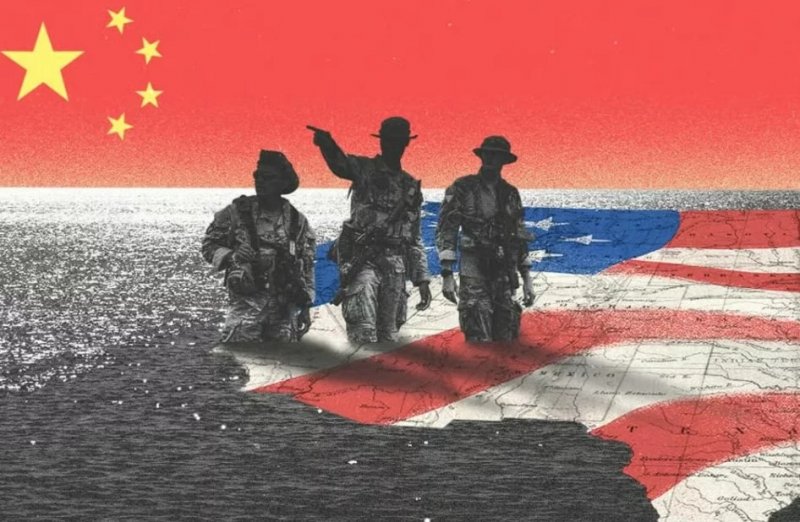
China’s nuclear buildup is frequently reduced to statistics: how many warheads, how many missile silos, how many submarines. This numerical framing, while convenient, obscures the more consequential reality. What Beijing is undertaking is not merely a quantitative expansion of its nuclear forces but a qualitative redefinition of its role in the global security order. The rapid modernization of China’s nuclear arsenal signals a decisive shift in how power, deterrence, and influence will be exercised in the 21st century.
For a long time, China’s nuclear posture was relatively predictable. It was built around restraint, minimum deterrence, and a clear political message: nuclear weapons were a last resort, not a tool of influence. That posture allowed China to remain outside the intense arms competition that defined the Cold War and to present itself as a responsible actor in global nuclear affairs. Today, that image is changing, and this shift deserves serious attention.
The rapid expansion of missile silos, the modernization of land-based intercontinental missiles, and the strengthening of sea- and air-based nuclear forces point to a deeper strategic recalculation. This is not about preparing for a nuclear war tomorrow. It is about ensuring that China can never again be strategically sidelined or coerced by superior military power. Nuclear weapons, in this context, become less about destruction and more about status, leverage, and strategic autonomy.

Source: Orcasia
The Taiwan issue looms large over this entire transformation. Any honest analysis must acknowledge that Taiwan is not simply a regional dispute; it is the most dangerous potential flashpoint between China and the United States. Beijing understands that military success in such a scenario depends not only on conventional capabilities but on shaping the strategic environment long before any shots are fired. A stronger nuclear deterrent raises the political and military costs of external intervention and introduces hesitation where decisiveness might otherwise prevail.
What is striking is how deterrence is being redefined. During the Cold War, nuclear weapons were primarily about preventing catastrophe through mutual fear. Today, they increasingly function as tools of political signaling. The message is subtle but powerful: escalation will be risky, intervention will be costly, and dominance can no longer be assumed. This shift makes crises more complex rather than safer.
It is equally troubling what China’s nuclear expansion reveals about the state of arms control. The global system that once regulated nuclear competition is weakening, and no credible replacement has emerged. China appears unconvinced that existing frameworks serve its interests, and from its perspective, this skepticism is understandable. Many of these arrangements were designed without China in mind. Yet the absence of dialogue and transparency creates a dangerous vacuum, where assumptions replace agreements and mistrust fills the gaps.
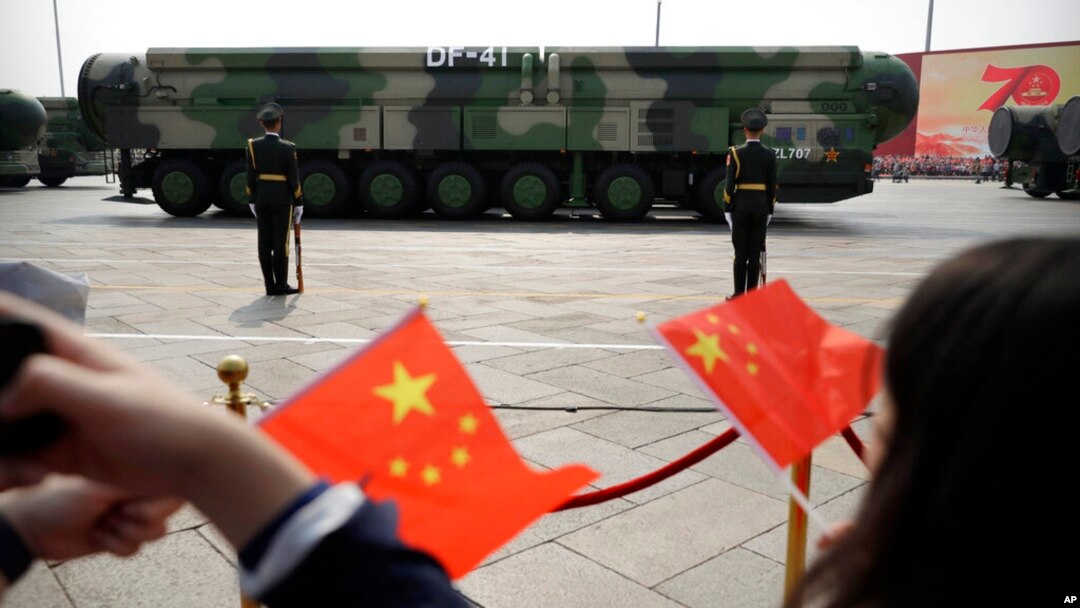
Source: Reuters
Unlike the Cold War era, today’s nuclear competitors operate in a far more crowded and technologically dynamic environment. Cyber operations, space systems, missile defense, and precision conventional weapons all interact with nuclear strategy in ways that are still poorly understood. Decision-making timelines are shrinking, while the consequences of miscalculation remain absolute. This combination is deeply unsettling.
China’s development of a full nuclear triad reflects a desire for resilience and flexibility. Land-based missiles ensure survivability, submarines guarantee second strike capability, and strategic bombers provide visible signaling power. Together, they form a force that is not only harder to neutralize but also more politically useful. This is where concern deepens. The more usable and adaptable nuclear forces appear, the greater the temptation to rely on them for strategic influence.
The regional implications are already visible. Across Asia, states are reassessing their security environments. Some are strengthening alliances, others are investing heavily in advanced military capabilities, and all are watching China’s trajectory closely. Even without direct proliferation, this dynamic fuels militarization and deepens suspicion. Stability built on deterrence alone is inherently brittle.
China insists that its actions are defensive, a response to U.S. missile defenses, expanding alliances, and advanced strike systems. These arguments should not be dismissed outright. Strategic competition is interactive, and no major power acts in isolation. But intent does not erase impact. Defensive logic on one side often appears threatening on the other, and history shows how quickly such cycles can spiral beyond control.

Source: Squarespace
What is most concerning is the normalization of nuclear expansion. When modernization becomes routine and expansion is framed as inevitable, the psychological barrier surrounding nuclear weapons erodes. They become just another instrument of power politics, discussed with technical detachment rather than moral gravity. This normalization is alarming.
There is also a symbolic dimension that should not be ignored. Nuclear weapons remain the ultimate marker of great power status. By expanding its arsenal, China is asserting that it belongs at the very top of the global hierarchy, not as a challenger but as a peer. This pursuit of recognition is understandable, yet it reinforces a world order where influence is measured by the capacity to inflict catastrophic harm.
War is not inevitable. In fact, a stronger Chinese nuclear deterrent may encourage caution among major powers. But caution built on fear rather than cooperation is a fragile foundation. It depends on rational behavior at all times, flawless communication in moments of crisis, and leaders who never misjudge intentions or signals. History offers little comfort on any of these fronts.
What we are witnessing is a transition toward a more competitive and less regulated global security environment. China’s nuclear buildup is both a symptom and a driver of this change. It reflects declining faith in rules-based systems and growing reliance on raw strategic capability. The danger is not immediate catastrophe, but the gradual erosion of mechanisms that once kept catastrophe at bay.

Source: ft.com
It is important to say this plainly: nuclear weapons are returning to the center of international politics at a time when collective restraint is weakening. That combination should concern everyone, regardless of where they stand geopolitically. A world in which power is increasingly defined by nuclear capacity is not inherently stable; it is merely balanced on the edge of disaster.
If there is a lesson to be drawn, it is that strategic competition without renewed dialogue is unsustainable. China’s rise as a nuclear power demands not only acknowledgment but engagement. Ignoring this transformation or responding solely through counter-expansion will only deepen the risks. The shadow cast by nuclear weapons grows darker when no one is willing to talk about how to live beneath it.
In the end, the concern is not about China alone. It is about a global system drifting toward permanent confrontation, where deterrence replaces diplomacy and fear substitutes for trust. This trajectory is not inevitable. But without deliberate effort, it may become irreversible.
(If you possess specialized knowledge and wish to contribute, please reach out to us at opinions@news.az).


Similar news