Climate challenges ahead: What to expect from COP-29 in Baku - INTERVIEW


By Faiq Mahmudov
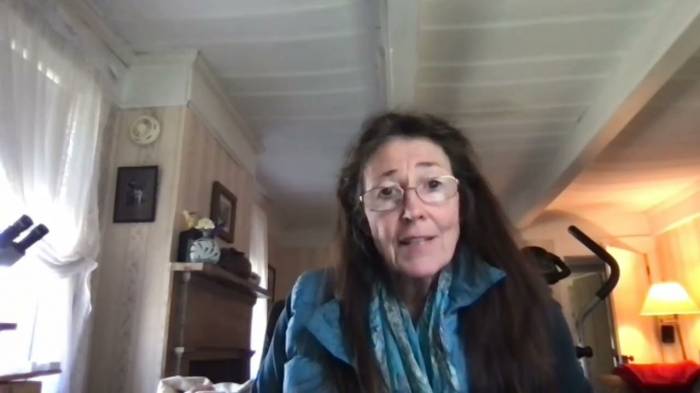
The analytical-information portal News.Az continues its series of articles, interviews and videos entitled "COP29 Baku". As part of this series, we will be posting interviews with and videos of prominent climate and environmental experts. Our guest today is Dorothy M Peteet. Dr. Dorothy M. Peteet is a Senior Research Scientist at NASA/Goddard Institute for Space Studies and Adjunct Professor, Columbia University. She directs the Paleoecology Division of the New Core Lab at Lamont Doherty Earth Observatory of Columbia and in collaboration with GISS climate modelers and LDEO geochemists is studying the Late Pleistocene and Holocene archives of lakes and wetlands (peatlands, salt marshes, tidal freshwater marshes, bogs, fens). Documenting past vegetational change using pollen and spores, plant and animal macrofossils, loss-on-ignition, carbon, and charcoal in conjunction with accelerator mass spectrometry (AMS) radiocarbon dating, her research provides local and regional records of vegetational and climate history and carbon sequestration. Peteet has performed GCM experiments to test hypotheses concerning LGM and abrupt climate change. She is interested in climate sensitivity from past climate changes and ecological shifts with future climate change.
- The urgency of the moment continues, as temperatures and sea levels rise. A myriad of concerns are affected by these changes. And conservation has never been so important, particularly for wetlands. These ecosystems are extremely important for critical habitat (incredible fish, shellfish and bird populations, nurseries) as well as for water treatment, coastal protection, blue carbon storage and human lives. Our maintenance and preservation strategies for these ecosystems should focus on adding sediment for building vertical elevation capital along with re-planting native species, and protecting horizontal transgression spaces upslope and upriver. Our lives are much richer by protecting these environments, and with their erosion we add greenhouse gases to the atmosphere, and pollute our estuaries with the heavy metals they store.
- Your research encompasses a wide range of methods, including pollen analysis, macrofossils, stable isotopes, and radiocarbon dating. Could you explain how the combined use of these methods helps you better understand climate and vegetation changes during the Late Pleistocene?
- Pollen and macrofossil analysis tell us the history of vegetation change through time, and the radiocarbon dating gives us the chronological order. Thus we see the regional plant communities from the pollen which reflects the vegetation, and from macrofossils we see specific species that help us fingerprint the specific moisture and temperature regimes. From the stable isotopes we see shifts in nutrients and carbon along with these changes in vegetation. From this sequence of vegetation change since the Pleistocene, we have seen abrupt climate shifts such as the Younger Dryas cooling and the Little Ice Age. We document migration of plant communities poleward after the ice age, and rates of change. We see consequences of drought, and how rapidly ecosystems can shift. In Alaska now we are seeing the rapid colonization of deglacial landscapes with shrubs. We also can see human impact from invasive species.
- In your work, you study the impact of climate change on ecosystems during the Late Pleistocene. What are the most significant findings you have made regarding how past climate changes affected the ecological systems of the Arctic and other regions?
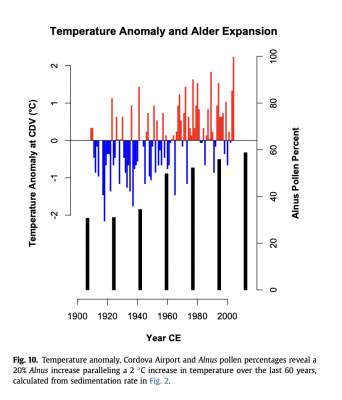
- We discovered that the Younger Dryas cooling (about 13,000-11,500 years ago) was a large cooling in Alaska, extending from the North Slope to Kodiak Island. The shift was probably about a 4 degree C cooling, and involved drier conditions, expressed by the absence of ferns in the Kodiak record. This change is important to document worldwide, as we still are unsure as to the origin of this rapid climatic shift. We also discovered from a sediment core near Cordova that the temperature warming of about 2 degrees C is expressed in the pollen record as a large increase in alder pollen…a pioneer which has colonized new terrain after glaciers retreat.
-You are involved in studying carbon sequestration processes in peatlands and wetlands. How effectively do these natural systems retain carbon, and what opportunities do they provide for mitigating the effects of modern climate change?
- Wetlands are extremely effective in storing carbon (called blue carbon if near rivers and oceans), and coastal wetlands are estimated to store 30-50 times the carbon of the worlds forests (McLeod et al., 2011). Thus we need to preserve them, and add sediment to coastal wetlands that are in danger of being eroded. The erosion of the marshes will foster decomposition of the peat into the water and then much of it goes back to the atmosphere as carbon dioxide, a greenhouse gas. Wetlands of all types need to be protected as very valuable resources we have, yet in the US they have been less protected in the last year due to the Supreme Court Sackett decision, which does not protect wetlands that do not have surface water connectivity.
- In your opinion, what role should scientific data and research, such as yours, play in the negotiations at COP-29? How important is it to consider historical climate data and ecosystem studies when developing modern climate policies?
- Science should play a very large role in negotiations at COP-29, because scientists have a paleoclimate and paleoecological perspective for addressing current problems. The past is the key to the present in understanding shifts in climate and ecosystems, and very useful for understanding just how the system works. Even though we are facing unprecedented man-made shifts in climate, we can learn from past natural shifts about how fast the ecosystems respond and how resilient they are.
Related articles:
- INTERVIEW: What COP29 in Baku means for the future of energy
- How the Arctic is changing and what it means for the world: An interview with Robert Newton
- Volker Sick: CO2 utilization must be key outcome for COP29
- Baruch Fischhoff: Attendees of COP29 Baku to be motivated by different goals
- Baku to outline more ambitious climate action strategies – Malaysian expert
- COP29 will bring several opportunities for Azerbaijan - US expert
- Nithi Nesadurai: COP29 in Baku to discuss increasing climate project funding
- INTERVIEW. What to expect from COP29 in Azerbaijan?
- Steve Vavrus: COP29 will need to reckon with "shocking" global warming


Similar news