INTERVIEW: What COP29 in Baku means for the future of energy


By Faiq Mahmudov
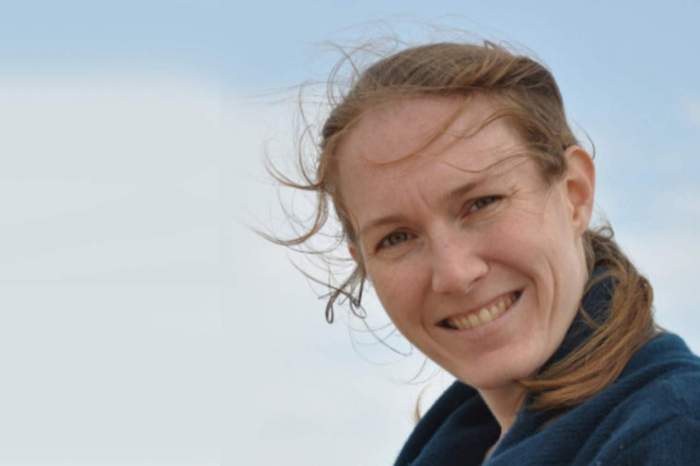
The analytical-information portal News.Az continues its series of articles, interviews and videos entitled "COP29 Baku". As part of this series, we will be posting interviews with and videos of prominent climate and environmental experts. Our guest today is Allegra N. LeGrande, Physical Research Scientist at NASA Goddard Institute for Space Studies. She specializes in finding ways to characterize climates more extreme than the historical period, implementing a means to validate the climate model against these extremes, and finally improving the model in instances where there is a mismatch between simulated and inferred (from proxy archives) climates. Dr. Allegra is interested in the hydrologic cycle, and in particular tracers of the hydrologic cycle such as water isotopologues. These tracers are useful for establishing the provenance and (rainout) history of air parcels. They are also useful as a tracer of past climates (ice cores, cave deposits, ocean sediment cores, etc.). She do experiments with a general circulation model (the kind used in predicting future climate change) to discover details about the hydrologic cycle in the past and present in hopes of improving our ability to understand this part of the climate in the future.
- It is challenging to hold a global conference on climate change, primarily caused by fossil fuels, in a country and region that produces a significant amount of them. In the US, there has been considerable discussion about whether it is appropriate, for the second year in a row, to discuss phasing out fossil fuels in a country whose economy heavily depends on them.
I emphasize this because, although I am now a scientist at NASA in New York City, I grew up in the Permian Basin of West Texas in a family that worked in this sector. People in this industry understand the ancient origins of these deposits and how different (much hotter) the Earth must have looked at that time to produce such hydrocarbons.
When I had the opportunity in college, I chose a different path with my family's support—to study climate change. I hope that my children will continue the work of addressing climate change—not only by scaling up alternative energy sources that produce fewer greenhouse gases but also by designing our lives and cities in ways that demand less energy. It seems unfair in a way, as our children are the ones least responsible for the excess greenhouse gas situation we currently find ourselves in.
There should be benchmarked action items to reduce energy demand and greenhouse gas emissions to be achieved before COP30. We need to move beyond endless discussions with minimal progress year after year.
Per capita energy consumption should be reported for each country, not as a whole, but broken down by income within each country.
Context for energy consumption in terms of the RCP or SSP scenario.
Reporting in GtCO2 fails to provide meaningful context for non-experts. People 'know' the temperature outside and whether rains come when and in the amount they are supposed to.
— What role do you expect Baku and the wider region to play in advancing climate change initiatives at COP29, and what local issues or achievements can be presented on the global stage?
- For Baku and the region, I believe this is an opportunity to show the world that hydrocarbons do not solely define this area. Can the region leverage its income from hydrocarbons to transition to carbon-neutral technologies faster than the larger economies currently producing so much? Such a move would demonstrate true leadership and a commitment to the future of all the world’s children.
Fossil fuel extraction can take a significant toll on the communities living nearby, from chemical contamination of soil and water supplies to destabilizing the very ground people live on (e.g., fracking-induced earthquakes). It is easier to implement policies that maintain a cleaner environment than it is to remediate damage, but both are necessary for the sake of our children.
When I visit West Texas now, the landscape is dotted with wind turbines producing carbon-neutral energy. Yet, the fossil fuel industry still persists, with much energy produced and exported out of the state. I feel proud of the green energy but frustrated by the lack of progress in reducing overall energy demand, which would decrease the need to rely on fossil fuels. I hope that Baku and the region can emerge as leaders who inspire the world to demand less energy, enabling us to truly transition to carbon-neutral energy rather than merely adding green energy to existing fossil fuel use.
The climate of my childhood was different from that of my grandparents' childhoods. I fear that the climate my grandchildren will experience will be unrecognizable by comparison. We must do everything in our power to provide the best possible climate and environment for our children.
— What key approaches do you use to study climates that were more extreme than our current climate? & How do water isotopologists help you study climate change, and what can they tell us about the past climate?
- My principal tool for studying the climate is the NASA Goddard Institute for Space Studies climate model, specifically the coupled atmosphere-ocean-land general circulation model known as ModelE. This model is used to simulate and predict future climates, focusing primarily on the impact that increased greenhouse gas concentrations will have on our environment.
As Shakespeare said, "What Is Past Is Prologue": past climates provide a window into our future. Water isotopes act as the scribes of past climates.
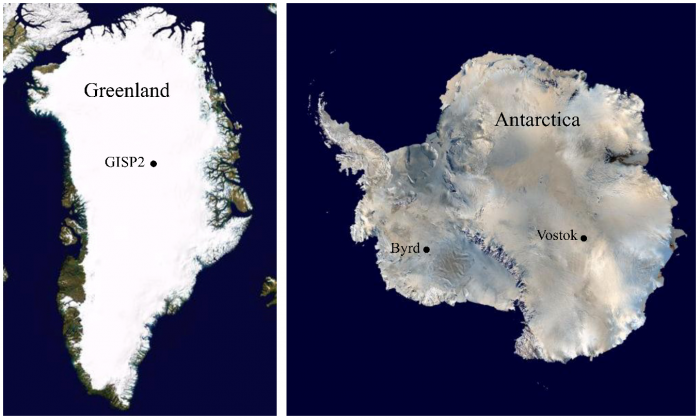
Water molecules, composed of two hydrogen atoms and one oxygen atom, exist in various forms that are sensitive to climate conditions. These forms are called isotopologues. Wherever these molecules are preserved over time, they offer a small snapshot of past climates. Ice core records from Greenland and Antarctica are the most well-known examples. The ice itself is, of course, water, and trace gases from the atmosphere are recorded in the trapped gas bubbles within the ice cores.
Tiny marine zooplankton called foraminifera build their shells from calcium carbonate (CaCO₃), which also records oxygen isotope changes. When these organisms die, they are deposited on the sea floor, creating a record of ocean conditions through time as you dig deeper into the sediment. Corals in the ocean are made of aragonite, an alternative form of CaCO₃, and the cellulose in trees contains oxygen as well.
Cave deposits, also made of calcium carbonate, provide another history of Earth's past climate. We simulate this tracer in the NASA GISS climate model.
The modern climate, generally considered to be from 1850 to the present, has experienced a relatively narrow range of greenhouse gas concentrations. However, we are now asking the model to predict a future climate that falls outside the range for which it was originally designed. To ensure the model's accuracy and skill, I conduct experiments based on past climates.
I study climates from the last 65 million years. Some of these climates are analogous to what we experience today. For instance, a senior colleague of mine studies the Pliocene period, about 3 million years ago, when CO2 concentrations were around 380 ppm. This period served as a good analog for the world in the 1990s and 2000s. However, as CO2 levels have continued to rise, we have had to look further back in time to find a modern analog.
During the Middle Miocene, approximately 15 million years ago, CO2 concentrations were around 470 ppm. By studying these periods, we gain insights into how much warming we can expect from future greenhouse gases in a way that is entirely independent of climate model simulations. The global mean temperature during the Pliocene was 2-3°C warmer than pre-industrial levels—and we have already seen significant warming in the last few years.
However, we have not yet reached net zero emissions and continue to increase our greenhouse gas concentrations. The Middle Miocene experienced temperatures around 4°C warmer than pre-industrial levels.
When we simulate these periods, and the model accurately reproduces the past climates, we gain confidence in the model’s ability to simulate climates within this warmer range.
I also conduct simulations of extreme climates. For example, what would happen if a large volcanic eruption suddenly occurred? Would the world cool? Warm? What would happen to rainfall patterns? I perform simulations of this nature, typically focusing on volcanic events within the last 1,000 to perhaps 100,000 years. The reason we simulate volcanoes on this shorter time scale is that we have better estimates of the size of these eruptions from fossil volcanic deposits (sulfate aerosols) found in ice sheets. By combining this information with past climate data, I can better assess the accuracy of the climate model’s response to such events.
— What are the main challenges in modelling future climate, and how do you overcome them?
— I think climate models have a reasonable handle on what mean climate will be in the future. However, simulations of extreme climates, or the distribution of climate hour-to-hour, day-by-day, are much more challenging and our work here is not done. I think the hybridization of AI/ML into traditional physics-based modeling tools should improve our representation of extremes, and the next decade of climate research promises to be very interesting.
Our brief satellite-era record of climate change is about 45 years long. Even over this period, we observe an increase in variance -- extremes -- of climate. For temperature, that means that there will be some cold extremes as well as many, many hot extremes. For rains, that means more incidences of drought peppered with more extreme rainfall.
— How do your research and experiments with general circulation models help us better understand the hydrological cycle and how it will change in the future?
- Capturing high-end extremes in hydroclimate (rain/snow) has been particularly challenging due to their highly heterogeneous nature. Remote sensing can play a crucial role in constraining and improving the physical processes represented within climate models. In my research, water isotopes offer an additional function in understanding these very small-scale processes, as they also influence water isotope composition.
Many scientists believe that increasing the resolution of existing climate models will be beneficial. While higher resolution certainly won’t hurt, it’s important to consider that we also face uncertainties in our future pathways and the microscopic mechanisms driving extreme rainfall. Allocating computing resources solely to resolution may come at the expense of exploring these uncertainties.
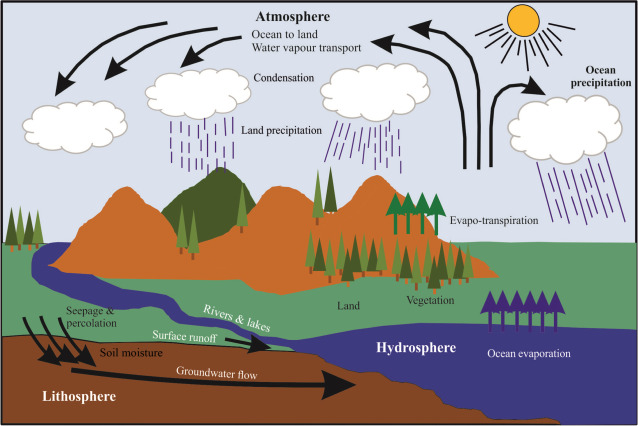 Many of these microscopic mechanisms rely on parameterizations within climate models, and I believe that the inclusion of AI and Machine Learning algorithms will be particularly beneficial in this area. These tools can help create hybridized AI/ML-physics-based models that better capture the complexities of extreme hydroclimate events.
Related articles:
- How the Arctic is changing and what it means for the world: An interview with Robert Newton
- Volker Sick: CO2 utilization must be key outcome for COP29
- Baruch Fischhoff: Attendees of COP29 Baku to be motivated by different goals
- Baku to outline more ambitious climate action strategies – Malaysian expert
- COP29 will bring several opportunities for Azerbaijan - US expert
- Nithi Nesadurai: COP29 in Baku to discuss increasing climate project funding
- INTERVIEW. What to expect from COP29 in Azerbaijan?
- Steve Vavrus: COP29 will need to reckon with "shocking" global warming


Similar news