Europe arms itself: New ambitions of the EU and their consequences


By Samir Muradov
On March 6, European Union leaders gathered for an extraordinary summit to approve plans for a substantial increase in defense spending and to demonstrate unity in supporting Ukraine. These steps come amid growing uncertainty about U.S. foreign policy under President Donald Trump, who has questioned traditional security guarantees for Europe. The decisions made at the summit signal a new phase in the EU's defense policy, carrying sformignificant economic and political implications.
The statement from the European Council was almost a manifesto: "Europe must become more sovereign and responsible for its own defense." However, behind this noble message lies not only a desire for independence from the U.S. but also a growing concern about Russia's aggressive policies. The war in Ukraine has acted as a catalyst for change, exposing the fragility of the EU's security system and the urgent need for a swift response to threats.
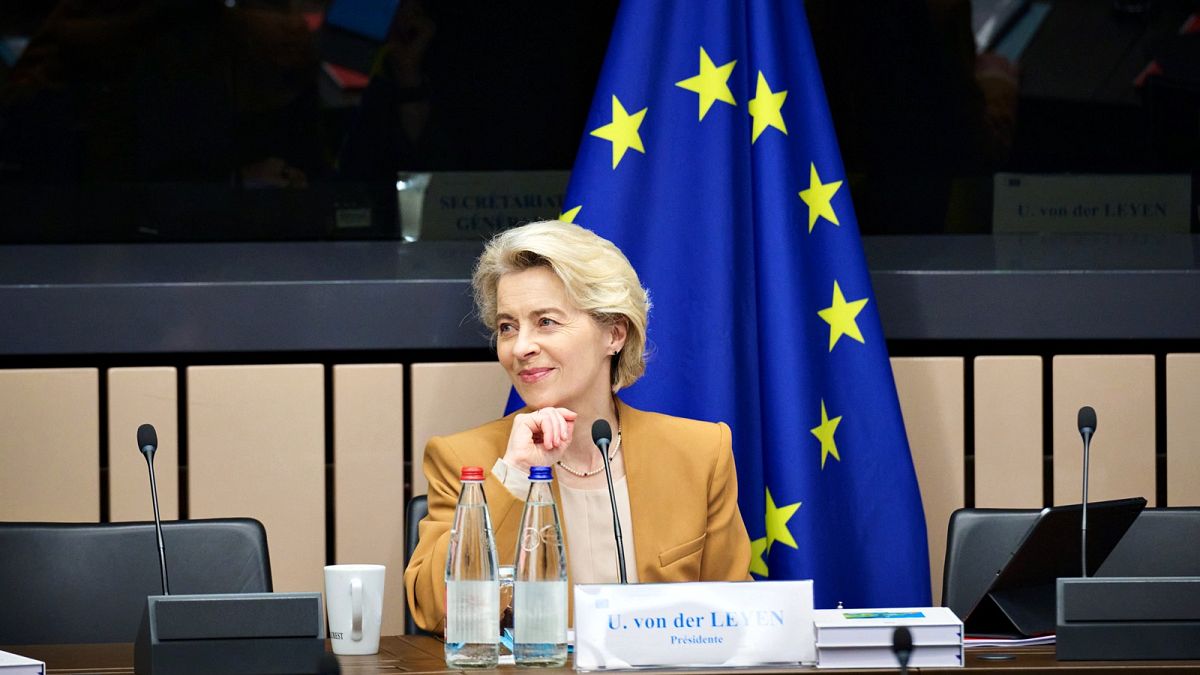
The ambitious plans include raising up to €150 billion for joint defense projects—an unprecedented move. Ursula von der Leyen, President of the European Commission, proposed allocating up to €800 billion for military needs in the coming years. Interestingly, even Germany, known for its cautious approach to national debt, supported excluding defense spending from the EU's budgetary restrictions. It seems that even Berlin's restraint has its limits, especially when the continent's security is at stake.
Source: Euronews
Of course, the EU's plans to finance defense projects have raised questions: where will such sums come from, and what will be sacrificed? The answer is simple—greater fiscal flexibility for military spending and potential cuts in other budget areas. Notably, the European Investment Bank is expanding its mandate to support defense-related loans. In plain language, this means that defense has become a priority even for the EU's financial institutions.
However, not everything is going smoothly. According to Bloomberg, Germany intends to cut development funding by nearly $1 billion, the Netherlands by €2.4 billion, and the United Kingdom plans to reduce aid by as much as £6 billion. It appears that the very development programs designed to combat crises and inequality will foot the bill for the new European defense.
Among the potential casualties of increased defense spending are programs to combat climate change and investments in education and innovation. If defense budgets take priority, plans for a green transformation of the economy and sustainable development may well be forgotten. Perhaps the European Commission hopes that drones can solve environmental problems too, but for now, such technology remains the stuff of science fiction.

Source: Science
The European Bank for Reconstruction and Development (EBRD) is already sounding the alarm: defense budgets in the region have doubled over the past decade. Ukraine spends 37% of its GDP on defense, while NATO's eastern flank countries are rapidly increasing their military expenditures. But EBRD's Chief Economist Beata Javorcik warns that such a reallocation of funds could harm long-term economic growth, leaving education and innovation underfunded.
Gareth Redmond-King of the Energy and Climate Intelligence Unit also notes that cuts in development funding reduce the West's soft power. And without that, even the most powerful tanks are unlikely to help the EU maintain its global influence.
Moreover, considering that part of the defense funding will be financed through debt, questions about the sustainability of such debt linger. The EU has already faced debt crises in the past, and a new wave of borrowing could be the straw that breaks the camel's back.
Particularly worrying is the shift in U.S. foreign policy. Trump's statement that America will no longer be Europe's security guarantor is a grim signal that the EU will not only have to arm itself but also reconsider its strategic alliances. Moreover, the abrupt halt of American military support for Ukraine was a cold shower for Brussels.
In this context, the determination of European leaders to increase military spending seems more like a forced measure than a manifestation of true sovereignty. If Washington continues to distance itself from defending the Old Continent, even the most ambitious EU defense budgets might prove insufficient.
Although EU leaders at the summit showed unity in their intentions, real disagreements have not disappeared. For instance, Bulgaria plans to allocate funds from the Recovery and Resilience Facility for modernizing its defense industry, while several other countries are more interested in economic support and social programs.
Slovenian Prime Minister Robert Golob also stated that the country would be forced to increase defense spending to 2% of GDP earlier than planned. However, the question remains whether the taxpayers of EU countries are ready to accept such a reallocation of budgetary funds. The political cost of these decisions could prove too high.
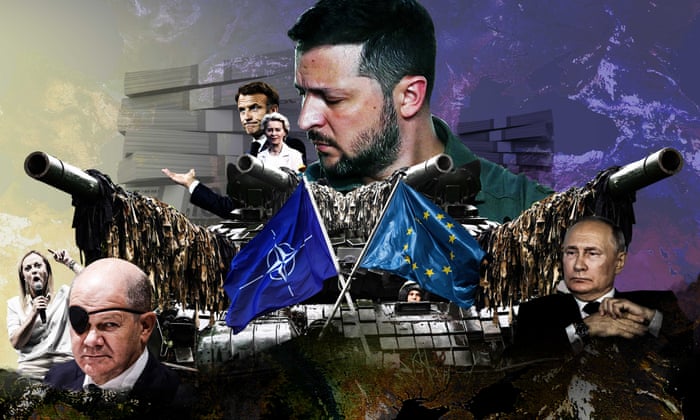
Clearly, one of the main reasons for the EU's militarization remains the war in Ukraine and the perceived threat from Russia. European leaders are evidently counting on increased military spending to serve as a powerful deterrent to Moscow. But the question is: how long can Europe sustain such a pace of spending if the conflict drags on for years?
Source: The Guardian
Moreover, the more funds are directed toward defense, the less will be available for Ukraine's economic recovery. Ironically, by defending Ukraine, the EU risks depriving it of the financial support crucial for post-war reintegration and economic restoration.
So, what do we have in the end? Europe is indeed becoming more sovereign—but at the cost of militarization and the abandonment of investments in development and social programs. Strengthening defense may help to manage immediate threats, but in the long term, this strategy appears risky.
The budgetary scissors are already sharpened, and the first to fall under them will be precisely those articles that ensure the sustainability and development of the economy. So the question remains: will the new European defense doctrine become the nail in the coffin of the European welfare state that Brussels has been so proud of?
While EU leaders deliberate, one can only note: with such plans and such expenses, Europe will have to defend itself not only from external threats but also from internal discontent. As the saying goes, "Those who dwell on the past shall not see the budgetary subsidies."


Similar news