Foreign embassies damaged in Kyiv: Full list and verified details


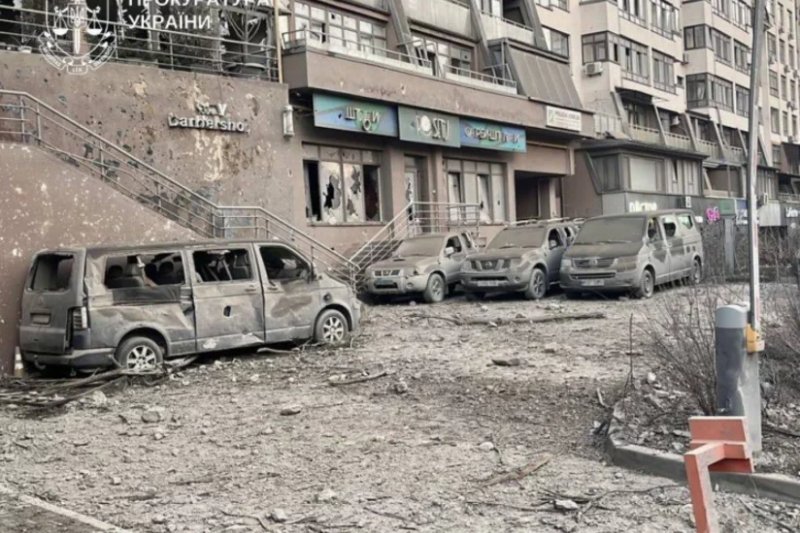
When war reaches diplomatic buildings, the event becomes more than a military episode — it becomes a blow to the global system built on rules, immunity, and guarantees. Over the past two years, Kyiv has experienced multiple incidents in which foreign embassies and international representations have been affected — whether through direct missile strikes, drone attacks, flying debris, or powerful shockwaves. These cases show that the boundaries of this conflict have stretched far beyond the battlefield and are now touching an area previously regarded as untouchable: diplomacy.
Diplomatic facilities have long been viewed as protected, neutral spaces. Today, that perception is changing rapidly. Kyiv’s diplomatic district, home to embassies of NATO members, EU states, neutral countries, and international organizations, can no longer be assumed safe. Damage has been recorded at diplomatic missions regardless of their political alignment or involvement in the conflict. The geography of the strikes reveals something critical: the attacks are not limited to specific political targets; they reflect the shifting nature of warfare itself.
The first major incident: A building housing six embassies hit — December 20, 2024

Source: AA
The first alarming episode occurred on December 20, 2024, when a Russian missile damaged a building that hosted the embassies of Albania, Argentina, Palestine, North Macedonia, Portugal, and Montenegro. For the international diplomatic community, the incident was significant because it simultaneously affected multiple states representing different regions, alliances, and foreign policy positions.
Ukrainian authorities stressed that the strike hit a civilian area with no military infrastructure nearby. From that moment onward, it became increasingly clear that boundaries once viewed as inviolable were beginning to erode.
Damage to the Apostolic Nunciature — July 10, 2025
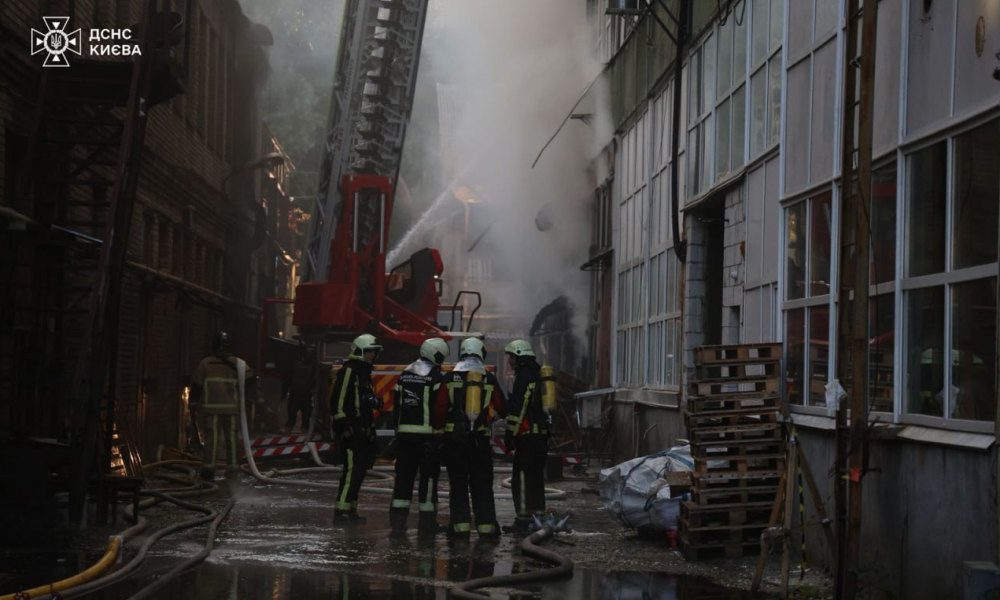
The next major incident occurred months later. During a massive night-time strike, debris from downed missiles and drones damaged the Apostolic Nunciature, the Vatican’s diplomatic mission.
Portions of the roof, interior areas, and surrounding grounds were hit. Although no staff were injured, the city recorded casualties that night, and dozens of civilians were wounded.
This incident drew particular attention because the Vatican traditionally acts as a mediator, humanitarian advocate, and politically neutral presence in global crises. Many analysts interpreted the episode as a symbolic signal: modern warfare no longer distinguishes between those directly involved in a conflict and those working to facilitate dialogue.
Strike on the EU Delegation and the British Council — August 28, 2025

Source: Financial Times
The August 28, 2025 attack became one of the most severe in terms of damage to diplomatic infrastructure. Both the EU Delegation building and the British Council office in Kyiv were hit.
Official reports confirmed at least 14 fatalities, while independent assessments suggested the number could be as high as 19. Dozens more were injured, including children.
Within hours, the European Commission stated publicly that the strike violated not only international law but also the political architecture of Europe, where diplomatic offices serve as essential channels of cooperation and institutional communication.
A new strike on the diplomatic quarter: Poland and the EU hit again — September 29, 2025
Source: KyivPost
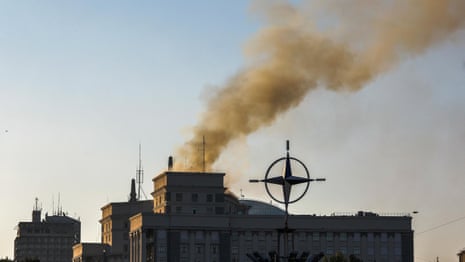
Less than a month later, the diplomatic quarter was struck again. A missile fragment pierced the roof of the Polish Embassy’s consular section, damaging internal facilities. The same attack caused further destruction to the EU Delegation — for the second time in thirty days.
Four civilians were killed, including a child, and more than ten were injured. Poland and the European Union immediately summoned Russian representatives and issued formal diplomatic protests.
Damage to the Azerbaijani embassy — A repeated pattern

Source: Report
The Embassy of Azerbaijan has been affected multiple times, making this case particularly notable. At least two major incidents were confirmed in late August and mid-November 2025. Flying debris and shockwaves damaged the embassy perimeter, government vehicles, and portions of the building.
Azerbaijan, a country not directly involved in the conflict and maintaining formal neutrality, publicly raised concerns, noting that the recurring nature of these incidents is troubling and requires further explanation at the international level.
A broader trend: Accident or new diplomatic reality?

Source: Unian
An analysis of the pattern shows that these are not isolated episodes; they form a sequence. Damage occurs:
— at different times,
— in different parts of the diplomatic district,
— and from various types of weapons, from drones to ballistic missiles.
This means that diplomatic immunity, once considered a foundational guarantee, is no longer protected by international law alone, but increasingly by chance and geography.
The question now extends beyond Ukraine: Will the world preserve diplomatic immunity as a functioning principle, or has the era in which embassies were unquestionably protected already ended?
When diplomatic missions come under fire, it cannot be dismissed as coincidence or technical error. These incidents serve as a stark reminder: international law is no longer universally perceived as an inviolable boundary, but as a negotiable framework that can be ignored. Every shattered embassy window is not only material damage; it is a sign that the rules of diplomacy and security once taken for granted are weakening.
And today, the question is no longer “Who was hit?” but rather: Is the international community prepared to defend what, until recently, was the foundation of civilized relations between states?


Similar news