Georgia caught between U.S. and China as rivalry for South Caucasus intensifies – INTERVIEW


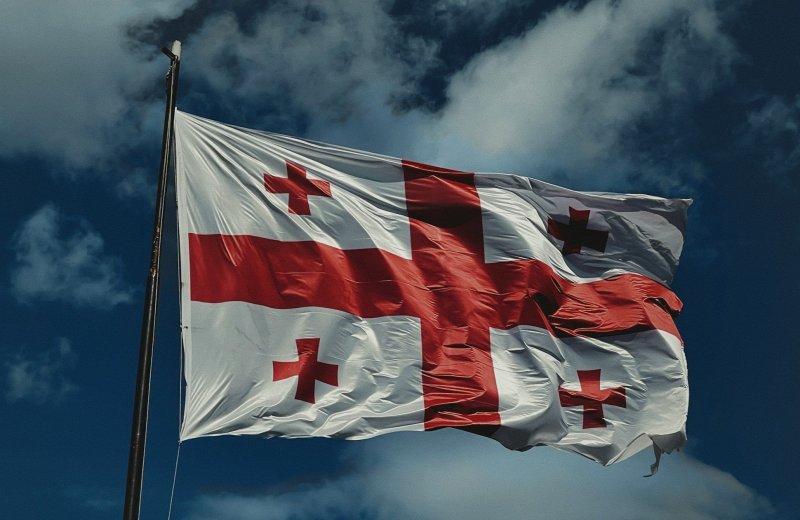
In recent months, Georgia has found itself at the center of major geopolitical developments, caught between the interests of the United States, China, and regional powers such as Russia and Iran. The ruling Georgian Dream party is seeking to break the country’s international isolation following the 2024 parliamentary elections while navigating rising tensions with the European Union and a growing partnership with Beijing.
In an interview with News.Az, Georgian political analyst Gia Kuchava discusses the implications of President Mikheil Kavelashvili’s open letter to U.S. President Donald Trump, the intensifying U.S.-China rivalry in the South Caucasus, and the domestic political landscape ahead of Georgia’s upcoming municipal elections.

— Recently, Georgian President Mikheil Kavelashvili sent an open letter to U.S. President Donald Trump, expressing hope for a reset in relations between the two countries. What is the Georgian government’s intention behind this move?
— First of all, it is worth noting that this is the second attempt by the ruling Georgian Dream party to draw President Donald Trump’s attention to Georgia’s problems. Back in May, Prime Minister Irakli Kobakhidze sent an open letter to President Trump and Vice President J.D. Vance. The letters from the Prime Minister and the President were practically identical in both content and style.
In his message, Kavelashvili stressed that the Trump administration “is not paying sufficient attention to Georgia,” which, given the “complete alignment of values” between the two governments, causes surprise among the Georgian public.
Domestically, Georgian Dream continues to enjoy strong support, especially in rural regions. However, on the international stage, the party has found itself almost completely isolated. The radical opposition has managed to convince Western elites that Georgian Dream does not truly represent the interests of Georgian society. In my view, this open letter is an attempt by the ruling party to establish direct contact with President Trump’s administration and break through the international isolation Georgia has faced since the 2024 parliamentary elections.
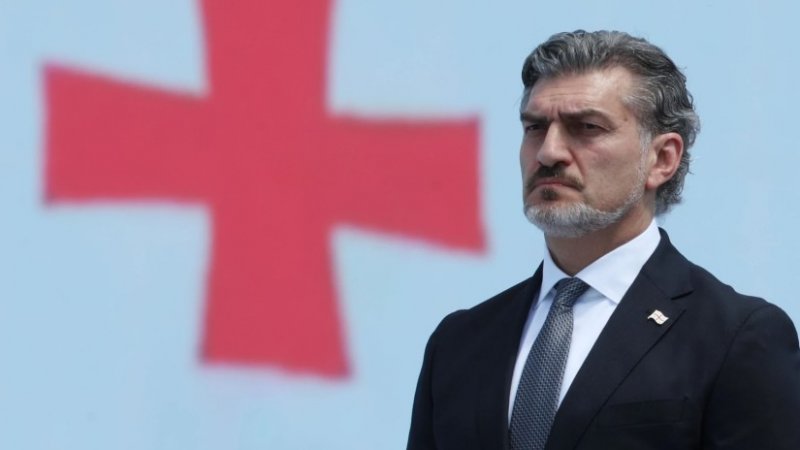
A few days ago, the U.S. Senate postponed consideration of the “Megobari Act.” The ruling party claims that the process may be delayed for a long time, while the opposition insists it is only a technical pause and that the bill will be passed by the end of the year.
Some pro-government experts speculate that Georgian Dream is engaged in backchannel negotiations in Washington. However, there are no secret talks taking place. Senator Markwayne Mullin has openly stated that he personally met with Prime Minister Kobakhidze, who, in his view, left a favorable impression. According to Mullin, it is important to leave space for improving U.S.-Georgia relations.
The portal Jam-news, citing The Hill, quotes Senator Mullin as saying:
“I understand what they [Georgian Dream] are trying to achieve. I recognize Russia’s direct influence, which, in my opinion, complicates the situation within the government. But I want to have the opportunity to work with them to figure out how they can achieve real sovereignty and free themselves from excessive Russian influence.”
— How can Georgia use the interest of the U.S. and China in the South Caucasus to strengthen its economic development? Could this global rivalry turn Georgia into an arena for confrontation?
— The struggle for global leadership between the United States and China is one of the most important phenomena in today’s international relations. Its consequences will have a profound impact on the future of humanity as a whole.
At the current stage, the Russian threat to Eastern Europe and our region remains more pressing. However, U.S.-China rivalry is already being felt in the South Caucasus and will only intensify over time.
On the “Grand Chessboard,” major geopolitical players view Georgia primarily as part of the South Caucasus — the space between the Black Sea and the Caspian Sea. This area holds immense economic and strategic importance. Control over maritime routes has always been at the heart of geopolitical interests, and one cannot control the Black Sea without controlling the adjacent territories.
Back in 1997, Russian political theorist Alexander Dugin published his book Foundations of Geopolitics, in which he argued that the entire northern and eastern Black Sea region must be brought under total Russian control. To achieve this goal, he advocated fragmenting the region along ethnic, religious, and cultural lines — while keeping all processes under Moscow’s direct influence. Similarly, Russian professor Natalia Narochnitskaya has written that “the key to dominance over Eurasia lies at the bottom of the Black Sea.”
In May 2017, Georgia and China signed a free trade agreement, which came into effect in 2018. In June 2024, the two governments signed a strategic partnership agreement. At the same time, following Donald Trump’s election victory, the outgoing Joe Biden administration suspended a similar strategic partnership agreement between the U.S. and Georgia.
China’s growing activity in the South Caucasus should be viewed in the context of broader geopolitical shifts in the Black Sea region, where Russia seeks to establish exclusive control, while the West aims to expand its influence. The struggle for the Black Sea has become a key element in shaping a new world order, forcing Beijing to pursue a more assertive foreign policy.
China advocates a vision of a multipolar world order that is not based on rigid military blocs or political alliances. Beijing does not seek to interfere in the internal affairs of other states, focusing instead on economic and political cooperation. This approach is welcomed by many countries in the Middle East and Africa and is now extending to the South Caucasus.
China’s interest in the region is largely driven by geography: the South Caucasus is the shortest corridor connecting China’s Xinjiang province to the European Union. The so-called “Middle Corridor,” running from the Black Sea through the Caspian Sea and into Central Asia, is gaining increasing importance for Beijing.
The U.S. also has vital interests in the South Caucasus. In August, with President Donald Trump personally mediating, Azerbaijan and Armenia reached a historic agreement: the Zangezur Corridor was placed under U.S. administration for 99 years and was named the “Trump Route for Peace and Prosperity” (TRIPP). Russia and Iran reacted sharply negatively to this deal. The Iranian news agency Fars wrote that “behind this diplomatic facade lie strategic objectives,” as the U.S. gained operational control over the route.
Some experts argue that China does not need the Zangezur Corridor since it already has access to the Black Sea through Georgia’s Anaklia port. However, this view is debatable. Beijing sees the corridor as part of its Belt and Road Initiative and seeks to diversify its transport routes. In China’s view, the Zangezur Corridor could play a critical role in establishing an alternative land route between Asia and Europe, bypassing unstable or overburdened pathways.
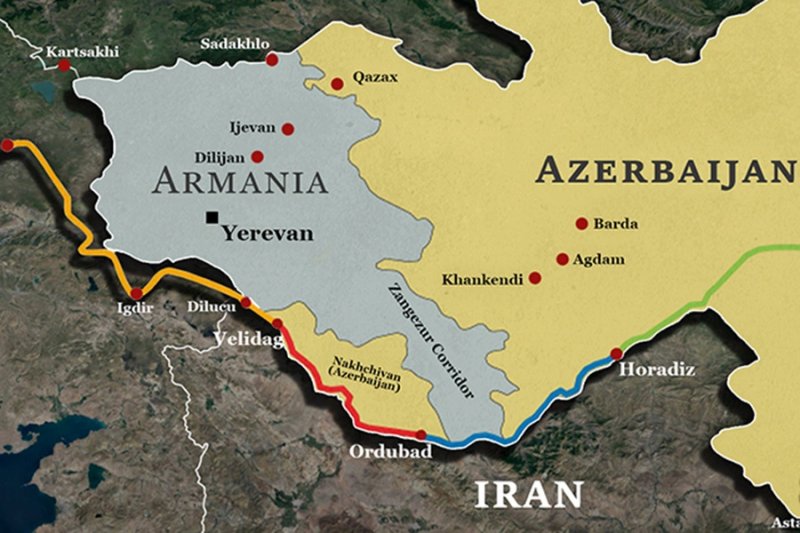
For instance, there is already a railway network linking China, Baku, Akhalkalaki, and Kars. In the event of worsening U.S.-China trade or political relations, Washington would have limited leverage to pressure Beijing by restricting the Zangezur Corridor’s capacity.
China views the South Caucasus not only as a transit hub but also as a target for deeper economic and investment penetration, including projects in energy, agriculture, and logistics.
While global tensions are rising, China continues to emphasize, at least rhetorically, a multipolar approach that considers the interests of all major players — China, the U.S., the EU, Russia, and Iran.
At this stage, due to worsening relations with the EU, the Georgian government is increasingly turning toward China. However, unlike the EU, the U.S. does not want to completely sever business and political ties with Tbilisi. This was evident in the recent decision by the U.S. Senate to delay passage of the Megobari Act.
Just days ago, Senator Markwayne Mullin convinced Senate Majority Leader John Thune to exclude the Megobari Act from the National Defense Authorization Act (NDAA). Including it in the NDAA would have created serious obstacles for the Georgian Dream government.
As The Hill quoted one congressional aide: “The fact that Senator Mullin is willing to go to such lengths to protect Georgia’s pro-China government is simply incomprehensible.”
This clearly indicates that a serious geopolitical struggle between the U.S. and China over Georgia lies ahead. If Washington adopts an approach similar to Beijing’s — pragmatic and focused on cooperation — it could achieve significant results.
— A report by the so-called “Tsulukiani Commission” was recently published regarding the 2008 war, placing full responsibility for the conflict on the government of Mikheil Saakashvili. How has Georgian society reacted to this report?
— Georgian society is deeply divided between supporters of the current government and the former authorities. Back in late March and early April, when the commission began investigating the causes of the August 2008 war, the radical opposition claimed that it was created under external pressure, hinting at Russia’s involvement.
However, the commission’s work went beyond just investigating the war. Its final report, presented to the parliamentary bureau, includes sections on prison violence, violations of privacy, corruption and business racketeering, suppression of media freedoms, and violations of Georgia’s territorial integrity.
In today’s polarized environment, each side refuses to listen to the other’s arguments, making consensus virtually impossible.
— What are your forecasts for the upcoming municipal elections scheduled for October 4?
— Voter turnout for municipal elections in Georgia is traditionally lower than for parliamentary elections. Adding to this, the radical opposition — which received the largest share of votes in last year’s parliamentary elections — is boycotting the vote and urging its supporters not to participate. This, in turn, benefits the ruling Georgian Dream party.
Recently, Georgia’s State Security Service announced the seizure of a large quantity of hexogen explosives smuggled in from Ukraine. It is worth recalling that ahead of the 2021 municipal elections, former President Mikheil Saakashvili illegally entered Georgia from Ukraine, attempting to spark a “Rose Revolution 2.” That plan failed, and Saakashvili was arrested.
The opposition camp today is fragmented. Former Prime Minister Giorgi Gakharia and the party Lelo, led by banker Mamuka Khazaradze, have decided to participate in the upcoming elections. Radical forces accuse them of having secret arrangements with Georgian Dream, while leaders of the United National Movement call Gakharia a “Trojan horse” within the opposition.
The radical opposition has ramped up its rhetoric, claiming that the October 4 elections are nothing more than a “special operation by Russian intelligence,” and alleging that the supposedly illegitimate parliament had no right to schedule the vote.
Several protests have already been held outside the campaign headquarters of Tbilisi Mayor Kakha Kaladze, demanding that he withdraw his candidacy. In my view, this only strengthens the likelihood of Kaladze’s victory.
I predict that Georgian Dream will win in most regions. After the election, the radical opposition will once again claim the results were falsified, escalating tensions even further.
By Asif Aydinly


Similar news