Georgia’s post-election turmoil: Analyzing challenges and prospects - INTERVIEW


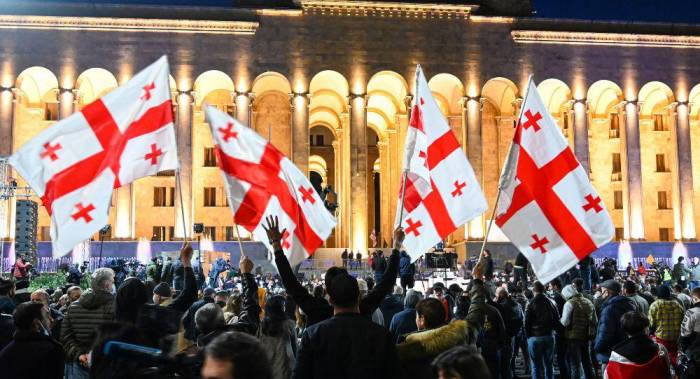
Photo: Getty Images
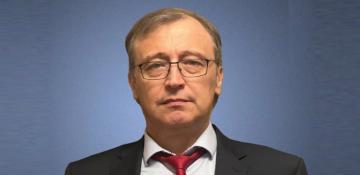
By Asif Aydinli News.Az presents an interview with the co-founder and deputy director of The Topchubashov Center (Baku, Azerbaijan), Murad Muradov.

Murad Muradov, co-founder and deputy director of The Topchubashov Center. Photo: top-center.org
- How do you assess the situation in Georgia after the parliamentary elections?
- The post-electoral situation in Georgia has turned out to defy most forecasts, whether from pro-government circles or opposition supporters. On the one hand, the victory of the GD has not been convincing enough to persuade everyone that it reflects a clear choice by the Georgian people. Numerous allegations of electoral fraud have been made against the ruling party. On the other hand, opposition protests have not been as enthusiastic as expected, paling in comparison to the rallies following the so-called “Gavrilov affair” in 2019 or the adoption of the foreign agent law in early 2023. While opposition parties have not officially recognized the election results, there is a sense that without significant external support, the momentum of protests will gradually dissipate. The existing dissatisfaction does not seem strong enough to mobilize large crowds or exert substantial pressure on the government.
- Against the backdrop of Tbilisi's confrontation with the West, is Georgia's rapprochement with Russia realistic?
- In my opinion, Georgia has already gone as far as it can with Russia under the current circumstances, given that Tbilisi lacks diplomatic relations with Moscow and parts of its territory are under de facto Russian occupation. Nonetheless, in recent years, Georgia has sought to find common ground with Russia, leading to growing bilateral trade. Since 2022, Georgia has also played a significant role in sanction evasion mechanisms by engaging in the re-export of sanctioned goods to Russia. Further rapprochement would likely require radical steps from Moscow, such as withdrawing recognition of the “independence” of Abkhazia and South Ossetia and supporting their reintegration into Georgia. These issues are highly sensitive for the Georgian public, and rapprochement with Russia would not be feasible without addressing them first.
- Recently, Georgian Prime Minister Irakli Kobakhidze stated that Tbilisi is ready to act as a mediator in negotiations between Azerbaijan and Armenia if they so desire. How realistic is this proposal, and what can it offer to Baku and Yerevan?
- This is not the first time Georgia has attempted to mediate between Azerbaijan and Armenia. Tbilisi is well-positioned to play such a role, particularly now as it adopts a more independent stance, moving away from strict alignment with Western frameworks. In 2021, Georgian assistance was instrumental in facilitating a prisoner exchange deal between Baku and Yerevan. Subsequently, Tbilisi’s potential as a mediator has been occasionally discussed, and it is clear that the Azerbaijani government does not oppose such a scenario. However, external powers have consistently sought to assert control over the negotiation process, competing with each other to increase their diplomatic influence, which complicates any third-party mediation efforts. This geopolitical dimension has driven Baku to focus on bilateral negotiations without mediators. Although Georgia is a trusted partner for both Baku and Yerevan, the likelihood of it successfully mediating is slim due to these broader geopolitical challenges.
- Will Donald Trump’s election as U.S. President for a second term change the geopolitical situation in the South Caucasus?
- It remains uncertain what kind of administration the U.S. would have under a second Trump presidency and how much attention it would devote to external affairs as opposed to addressing domestic issues important to Trump’s supporters. While statements made by Trump and his team could influence the South Caucasus, their ability to implement them might be limited. Furthermore, many of Trump’s appointees have populist profiles and may not deliver on their earlier statements. For instance, while figures like Marco Rubio, Robert Kennedy, or Vivek Ramaswamy have previously expressed support for Armenia, including the Karabakh Armenians, the administration’s anticipated strong anti-Iranian and pro-Israeli stance would likely lead it to seek Azerbaijan’s support in this strategic region.
- How realistic is the prospect of a peace treaty between Azerbaijan and Armenia in the near future?
- Since the autumn of 2023, the negotiation dynamics between Azerbaijan and Armenia have been conducted with notable confidentiality, making their genuine intentions difficult to discern. While COP29 failed to yield tangible results—Armenia’s delegation did not attend the Baku summit, and no agreement was reached—recent statements from both sides have offered a glimmer of hope. Progress has reportedly been made on sensitive issues like the Zangezur road and border delimitation. However, external actors, particularly France and Iran, continue to exert influence on Armenia, complicating negotiations. Despite these challenges, the Armenian government has consistently expressed a positive attitude toward the ongoing talks. According to both parties, approximately 90% of the peace treaty is already agreed upon, with recent progress on divisive points highlighted. Nonetheless, geopolitical shifts, including the potential impact of Trump’s presidency, could significantly alter the situation, making it impossible to provide a definitive forecast at this stage.


Similar news