Growing demand for LNG opens new opportunities for Azerbaijan


Editor's note: Ivan Us, chief consultant of the Center for Foreign Policy Research of the National Institute for Strategic Studies (Ukraine), Ph.D. in Economics.
At the beginning of the current millennium, the global trade in natural gas was dominated by conventional natural gas (in its gaseous state). However, by 2015, the export figures for gaseous natural gas were almost equal to those for liquefied natural gas (LNG). In 2016, LNG became the primary form of natural gas with a market share of 43.5%. The share of LNG then grew to 48.4%, but in 2018, conventional gaseous natural gas once again became the primary form in global exports. The trend changed again in 2019, when the share of LNG sharply increased to 53.7%, reaching a historic peak in the share of LNG for all time.
However, the coronavirus pandemic significantly impacted the structure of the global gas market to such an extent that other types of gas, besides gaseous natural gas and LNG, began to play a leading role. In 2022, the share of gaseous natural gas sharply increased. This growth was driven by the rise in natural gas prices in Europe, triggered by the onset of the full-scale war in Ukraine. In 2022, the average price of natural gas in Europe increased by 2.5 times compared to 2021. The reason for this growth was the actions of European countries to purchase as much natural gas as possible, including from Russia. This was done to accumulate the necessary reserves to impose sanctions on the purchase of natural gas from Russia. As a result, the global export of gaseous natural gas reached $378 billion in 2022. For comparison, in 2021, it was $138 billion.
The volumes of global LNG exports also significantly increased (from $118 billion in 2021 to $224 billion in 2022). The reason for this growth was similar to the reasons for the growth in the amount of gaseous natural gas – the high demand in Europe, which was buying any available natural gas.
Notably, global exports of the third type of gas, propane, amounted to $87 billion in 2022, down from $124 billion the previous year. Butane was the fourth most exported gas in terms of value on the international market in 2022, with a trade volume of only $21 billion.
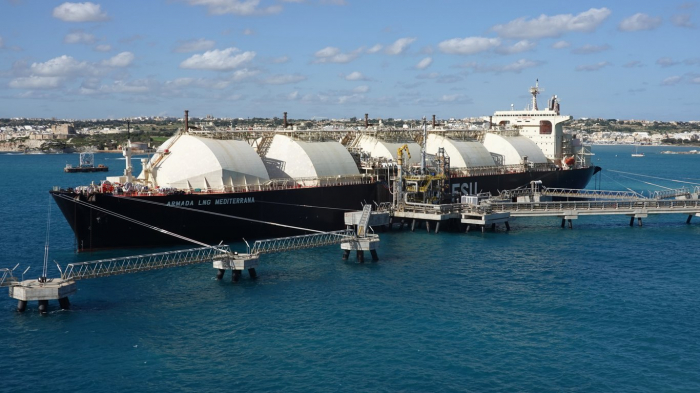
However, this was in 2022, and already in the following year, 2023, the situation on the global natural gas market began to change again due to logistics. Exporting natural gas in its gaseous state requires pipelines, whereas LNG logistics are more diversified. Unlike stationary pipelines, most of the new LNG infrastructure features floating terminals that can be disconnected and moved to different locations as demand shifts.
The World Energy Outlook 2023 report by the International Energy Agency (IEA) forecasts a "wave" of new LNG export projects starting from the middle of this decade. The United States and Qatar are expected to account for up to 60% of the new liquefaction capacity to be commissioned by 2030. The IEA emphasizes that this will "completely change the balance of gas markets".
Another major supplier, Australia, exported 81.3 million tons of LNG in 2022, according to Refinitiv data, accounting for 20.1% of global supplies, surpassing Qatar. Nearly all of Australia's gas is sold on East Asian markets.
As for Russia, there has been a gradual exit of global energy giants such as BP, Equinor, Total, ExxonMobil, and others from joint projects. This trend is partly due to Ukraine's ability, starting from early 2024, to respond to Russia's constant attacks on its energy infrastructure by using drones to target Russia's oil and gas processing industries. Along with sanctions against Russia, this has cast doubt on its LNG projects.
Thus, global giants have begun to reorient towards alternative projects. For example, the Greater Tortue Ahmeyim (GTA) – an offshore project on the maritime border of Mauritania and Senegal.
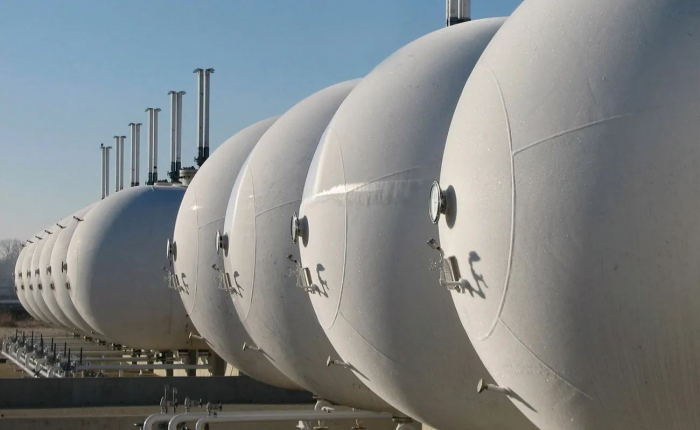
According to the London Stock Exchange Group (LSEG), in October 2023, American LNG producers increased exports to 7.92 million tons, marking the second highest monthly level in history. The record was set in April 2023 (8.01 million tons). The US remains the leading supplier of LNG to the European market.
The US Energy Information Administration (EIA) reports that the US was the world's largest LNG exporter in the first half of 2023, followed by Qatar and Australia.
Regarding the prospects for LNG, they are largely determined by political factors, namely Russia's war against Ukraine. After imposing sanctions on Russia and giving up on Russian pipeline gas, Europe had two feasible solutions that could be implemented quickly – increasing the share of LNG in the energy mix and reducing gas consumption. This was indeed done. In 2022, a large-scale energy efficiency programme was launched in Europe, with regulations introduced for filling gas storage facilities to a minimum of 90%, and public awareness campaigns on energy efficiency were conducted.
Regarding LNG imports, Bruegel data shows that its share in the overall European gas balance doubled from 20% in 2018-2019 to 40% within just 12 months, from August 2022 to July 2023.
The LNG infrastructure is rapidly developing. According to the Institute for Energy Economics & Financial Analysis, the European LNG network consists of 36 import terminals, 17 new projects under construction or planning, and four expansion projects of existing facilities.
Since February 2022, six new LNG terminals have become operational in Europe, while one in France has been expanded, adding 36.5 billion cubic metres of additional regasification capacity. Another 106 billion cubic metres of new or expanded LNG import capacity is planned by 2030, increasing Europe's capacity to 406 billion cubic metres.
Thus, we are witnessing a shift in the logistical and infrastructural paradigm of gas supply – from pipeline to LNG-oriented. According to the International Energy Agency, the share of LNG in gas demand in the EU has tripled over the past 8-10 years – from an average of 12% in the 2010s to nearly 35% in 2022 (Figure 3). Experts from this agency believe that in the future, this share will resemble that of Russian pipeline gas before Russia's full-scale war against Ukraine.
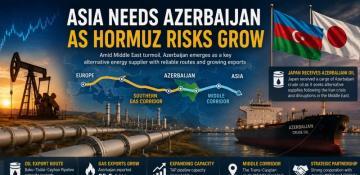
This trend opens opportunities on the European market for other suppliers, primarily Azerbaijan. Azerbaijan began selling natural gas to Europe in 2020 and agreed with the European Commission in 2022 to increase supply volumes to 20 billion cubic metres over the next five years. After Russia's invasion of Ukraine in February 2022, more than 10 European countries turned to Azerbaijan for gas supplies.
In many ways, Europe sees Azerbaijan as a country capable of replacing Russian supplies and helping individual European countries break free from their dependence on Russian natural gas. For example, a newly-commissioned pipeline to Serbia can supply up to 60% of Serbia's gas needs with Azerbaijani gas, which previously relied on Russian supplies. Romania also stated at the end of 2023 that it was ready to supply gas from Azerbaijan to Moldova or other countries in the region during the cold season.
Before the full-scale war, Ukraine received LNG supplies from Azerbaijan, but these stopped due to security risks. However, Romania's proposal could resume these supplies.
In summary, LNG is becoming an important tool for globalizing international natural gas trade. Due to the partial recession and the negative impacts of the energy crisis, EU countries have taken a course to secure steady supplies through long-term contracts. The development of LNG infrastructure under long-term contracts integrates regional markets into the global market.
Today, everyone understands the value of LNG and knows that this is a long-term "game". Therefore, they are trying to secure this resource for decades by signing long-term contracts. We are witnessing a global race for leadership on the LNG market. In certain segments, leaders have already been identified. In exports, the leaders are the US and Gulf oil and gas countries, as well as Australia. In imports, the leaders are Japan, the EU, and China.
As for Russia, it is evident that it will try to replace its pipeline gas with LNG supplies as quickly as possible. Even concessions are being made to Gazprom by prioritizing private Russian companies on the list of priority "megaprojects". However, it is important not to forget Russia's weaknesses – sanctions from both the US and the EU.
(If you possess specialized knowledge and wish to contribute, please reach out to us at opinions@news.az).


Similar news