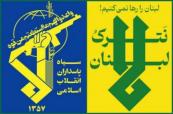
Heroes of the sky: Azerbaijan will never forget them


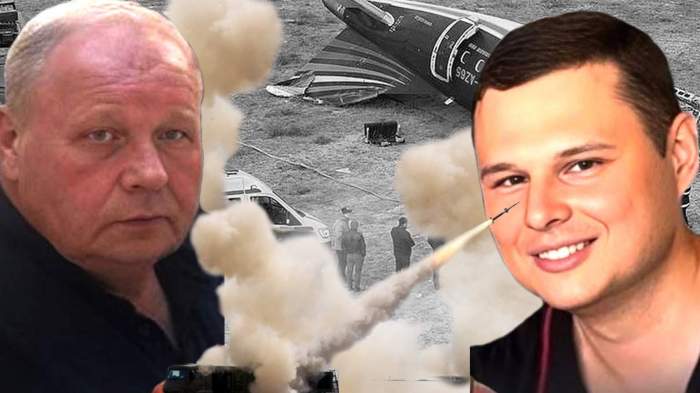
Photo: News.Az
By Tural Heybatov
As new details emerge regarding the crash of an AZAL aircraft, experts are increasingly describing the crew as heroes. The pilots and flight attendants worked tirelessly until the very last moment to save lives.
During the crash, three of the five crew members aboard the Embraer-190 lost their lives: Captain Igor Kshnyakin, co-pilot Aleksandr Kalyaninov, and flight attendant Hokuma Aliyeva.Captain Igor Kshnyakin had over 15,000 flight hours under his belt, including 11,200 hours as captain. Friends and colleagues remember him as a talented pilot, and his loss is seen as a significant blow to Azerbaijan’s aviation sector. Although there is no publicly available information about Aleksandr Kalyaninov's flight hours, his actions during the incident demonstrated extraordinary resilience and dedication, despite being younger and less experienced than his senior colleague. The voice of flight attendant Hokuma Aliyeva, who consoled passengers during the most difficult moments, will forever remain in memory. Reports indicate that Hokuma had planned to leave aviation and pursue her career as a lawyer, but fate had other plans.
The Azerbaijani crew exhibited exceptional professionalism and heroism , managing to save dozens of lives in what seemed to be a hopeless situation.
Newsweek recently published an article highlighting the skill and bravery of the AZAL pilots. The report suggests that the aircraft was likely struck by a surface-to-air missile, leading to catastrophic circumstances. In these dire conditions, Captain Igor Kshnyakin and co-pilot Aleksandr Kalyaninov managed to guide the severely damaged plane over the Caspian Sea toward Aktau, Kazakhstan, attempting an emergency landing. Although 38 people, including the pilots, lost their lives, 29 passengers survived—a miracle attributed to the crew’s expertise and composure under extreme pressure.
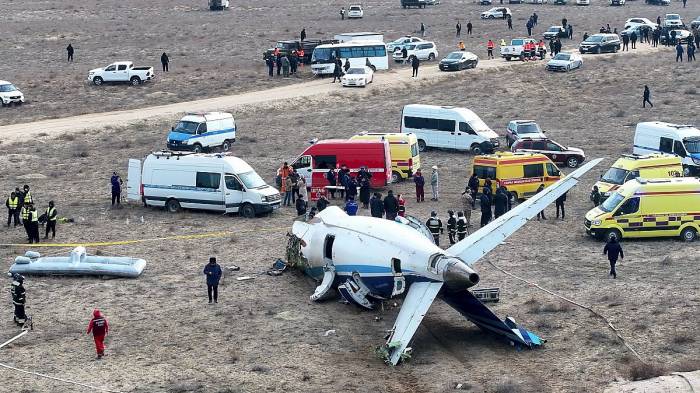
Photo: AP
Experts speculate that the plane likely lost control due to extensive damage to its electrical and hydraulic systems. Flight data from Flightradar24 revealed that the vertical speed of the aircraft fluctuated more than 100 times during the 74 minutes preceding the crash landing.
Dan Bubb, a former pilot and professor at the University of Nevada, Las Vegas, praised the professionalism of the AZAL crew, stating that their efforts prevented an even greater tragedy. “These pilots weren’t just flying a plane—they were fighting for survival until the very last moment,” Newsweek quoted him as saying.
Bubb drew a parallel between the AZAL incident and the 1989 crash of United Airlines Flight 232. In that case, a McDonnell Douglas DC-10 lost all hydraulic systems after an engine explosion but still managed to save 184 of the 296 people on board. The Embraer-190 crew, like the DC-10 pilots, “adapted under extreme pressure,” said Bubb. “Pilots in such scenarios must think creatively and draw on every ounce of their experience. This level of skill and calm is what sets exceptional pilots apart from the rest. What they achieved is nothing short of a miracle,” he concluded.
In Azerbaijan, the crew of Flight 8243 has already become national heroes. Survivors’ families continue to express their gratitude, though, tragically, they cannot do so in person. Flowers are being laid at the homes of Kshnyakin and Kalyaninov, and there are growing calls for the authorities to honor the pilots and flight attendant posthumously for their bravery. These individuals are true heroes of our time. To be a hero, one doesn’t necessarily need to charge onto a battlefield—sometimes it means saving 29 lives in an impossibly challenging situation and leaving an eternal legacy.
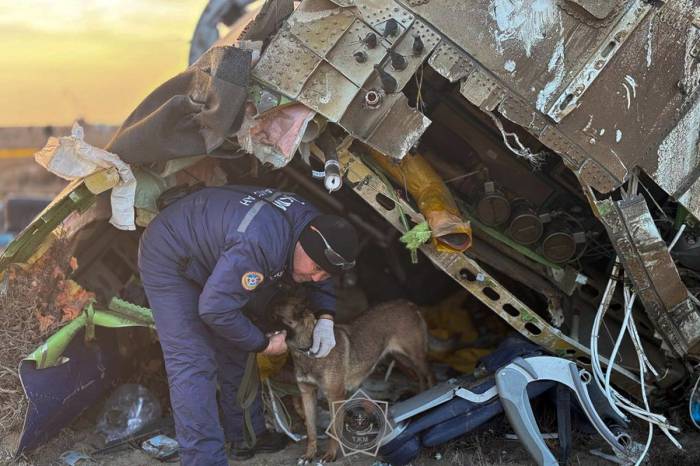
A rescuer searches at the wreckage of the crashed Azerbaijan Airlines plane in Aktau, Kazakhstan, on December 26. Photo: Kazakhstan’s Emergency Ministry Press Service via AP
Experts emphasize the extraordinary nature of the AZAL crew’s actions. Few incidents worldwide have seen so many lives saved under similar circumstances. Unfortunately, our world is rife with conflict, and military technology has become alarmingly advanced.
Consider these examples:
• On July 3, 1988, Iran Air Flight 655 (an Airbus A300) was mistakenly shot down by the U.S. cruiser USS Vincennes over the Persian Gulf. The crew had no chance to react, and all 290 people on board perished.
• On July 27, 1955, El Al Flight 402 was shot down by Bulgarian fighter jets after inadvertently crossing into Bulgarian airspace. Everyone on board died.
• A true miracle occurred with DHL Flight A300 on November 22, 2003. A surface-to-air missile struck the plane over Baghdad, destroying its left wing. Despite severe damage, the crew managed to survive.
• Malaysian Airlines Flight MH17 had no such chance. On July 17, 2014, a Boeing 777 was shot down by a Buk missile system over eastern Ukraine, killing all 298 passengers and crew.
• On September 21, 1993, Transair Georgia Flight 236 sustained damage while attempting to land in Sukhumi during the Georgian-Abkhazian conflict. Despite the crew’s efforts, the damage was too severe, and most passengers died.
• On February 21, 1973, Libyan Arab Airlines Flight 114 was shot down by Israeli fighter jets after straying into Israeli airspace. The crew did everything possible to save the aircraft, and a few passengers survived.
Returning to the AZAL incident, experts agree that the survival of any passengers after such a crash—where the aircraft was torn apart—is nothing short of a miracle crafted by the crew’s hands. The crew did everything in their power to minimize casualties under the most challenging circumstances. The names of the heroic pilots and the brave flight attendant are now etched in gold in Azerbaijan’s aviation history.


Similar news