Iğdır–Nakhchivan railway: A New Silk Road shaping Eurasia’s future


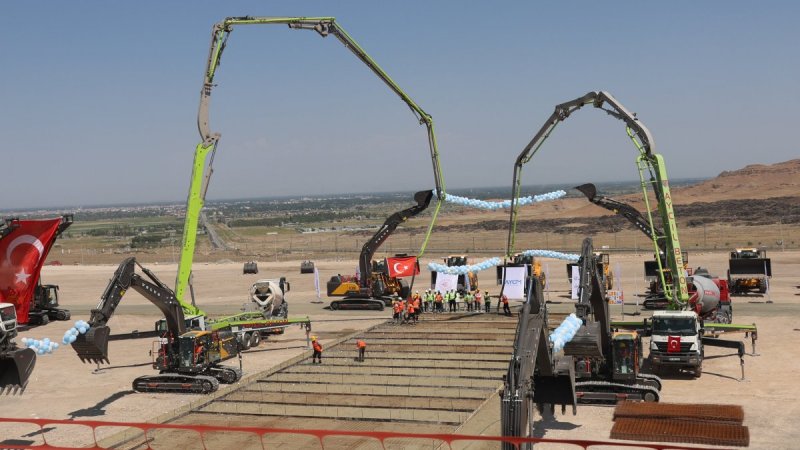
On August 22, the Turkish city of Iğdır witnessed an event that might, at first glance, seem purely technical: the groundbreaking ceremony of the Kars–Iğdır–Aralık–Dilucu railway. Yet this is not merely a railway. It is a geopolitical project that, if completed, could fundamentally reshape the South Caucasus, strengthen the Middle Corridor, and change the fate of Nakhchivan, a region long trapped by isolation.
The announcement of a 224-kilometer line stretching to Nakhchivan’s border comes at a pivotal time. Washington has recently pushed forward with talks on the Zangezur Corridor, reviving debates about connectivity between Azerbaijan and its exclave. Against this backdrop, Türkiye and Azerbaijan are not waiting for others to dictate the terms. They are building the infrastructure themselves, carving a physical and political path toward regional integration.
Türkiye’s Minister of Transport and Infrastructure Abdulkadir Uraloğlu emphasized that the line will carry 5.5 million passengers and 15 million tons of cargo annually, with five tunnels and ten bridges planned. But the numbers only tell part of the story. For both Ankara and Baku, this project is the material embodiment of strategic autonomy: the belief that their future should not depend on Armenia’s political will or Western mediation but on their own capacity to connect east and west.
Nakhchivan has always been an anomaly — geographically cut off from mainland Azerbaijan, blockaded by Armenia since the early 1990s, yet surviving through tenuous links with Iran. For decades, its railways remained functional only in one direction, toward the south.
 Photo: Shutterstock
Now, President Ilham Aliyev envisions transforming Nakhchivan from a geopolitical cul-de-sac into a transit hub. Just a day before the Iğdır ceremony, he announced that a feasibility study for the modernization of Nakhchivan’s railway system has been completed. Once construction begins, the enclave will no longer merely endure isolation but emerge as a vital junction of the Middle Corridor, the trans-Eurasian route linking China with Europe.
This would mark a profound reversal of fortune. For thirty years, Nakhchivan’s railways symbolized the wounds of conflict and blockade. In the near future, they could symbolize connectivity, trade, and independence.
A Silk Road for the 21st Century
The new line has already been dubbed the “Rail Silk Road,” and the metaphor is fitting. Just as ancient caravan routes bypassed political frontiers to connect civilizations, this railway seeks to overcome post-Soviet barriers.
Once operational, the Kars–Nakhchivan route will integrate seamlessly with the Baku–Tbilisi–Kars (BTK) railway, inaugurated in 2017. That line, too, was initially underestimated. Critics doubted its financial viability and geopolitical significance. Yet today BTK has become a backbone of east–west trade, offering a faster alternative to the northern Russian routes and the southern maritime lanes through the Suez Canal.
The Iğdır–Nakhchivan project can be seen as BTK’s younger sibling — smaller in scale but potentially greater in symbolism. If BTK proved that the South Caucasus could matter to global trade, the Nakhchivan line proves that no enclave is too small to be reimagined as a bridge.
The railway also fits neatly into Türkiye’s broader ambitions. Ankara has repeatedly declared its goal of becoming a “logistics superpower.” The strategy is clear: connect its ports, expand its railway capacity, and position Türkiye as the indispensable bridge between Europe, Central Asia, and the Middle East.
This ambition has geopolitical consequences. By linking its territory directly to Nakhchivan and, through it, to mainland Azerbaijan, Türkiye strengthens not only bilateral ties but its role in the Turkic world. From Baku to Astana, from Tashkent to Bishkek, the vision of a connected Turkic corridor gains new credibility when steel tracks replace diplomatic promises.
Yet one cannot discuss this project without mentioning Armenia — or rather, its absence. The original vision of the Zangezur Corridor included a direct link through Armenian territory, opening routes for Azerbaijan to Nakhchivan. But Yerevan’s reluctance and geopolitical balancing have delayed progress.
For Ankara and Baku, the lesson is obvious: waiting for Armenia is a strategic dead end. By pressing ahead with the Iğdır–Nakhchivan line, they reduce dependence on Armenia while simultaneously increasing the cost for Yerevan of remaining outside regional connectivity schemes.
Ironically, what was once Armenia’s leverage — its geography — may become its liability. If Nakhchivan can connect east and west without Yerevan, then Armenia risks being left isolated from the very corridors that are redefining Eurasia.
It is worth recalling that the idea of linking Iğdır and Nakhchivan by rail is not new. As early as 2012, then-Prime Minister Recep Tayyip Erdoğan declared that such a line would “directly link Türkiye and Azerbaijan.” At the time, the idea seemed distant, even utopian.
The turning point came after the Second Karabakh War in 2020. The Trilateral Statement, which obliged Armenia to unblock regional communications, signaled a new era. Within two days, Türkiye announced its intention to extend railways to the Azerbaijani border. In 2021, Presidents Aliyev and Erdoğan signed a memorandum declaring the project historic. Now, in 2024, ground has finally been broken.
This timeline demonstrates a broader truth: in Eurasia, strategic projects often take years of gestation but, once conditions align, move with remarkable speed.
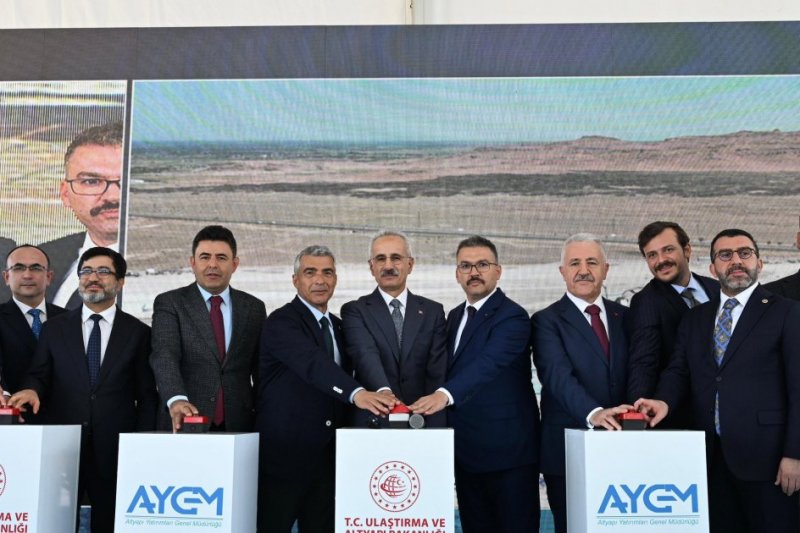 Türkiye has begun laying the groundwork for the Kars-Igdir-Aralik-Dilucu Railway Line in the country's southeast, which will connect the country to the Zangezur Corridor. Photo: AZERTAC
The strategic reach of this project goes far beyond Nakhchivan. By becoming part of the Middle Corridor, the railway will give Azerbaijan and Türkiye new levers in east–west trade. Goods from China could pass through Central Asia, cross the Caspian, and move through Baku and Nakhchivan to Türkiye and Europe — bypassing both Russia and the congested Suez Canal.
Moreover, the line opens potential southward links to the Gulf states. If Nakhchivan becomes a node on this network, it could channel trade flows not just between Asia and Europe but also north–south, enhancing Azerbaijan’s role in corridors like the International North–South Transport Corridor (INSTC).
Sometimes geopolitics is best expressed not in grand strategy but in small numbers. When completed, the journey from Kars to the Azerbaijani border at Dilucu will take just 85 minutes. In less than an hour and a half, trains will cross a distance that once symbolized isolation. This is more than convenience. It is a redefinition of space, time, and possibility.
The Iğdır–Nakhchivan railway is more than steel and concrete. It is a story about resilience, ambition, and the reordering of a region that has too often been defined by conflict. It tells us that geography can be reimagined, that isolation can be turned into opportunity, and that small regions like Nakhchivan can play outsized roles in global trade.
President Aliyev called the project historic in 2021. Today, as construction begins, his words are proving prophetic. The railway may not solve all the South Caucasus’ conflicts. But it will do something perhaps equally important: it will create facts on the ground — rails that no political speech can erase.
The Silk Road of the 21st century is being laid not in Beijing or Brussels, but in Iğdır and Nakhchivan. And that is where the future of Eurasia may be quietly decided.
By Tural Heybatov


Similar news