India turns its back on U.S. pressure, strengthens Moscow link


Russia–India relations, once again thrust into the global spotlight following President Vladimir Putin’s two-day visit to New Delhi, are emerging as a key pillar in the architecture of an evolving multipolar world.
Against the backdrop of mounting U.S. pressure, new trade restrictions, and intensifying competition among major powers, Moscow and New Delhi are demonstrating their capacity to pursue independent foreign policy lines, treating their partnership as part of a broader strategy of strategic autonomy. This strategy reflects the determination of major powers to define their own roles in the international system and to resist external attempts to limit their freedom of action.
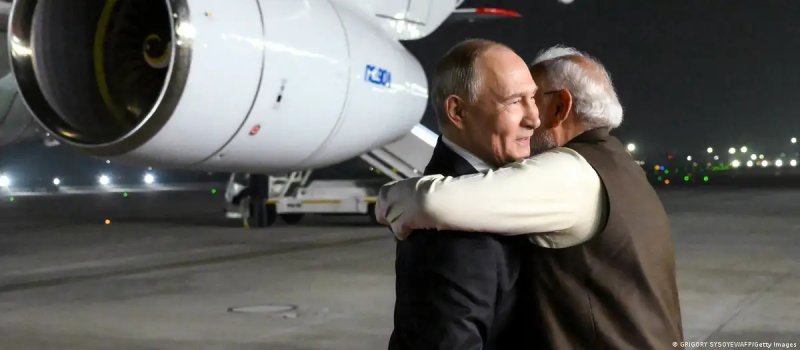
Putin’s visit itself carries symbolic significance: it is his first trip to India since the start of the conflict in Ukraine. At a time when Western governments attempt to portray Russia as isolated, a high-level meeting with Indian Prime Minister Narendra Modi indicates that Moscow maintains strong ties with major global actors. For New Delhi, the visit signals an equally important message: India does not intend to operate within the logic of rigid geopolitical blocs and will act strictly on the basis of its own national interests.
GRIGORY SYSOYEV/AFP/Getty Images
Both sides continue to emphasize that Russia and India share a “special and privileged strategic partnership.” This is not mere diplomatic rhetoric. It reflects the depth of historical relations that began soon after India gained independence and strengthened throughout the Cold War. The Soviet Union provided India with diplomatic support, industrial assistance, and critical military technology—establishing a level of trust that endures today. This foundation allows the two states to preserve and expand cooperation even under Western pressure aimed at redirecting India’s foreign policy.
Energy has become one of the central components of contemporary bilateral relations. Russia now supplies more than 35% of India’s imported oil, compared with just 2% prior to 2022. This dramatic shift reflects New Delhi’s pragmatic approach: buying Russian oil at favorable prices has strengthened India’s energy security, prevented domestic inflation from rising, and stabilized its broader economic trajectory. Although some Indian refiners have diversified their sources in response to targeted U.S. sanctions, the general strategic course remains unchanged: India will not abandon Russian oil as long as it is economically beneficial.
Defense cooperation remains equally vital. Russia is still India’s key military supplier, despite Washington’s efforts to expand its own defense footprint in the country. Talks about potential contracts—from S-400 air defense systems to fifth-generation Su-57 fighters—show that India continues to regard Russian technology as indispensable for its long-term security. The joint production of the Su-30MKI, collaboration on missile systems, and Russia’s participation in the development of India’s nuclear-powered submarines demonstrate that defense ties represent an integrated technological ecosystem rather than one-off purchases.
Yet the significance of the Russia–India relationship extends far beyond energy and defense. It plays an important role in shaping Eurasian geopolitics. For India, ties with Russia serve as an instrument of balancing—allowing New Delhi to manage its relations with China, maintain dialogue with the United States, and assert itself as an autonomous center of power in an increasingly multipolar order. Moscow, meanwhile, sees India as a necessary counterweight in multilateral formats such as BRICS and the Shanghai Cooperation Organisation (SCO). This allows Russia to strengthen its influence in Asia and ensure that China does not dominate the regional security architecture uncontested.
This is where the essence of strategic autonomy becomes clear. India seeks to avoid rigid alliances and preserve maximum flexibility—cooperating with the United States in advanced technologies and defense while avoiding any actions that would undermine relations with Russia; participating in QUAD as a mechanism to balance China, yet simultaneously engaging in SCO where both Moscow and Beijing play leading roles. Washington may pressure India to curtail its ties with Moscow, but Indian diplomacy views these relationships as complementary rather than mutually exclusive. Moreover, the unpredictability of U.S. policy—especially under President Donald Trump—reinforces New Delhi’s determination to diversify its partnerships and avoid strategic dependence on any single power.
Another important factor distinguishing Russia from the West is Moscow’s consistent refusal to interfere in India’s internal affairs or attach political conditions to bilateral cooperation. This makes relations with Russia more predictable and comfortable for the Indian leadership, which places a high value on sovereignty and independent decision-making.
At the same time, India has no intention of distancing itself from the United States. New Delhi continues negotiations on major trade agreements, promotes a landmark deal between GE Aerospace and Hindustan Aeronautics Limited, and expands military-technical engagement with Washington. However, India clearly signals that strengthening ties with the United States will not come at the expense of its relationship with Russia. Its foreign policy is not based on an “either–or” approach but on maximizing strategic advantage across multiple partnerships.
In this context, Putin’s visit confirms that India is conducting an independent foreign policy and will not join attempts to isolate Russia. The visit strengthens New Delhi’s role as a sovereign global actor capable of making decisions rooted in national interests rather than external pressure.
For Russia, the trip carries an equally important message. Despite Western sanctions and efforts to weaken Russian strategic influence, Moscow maintains strong, multidimensional partnerships with major Asian powers. India is more than an economic market; it is a geopolitical ally whose participation in Eurasian initiatives helps Russia maintain a balance in its relations with China and keep its place in the broader Asian power configuration.
Thus, Putin’s visit to India far exceeds the boundaries of routine diplomacy. It demonstrates how two countries with a long history of trust are adapting their partnership to new geopolitical realities. Moscow and New Delhi are reinforcing a relationship that resists external pressure and is built upon shared strategic interests, mutual respect, and pragmatic assessments of the international environment.
Their cooperation reflects a broader trend in global politics: the transition to a multipolar world in which states pursue independent strategies instead of aligning with dominant blocs. India underscores that its foreign policy will not be dictated by others, while Russia affirms that it continues to play a significant role among key Asian partners. In this sense, the visit serves as evidence of how both countries envision a future international order—one defined not by confrontation, but by sovereign choice and strategic autonomy.


Similar news