Iran: Is a change of course possible?


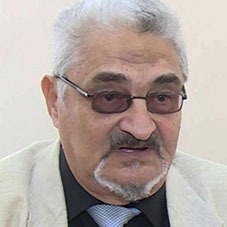
Editor's note: Moses Becker is a special commentator on political issues for News.Az, a PhD in political science and an expert on interethnic and interreligious relations. The article expresses the personal opinion of the author and may not coincide with the view of News.Az.
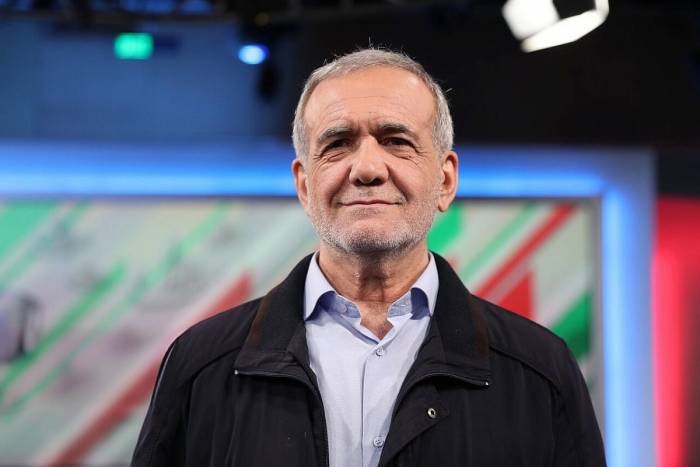
On August 21, the Majlis of the Islamic Republic of Iran expressed its vote of confidence in the government presented by the newly elected President Masoud Pezeshkian. The cabinet was formed based on a consensus among all branches of Iran's political system. The reformist faction of the government has developed a series of long-overdue reforms aimed at expanding democratic principles. In foreign policy, the reformists advocate for establishing relations with most countries worldwide, especially Western Europe and, if possible, the United States.President Pezeshkian has openly acknowledged that he coordinated the appointment of ministers with the Supreme Leader. It is clear that Khamenei did not allow reformists to gain power without a strategic reason. Iran's intelligence services informed him that a significant portion of Iranians are dissatisfied with economic hardships and the lack of social freedoms, which could lead to an election boycott. If reformists were excluded, voter turnout could drop to around 13%, threatening the regime's stability. This prospect forced Khamenei to back Masoud Pezeshkian to preserve the Islamic Republic amid internal challenges and increased tensions with the West and Israel. This move aims to maintain the power of the religious establishment, ensure continuity, and secure the regime's future.
In addition to economic, social, and political issues, the country faces increasing centrifugal forces. Therefore, electing a president with Azerbaijani and Kurdish heritage signals to ethnic and religious minorities that the government understands their needs and is willing to address emerging issues.
The need for reforms is driven by several factors: rampant inflation, youth unemployment, dependence on oil exports, nationalization of the economy undermining private business interests, inefficient management of state infrastructure, mass emigration of qualified professionals, shortages of electricity and water resources, stifling US sanctions, a foreign currency deficit, and the devaluation of the rial. These factors necessitate a shift in both domestic and foreign policy, as the country grapples with challenges in its relations with several neighboring, predominantly Muslim countries.
Iran's new Foreign Minister, Abbas Araghchi, outlined the main directions of Iran's future foreign policy in his initial statements. He identified China, Russia, Africa, Latin America, and East Asia, where Japan holds a key position, as priority areas. Regarding the ongoing tension with the West, the minister noted that it should not be a permanent situation. According to him, Europe could become a priority if it changes its "hostile behavior." Araghchi immediately began working on this issue after taking office, conducting a series of phone calls with the foreign ministers of major European countries and the EU's High Representative for Foreign Affairs, Josep Borrell. The Iranian minister expressed readiness to develop relations with the EU based on mutual respect, while Borrell, in turn, expressed hope for the expansion of political dialogue and consultations between Iran and the EU.
During a phone call with Norwegian Prime Minister Jonas Gahr Støre, Iranian President Masoud Pezeshkian also stated that establishing peace and friendship, preventing conflicts, and expanding international relations are the main goals of his administration's foreign policy. Relations with the United States, according to Araghchi, will be based on the principle of "managing tension," which implies efforts to ease economic pressure and reduce sanctions.
A notable development was the statement by Mehdi Ghazanfari, Chairman of Iran's National Development Fund, on the feasibility of restoring US consular services at the site of the former US embassy in Tehran—an initial step toward diplomatic recognition. Another significant event was the appointment of Mohammad Javad Zarif, a proponent of dialogue with the US, as Iran's Vice President for Strategic Affairs. Although he resigned ten days later due to disagreements over Iran's involvement in the Palestinian issue, the conflict was soon resolved.
The reaction of the Pezeshkian administration to the assassination of Hamas leader Ismail Haniyeh by Israeli intelligence also aligns with Iran's new foreign policy. While this act was condemned by the Iranian government and Foreign Minister Araghchi repeatedly asserted Iran's right to retaliate, Tehran has so far refrained from a military strike against Israel. This restraint may be due to several factors, including the lack of support from the Organization of Islamic Cooperation, convened in Jeddah, and the absence of a response to Ayatollah Ali Khamenei's call for Islamic countries to sever political ties with Israel.
It remains unclear how Iran will respond to the assassination of Ismail Haniyeh, but it is evident that Tehran is not eager for war with Israel, especially after Israel's air force launched a preemptive strike on Hezbollah's rocket installations. Pezeshkian's government is focused on reaching agreements with Europe and, eventually, with the United States. Initiating a war with Israel would mean abandoning these plans and, most importantly, destroying any hopes of easing or lifting economic sanctions on Iran.
Moreover, Iran's leadership has concluded that the country no longer has the resources to support the Assad regime in Syria, maintain Hezbollah, and fund other proxy groups across the region. These activities, in addition to their financial burden, increase tensions between Iran and its neighboring states. Pezeshkian's government represents the last opportunity to prolong the regime's survival, with its leaders keenly aware of what awaits them in the event of a popular uprising. The collapse of the Shah's regime is still a vivid memory.
(If you possess specialized knowledge and wish to contribute, please reach out to us at opinions@news.az).


Similar news