Istisu reclaims its former glory and brings revenue to Azerbaijan


By Tural Heybatov
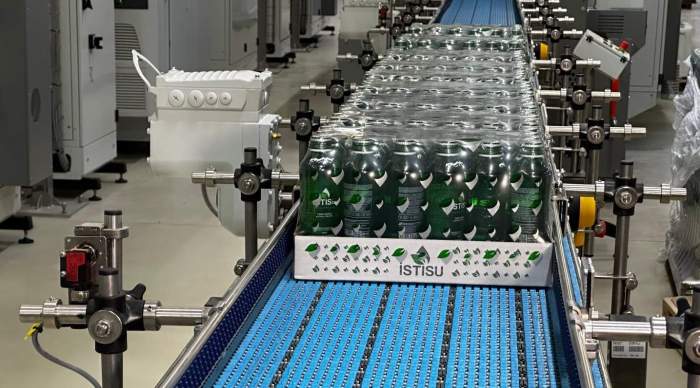
In October, the first batch of Istisu mineral water is set to be exported. The factory, located in the Kalbajar district, began production in early September, and the product is already in high demand across Azerbaijan. Now, it's time to introduce it to international markets.Istisu is currently being produced as table water. The factory, restored after Kalbajar’s liberation, is equipped with state-of-the-art technology, allowing the water to be purified from heavy metals and producing up to 100 million bottles of mineral water per year. Thanks to these advancements, high-quality mineral water can now be produced while preserving its natural properties. Back in Soviet times, such technologies were not available, and Istisu was seen primarily as a medicinal product prescribed by doctors. Nowadays, this much-loved mineral water can be found in almost any store in Baku.
The use of Istisu’s mineral waters for medicinal purposes in Azerbaijan dates back to the 12th century. The history of balneology in Azerbaijan began in the 19th century when D. Ilyin’s book "Lankaran Mineral Waters" was published in Baku in 1866. In 1925, the Ministry of Health of the Azerbaijan SSR established a department for resorts, and in 1927, the Istisu resort was officially opened. By 1928, the towns of Khankendi and Shusha were recognized as health resorts. In 1926, the Supreme Council of the Azerbaijan SSR passed a law on resort and medical construction near Istisu's water resources. A sanatorium was built in 1928 near the settlement that gave its name to the mineral springs, turning it into a resort of all-Union significance. In 1951, a scientific expedition led by Professor Mirali Gashgay was organized to study the healing properties of Istisu, marking a new phase in the resort's development.
Kalbajar’s water naturally emerges at a temperature above 60°C, which helps minerals dissolve more easily. Experts believe that Istisu is unique due to its composition of beneficial elements, which differ from other well-known mineral waters. Additionally, Istisu's waters are similar in composition to those of the famous Karlovy Vary spa . It is believed that consuming Istisu water provides a person with the daily required intake of essential minerals. The healing properties of this water were known centuries before the creation of the all-Union resort. The Istisu valley is rich in hot springs that surfaced after the earthquake of 1138. Treatments at the resort were prescribed for diseases of the musculoskeletal system, cardiovascular and nervous systems, liver, digestive tract, kidneys, and metabolic disorders.
Production of Istisu mineral water began in 1976. However, after Armenia's occupation of the Kalbajar district, the factory was shut down. On June 26, 2022, with the participation of the President of Azerbaijan, the foundation stone of the new plant was laid, and on September 2, 2024, the factory was officially launched.
The Istisu mineral springs consist of 12 active springs. Their waters are notable for their gas and chemical composition, high temperature, and significant natural reserves. Experts estimate that around 3.963 billion liters of water flow annually from the local springs. During Soviet times, the factory could bottle 800,000 liters of mineral water per day. This highlights the immense potential of this region, both for expanding the spa resort and increasing the production of healing water.
Once upon a time, the Istisu resort, with its unique hot springs, was famous throughout the Soviet Union. People came from all corners of the country and abroad to heal and relax here. In Soviet times, sanatoriums No. 1 and 2 operated in Istisu, accommodating up to 50,000 people annually. It was designed as a resort of all-Union significance, but its reputation for healing spread beyond the Soviet borders, attracting foreign visitors seeking wellness.
During the years of Armenian occupation, the resort was destroyed, the springs polluted, and the pipelines rusted. Istisu was renamed "Jermadzur" and included in Armenia's list of "thermal springs." The Armenian side made several attempts to restore the sanatorium and sought funds for the project. However, due to the reference to Kalbajar’s occupation in the 1993 UN Security Council resolution, it was impossible to legitimize the resort and turn it into a tourist hub, which hindered the project’s realization. After Kalbajar’s liberation, Azerbaijan found ruins and rusty pipes where the once grand and meticulously built Soviet-era complex stood.
In a few years, the sanatorium will mark its 100th anniversary. It will celebrate this milestone in a modern, revamped form and once again serve the public. The new Istisu resort will cover 34 hectares and accommodate up to 300 people daily.
In conclusion, experts estimate that 33 percent of all the republic’s mineral water reserves are located in the Kalbajar and Lachin districts. Most of these sources—58 percent—are in Kalbajar alone. In the Tartar River basin within this district, there are around 400 mineral water deposits. Kalbajar is unique in every respect, and now its natural wealth will once again benefit the people.


Similar news