Joseph Shumunov: U.S.–Azerbaijan relations enter a new strategic phase - INTERVIEW


.png)

Global power shifts and rising rivalries are reshaping the international order, with the United States, China, and emerging regional actors playing pivotal roles. The South Caucasus, at the crossroads of East and West, is also directly affected by these dynamics.
News.Az spoke with Joseph Shumunov, Non-Resident Fellow at the Topchubashov Center, Research Assistant at the Turan Center, and MA Candidate in International Relations, to discuss the transition toward multipolarity, the future of U.S.–Azerbaijan relations, the war in Ukraine, and the challenges and opportunities facing the South Caucasus.
- How do you assess the current processes shaping the formation of a multipolar world? In your opinion, what roles do the United States and China play in this context?
Source: Stimson
- The formation of a multipolar world is still in transition, rather than fully realized, given the enduring power gap between the United States and its competitors. China plays the central role as the main driver of multipolarity, building alternative institutions such as BRICS and the SCO and promoting a civilizationally diverse and multilateral order. The United States, by contrast, resists this shift, seeking to preserve its unipolar primacy through alliances, economic dominance in the Western Hemisphere, and efforts to constrain rivals. The processes shaping this formation include the rise of non-Western institutions, the assertion of monetary and strategic sovereignty by emerging powers, and the gradual erosion of U.S. hegemony as Russia, China, and India consolidate spheres of influence.
- The United States and Azerbaijan have a long history of diplomatic relations. How would you evaluate the current state of these ties and their future prospects?

Source: Trend
- The United States and Azerbaijan have maintained diplomatic relations for decades, but their partnership remained limited prior to 2020. Early developments such as the Baku–Tbilisi–Ceyhan (BTC) pipeline and tentative efforts to link Baku with Euro-Atlantic institutions reflected economic incentives rather than a fully developed relationship. Since 2020, however, ties have deepened considerably. This shift reflects both Washington’s search for reliable Western-oriented partners in Eurasia and Azerbaijan’s growing regional influence in energy, connectivity, and military modernization. Looking ahead, prospects appear strong—particularly with initiatives like the Trans-Caspian International Transport Route (TRIPP Corridor). The long-term success of this relationship will depend less on framing Azerbaijan as a prospective Euro-Atlantic member and more on recognizing its sovereignty and value as a strategic crossroads state.
- Why, in your opinion, is Trump unable to stop the war in Ukraine?
Source: Anadolu
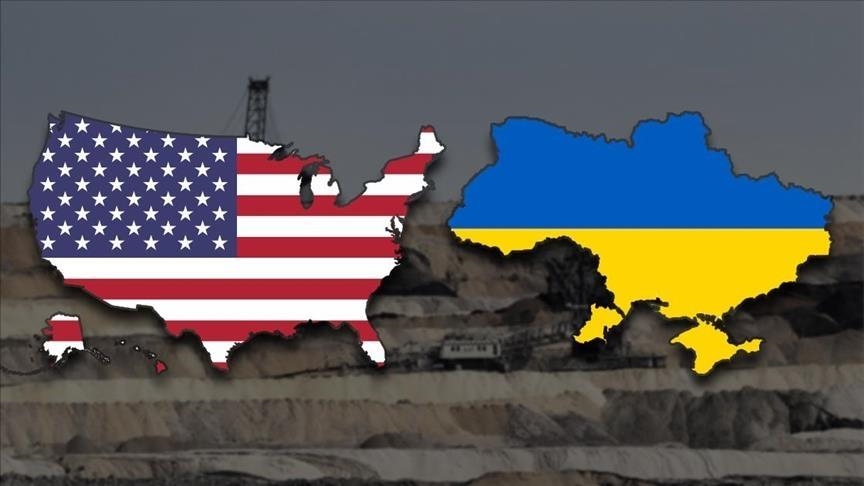
- President Trump’s meeting with his Russian counterpart at the Alaska Summit was a notable gesture of outreach, given the deterioration of U.S.–Russia relations over the past decade. However, he is unable to stop the war in Ukraine because the fundamental terms demanded by Moscow are politically and strategically unacceptable for Washington or Kyiv. Russia’s conditions for immediate peace—Ukraine ceding the Donbas, renouncing NATO membership, and adopting permanent neutrality without Western military presence—directly contradict U.S. and Ukrainian interests. Any agreement along those lines would undermine Ukrainian sovereignty, NATO’s credibility, and the US’s hegemonic status, making it nearly impossible for Trump to broker or enforce such a settlement.
- What challenges, in your view, does the South Caucasus face amid the rivalry of major powers?

Source: Cnet
- The South Caucasus faces enduring challenges as a geopolitical crossroads caught between the competing interests of Russia, China, and the West, as well as the regional ambitions of Türkiye and Iran. The core problem is twofold. First, the region must reconcile its dual role as both a corridor of connectivity—linking Europe and Asia through energy and transport—and a zone of division where rival powers project influence. Second, each state confronts difficult alignment choices: Armenia is drifting toward the West in response to disillusionment with Moscow, Georgia’s government has taken a more ambiguous posture that leans toward accommodation with Russia, and Azerbaijan continues to hedge between all sides while emphasizing its sovereignty and connectivity. As regional conflicts are resolved—particularly the Nagorno-Karabakh issue with the involvement of major powers—it will be crucial for South Caucasus states to avoid overdependence on external patrons, which could provoke backlash from Russia or Iran and undermine long-term stability.
- What steps should the international community take to ensure long-term stability and peace in the South Caucasus?

Source: THEJ.CA
- Long-term stability and peace in the South Caucasus depend on embedding the region as deeply as possible into Eurasian and global economic networks. If the South Caucasus becomes indispensable to trade and connectivity, any disruption—whether internal or external—would carry costs not only for the region but also for major outside powers, making them stakeholders in its security rather than occasional, politically convenient interveners. In this context, initiatives such as the Middle Corridor, the North–South Corridor, and the potential TRIPP corridor are essential to transforming the South Caucasus into a critical lifeline of global connectivity, even amid broader trends of retrenchment from globalization. Ensuring that each South Caucasus state serves as a vital link between East and West is the most effective path toward durable stability.


Similar news