Morocco’s youth protests: Between social anger and political uncertainty


.png)
Editor’s note: Faig Mahmudov is a journalist based in Azerbaijan. The views expressed are the author’s own and do not necessarily reflect those of News.Az.
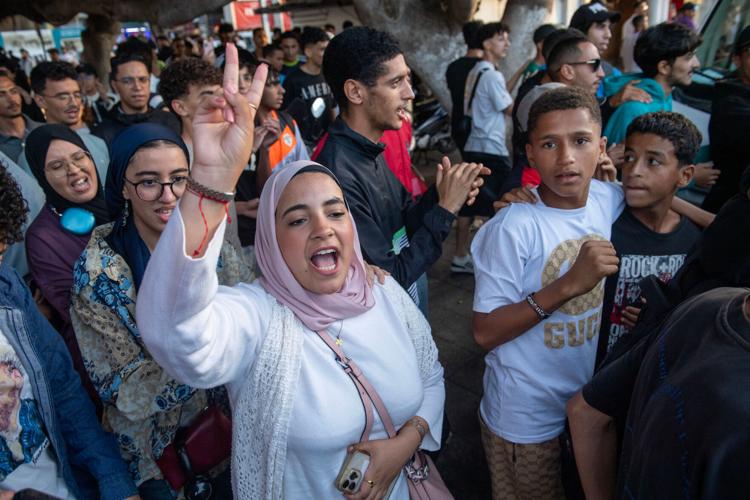
Morocco is witnessing its most serious wave of unrest in years. What began as peaceful demonstrations led by young citizens demanding better public services has evolved into violent confrontations with security forces, leaving casualties and raising questions about the future of stability in the kingdom. The movement, widely referred to as “GenZ 212,” has no formal leadership yet has rapidly gained traction through social media, symbolizing the frustrations of a generation that feels excluded from Morocco’s economic progress.
The unrest not only highlights domestic grievances but also comes at a time when Morocco is seeking to present itself as a rising regional power, investing heavily in infrastructure projects and preparing to host major sporting events, including the Africa Cup of Nations in 2025 and the 2030 FIFA World Cup. The protests thus place the government in a difficult position: balancing social demands with its ambition to project stability and modernity abroad.
Source: AP News
The roots of the demonstrations lie in longstanding social and economic challenges. For years, Moroccan youth have expressed frustration over limited job opportunities, underfunded schools, and weak healthcare services. Official unemployment figures show high rates among educated young people, many of whom graduate without viable prospects. At the same time, Morocco has poured billions of dollars into infrastructure projects — stadiums, high-speed rail lines, desalination plants — designed to modernize the economy and boost its international profile. While these projects are intended to attract investment and tourism, many young Moroccans feel they serve global audiences rather than the daily needs of citizens. This sense of imbalance has become a rallying cry for the GenZ 212 movement. Regional disparities also play a role. Wealthier coastal cities such as Casablanca and Rabat have seen economic growth, while rural and southern regions often lag behind, creating a perception of inequality that fuels resentment.
The first demonstrations began peacefully, with students and young workers gathering to demand better funding for schools and hospitals. But as the movement spread across cities such as Salé, Agadir, Oujda, Tiznit, and Inezgane, the tone shifted. Protesters began blocking roads, burning tires, and targeting government buildings. According to official figures, more than 260 security officers and at least 23 civilians have been injured, and around 400 people have been arrested. In Lqliaa near Agadir, two demonstrators were killed when security forces reportedly opened fire as crowds tried to storm a police station.

Source: Reuters
The escalation reflects both the anger of protesters and the challenges faced by security forces in containing unrest that spreads through decentralized online networks. The GenZ 212 movement relies heavily on TikTok, Instagram, and Discord to organize gatherings, share videos, and rally support. Unlike traditional political movements, it lacks central leadership, making negotiations with the state more complicated.
Morocco’s government has tried to strike a balance between acknowledging legitimate grievances and maintaining order. The Interior Ministry has emphasized the right to peaceful protest but insists that acts of vandalism, arson, and attacks on police will be prosecuted. Officials describe the approach as “measured restraint,” though the use of live ammunition has drawn concern domestically and internationally. Authorities also stress that the government is listening to young people’s demands and will respond “responsibly.” However, no clear roadmap or reform package has yet been presented. Critics argue that without concrete measures, promises of dialogue may not satisfy an increasingly frustrated population.

Source: Hespress
The protests have unfolded at a delicate moment for Morocco’s international strategy. The country is preparing to host the Africa Cup of Nations in 2025, which is seen as a rehearsal for the much larger 2030 FIFA World Cup, co-hosted with Spain and Portugal. Billions are being spent on new stadiums, transport upgrades, and hospitality projects. Morocco has also positioned itself as a hub for renewable energy, particularly solar and wind, as well as a key player in migration diplomacy with Europe. The image of a stable and modernizing state is central to this strategy. Prolonged domestic unrest, especially if violent, risks undermining investor confidence and damaging Morocco’s reputation abroad. Ironically, the same projects meant to showcase Morocco’s progress are among the protesters’ main grievances. For many, investments in stadiums and international events feel disconnected from the urgent need for better schools, hospitals, and jobs.
The protests come against a backdrop of wider challenges in North Africa. Neighboring Algeria faces its own economic pressures, while Tunisia continues to grapple with political instability. For Morocco, domestic unrest could weaken its ability to assert regional leadership and complicate relationships with partners in Europe, the Gulf, and Africa. Internationally, Morocco’s Western allies, particularly the EU, view the kingdom as a vital partner in controlling migration, combating terrorism, and ensuring energy security. Any significant destabilization would have ripple effects beyond Morocco’s borders.
The greatest danger for Morocco lies in the protests spiraling beyond state control. If more deaths occur, public anger could intensify, leading to larger demonstrations and harsher government crackdowns. The lack of a central leadership structure makes de-escalation harder, as there is no single voice representing the movement. At the same time, the protests expose deeper fractures between the state and a generation that communicates, organizes, and expresses itself largely outside official structures. The challenge for authorities is not only to restore calm but to bridge this growing gap.
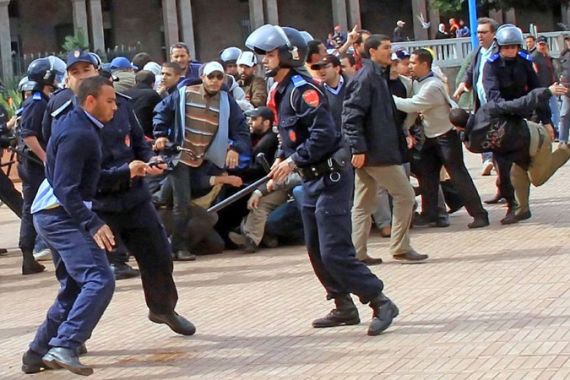
Source: Aljazeera
There are several possible scenarios. One option is dialogue and concessions: the government could increase spending on education, healthcare, and job creation, calming tensions while maintaining political stability. Another possibility is a security clampdown, in which authorities adopt a harsher response, leading to temporary calm but risking long-term resentment and reputational damage. A third scenario is a hybrid approach: limited reforms combined with stronger policing, which might contain unrest without resolving underlying issues.
The protests in Morocco are not simply about anger over stadiums or spending priorities. They represent a broader crisis of confidence between the state and its younger citizens. For the first time in years, a generation that grew up connected online is mobilizing on a large scale, outside traditional political frameworks. How the government responds will determine whether Morocco can channel this energy into constructive reform or whether it risks deeper instability. The coming weeks will be decisive: either Morocco adapts to the demands of its youth, or it faces the prospect of repeated unrest that could overshadow its international ambitions. For now, Morocco stands at a crossroads — between the promise of modernization and the pressures of social justice.
(If you possess specialized knowledge and wish to contribute, please reach out to us at opinions@news.az).


Similar news