Multifaceted West has finally unmasked itself: What Kursk has reminded us of


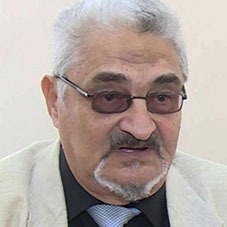
Editor's note: Moses Becker is a special commentator on political issues for News.Az, a PhD in political science and an expert on interethnic and interreligious relations.
The current events surrounding the Russian-Ukrainian conflict have become a moment of truth for the so-called "democratic model" promoted and propagated by the West. Hypocrisy, double standards, cynicism, and dishonesty, long hidden behind a façade, are now glaringly obvious.Let’s not delve into the reasons behind Russia's special military operation in Eastern Europe or the role of the collective West in escalating the conflict. Instead, let’s focus on the aspects directly concerning us. What is the connection between what is happening on the Russian-Ukrainian front and us? Europe’s and the West’s overall reaction to the events in Kursk has exposed the festering sore of duplicity, giving us grounds to abandon diplomacy in an obviously unjust situation.
We have long noticed the striking difference in the "democratic world’s" attitude toward the Armenian-Azerbaijani and Russian-Ukrainian conflicts. We were told that Armenian occupation was "something different," while the legitimate actions of the Azerbaijani army to restore its internationally recognized borders were labeled as "aggression." In our case, the victim and aggressor were initially swapped, and this continues to this day. Now, in a similar situation, we see a completely different approach. But, let’s be honest, we are not surprised. Not in the least.
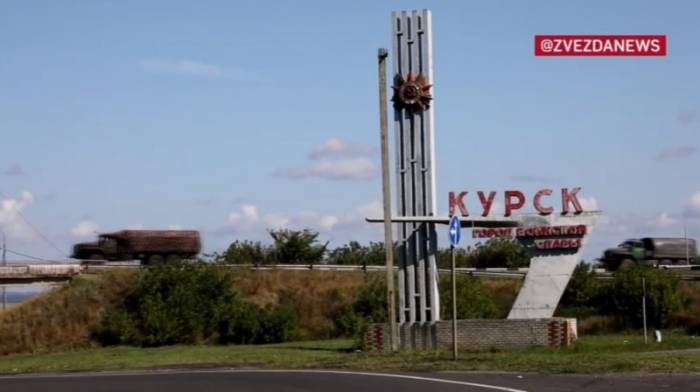
On August 6, the Armed Forces of Ukraine crossed the Russian state border and began advancing into the Kursk region. According to the Russian General Staff, about 1,000 Ukrainian soldiers invaded Russian territory. The total losses of Ukrainian troops since the beginning of hostilities in the Kursk direction have amounted to up to 660 people.
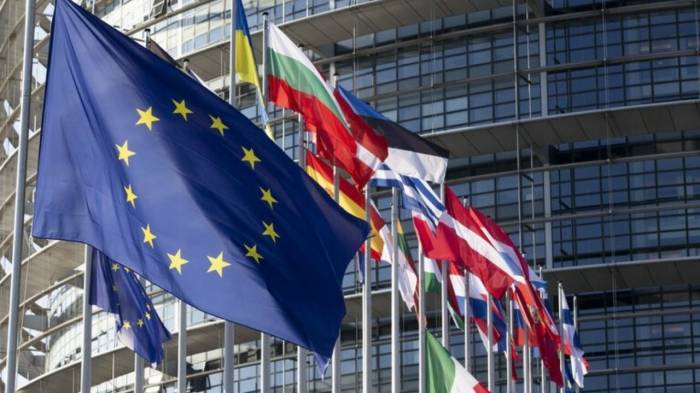
Regardless of one’s personal view of the situation, under international law, this is classified as an escalation of the conflict, which has now spread to the territory of the Russian Federation, significantly complicating—and possibly making impossible—any attempts to achieve peace. However, the European Union not only did not condemn (even mildly) the actions of the Ukrainian Armed Forces but openly encouraged them. Here’s what the EU External Action Service spokesperson Peter Stano had to say: "The right to self-defense also includes the right to strike"; "Our position, as defined by a number of European Council decisions, has remained unchanged since February 2022: full support for Ukraine and its military efforts. This includes political, financial, diplomatic, and military assistance, and this has not changed."
 Peter Stano became the first Western official to openly support the Ukrainian units' attack on the Kursk region. In this context, one cannot help but recall previous statements from European officials, who claimed that the weapons supplied to Ukraine were intended solely for defensive purposes.
In light of these events, fearing that the conflict might go "beyond acceptable limits," the United States requested additional information from Kyiv to "better understand the situation." The State Department, while stating that Kyiv's actions "do not contradict" Washington's approaches, nevertheless reiterated its position, which limits the use of American weapons on Russian territory and states that they are intended exclusively for defensive purposes. However, judging by the footage, Ukrainian units in Kursk were using American armored vehicles. This contradiction, it seems, did not cause any concern in the West. On the contrary, if military actions align with the interests of the collective West, then violating their own rules does not bother them. But if military actions do not serve their interests, no matter how just the war may be, the side defending its rights will be declared the "aggressor."
This is exactly what has happened and continues to happen in our case. Let’s recall the events on the Armenian-Azerbaijani front and how the multifaceted West reacted to our just aspiration to restore territorial integrity and full control over our sovereign territory. This is our legal right, enshrined in all international documents. Azerbaijan is recognized within its internationally acknowledged borders, within which it joined the UN, and these borders are recognized by everyone, including Armenia. For three decades, these borders were grossly violated, and finally, Azerbaijan, acting in accordance with international law, decided to restore justice. The pursuit of justice demanded not only the liberation of the occupied territories but also the full restoration of the state’s borders down to the last square meter.
We remember the numerous threats and reproaches directed at Azerbaijan in 2021 regarding the events around Lake Garagel. A small body of water covering only 13 square kilometers suddenly became the focus of the leading world powers. It was clear to everyone that the Azerbaijani army was not seizing foreign lands but merely reclaiming its own, yet the West found it necessary to support Armenia, which had “behaved well” by declaring its intention to leave the CSTO and join the European Union. Yerevan’s intentions promised to weaken Russia’s positions in the South Caucasus and promote the penetration of the US and the EU into the region. The vested interests in maintaining the conflict were evident in the telephone conversation that took place during those days between US Secretary of State Antony Blinken and then-French Foreign Minister Jean-Yves Le Drian.
The US and France closely monitored Azerbaijan’s actions. Every square meter of territory reclaimed by Azerbaijan was met with hysteria and stern warnings from Western capitals. Baku paid little attention to this uproar but drew its own conclusions. Today, we can confidently say that our assessments were correct.
Armenia, relying on the support of the US and France, as well as its diaspora and lobby, attempted to slow down Azerbaijan’s process of restoring its borders. First, French President Emmanuel Macron demanded the “immediate withdrawal of Azerbaijani troops from Armenian territory.” Then the US State Department called on Azerbaijan to “immediately withdraw all its forces and cease further provocations.”
However, when it comes to Ukraine, which, contrary to agreements, uses Western weapons not for defense and the restoration of its territorial integrity, but for an offensive against a nuclear power, no similar demands are made. Such a situation could have unpredictable consequences for the entire world. The seriousness of the situation is undeniable, and this is not the time for spectators to sit back with popcorn and watch with interest to see how it will all end.
It seems that the countries of the collective West still live in a paradigm of the past, somewhere in the 19th or early 20th century, when the entire world belonged to a few powers, and the state borders of other nations were drawn in London, Brussels, or Paris. But everything has changed: the times of colonial domination are long gone, and the project of globalization and the depersonalization of nation-states has failed. Now, globalists are attempting to impose a new division of the world, claiming that the old world order has outlived its usefulness. But the world has changed, and we are witnessing in real-time that this new Western project is also failing. The era of double standards is coming to an end, and the voice of each country is gaining significance. It would not be an exaggeration to say that Azerbaijan was the first to break with “tradition,” go against the will of the powerful of this world, and set an example. Even within Europe itself, bold voices are emerging from those who do not want to become a gray mass, ready to obey orders from Brussels or Washington.
(If you possess specialized knowledge and wish to contribute, please reach out to us at opinions@news.az).


Similar news