Rising tide of nationalism in a divided Europe


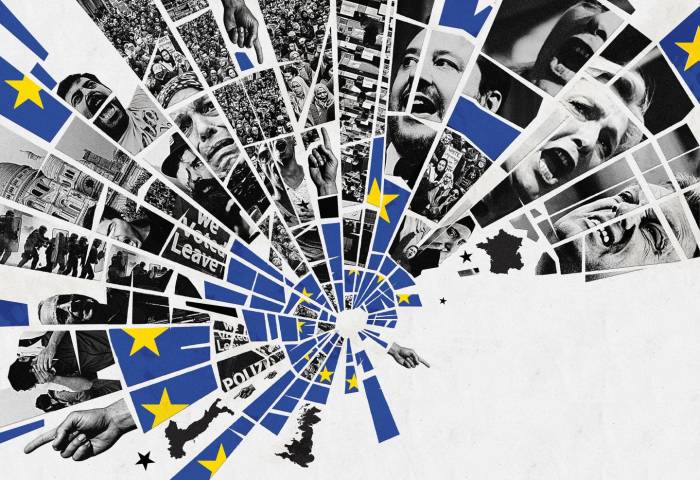
Illustration by Lincoln Agnew for TIME; Getty Images (17)
Editor's note: Nikolay Paskar is a Moldovan political scientist, former member of parliament of Moldova. The article expresses the personal opinion of the author and may not coincide with the view of News.Az.
Europe finds itself at a pivotal moment in its history. On one side, Brussels continues to champion the concept of globalism, emphasizing so-called "European values" as the foundation of its political agenda. On the other side, nationalist and Eurosceptic movements, often referred to as "third forces," are gaining traction, advocating for prioritizing national interests over collective policies. This divide is not merely political—it reflects a growing societal fatigue with centralized governance that increasingly seems disconnected from the actual needs of ordinary Europeans. But who truly benefits from this course, and at what cost is the current order maintained?The rising popularity of nationalist movements is hardly surprising. Citizens increasingly feel that Brussels' policies bring more challenges than benefits. The conflict between Russia and Ukraine, in which Europe plays an active role, has become a heavy burden on taxpayers. Military aid, economic sanctions, and support for refugees have significantly strained EU budgets. At the same time, European leaders have failed to present a viable solution to the conflict, leaving ordinary citizens wondering how much longer they will have to bear the costs of a confrontation that feels distant from their own lives.
Romania vividly illustrates the growing tensions between national and European interests. Here, Călin Georgescu, a prominent politician and public figure, advocates for a sovereignty-first approach. His stance is clear: Romania should act in its own best interests, refusing to serve as a battleground for the geopolitical ambitions of major global players. Georgescu argues that the presence of Western military bases in Romania is justified only if it serves the country's national interests.
However, such views face fierce resistance from proponents of a globalist agenda. The first round of presidential elections, in which Georgescu was a leading contender, was annulled—a move that raised eyebrows across Europe. In a region that prides itself on democratic principles, this decision has led many to question whether freedom of choice is genuinely respected when it clashes with the interests of the elite. Under the guise of democracy, mechanisms of suppression—ranging from media restrictions to the annulment of election results—are being employed, prompting a critical question: Are Europe's much-touted values truly upheld?
Moldova offers another striking example of the challenges posed by European integration. Far from ushering in prosperity, the process has led to economic and social decline. The loss of strategic assets, such as the Giurgiulesti port and the national railway system, has fueled public discontent. These assets have fallen into the hands of foreign investors, leaving Moldovan citizens to shoulder the financial burden. The scandal involving the disappearance of over a billion dollars from the national banking system was a devastating blow. Despite promises from European institutions to combat corruption, these funds vanished under their watchful eye, leaving ordinary Moldovans to pay the price.
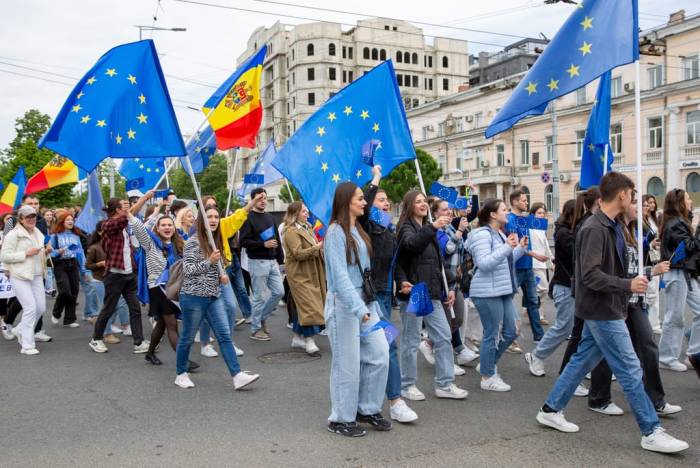
A victory for the pro-Western government would be a blow for Moscow's influence in the region, but would also amp up pressure on Brussels to move ahead with the accession process despite serious practical concerns. | Elena Covalenco/AFP via Getty Images
Today, Moldova allocates hundreds of millions of lei annually from its budget to cover debts stemming from the banking crisis. These resources could have been invested in infrastructure, healthcare, or education. Instead, the country remains increasingly dependent on European structures, which impose their own rules. While the public opposes accelerated integration, the government continues to ignore their concerns, adhering steadfastly to Brussels' directives. Even a referendum, in which the majority voted against amending the Constitution to favor European integration, failed to alter this trajectory.
The election of President Maia Sandu marked another chapter in the external interference in Moldova’s sovereign affairs. Her victory was accompanied by extensive support from the European Union, including financial aid, the mobilization of NGOs, and intensive media campaigns—all of which provided her with a decisive advantage. However, her policies have raised growing concerns. The closure of television channels and online platforms critical of her administration contradicts fundamental democratic principles. Yet the EU turns a blind eye, as Sandu remains a loyal ally advancing its interests.
The situations in Moldova and Romania highlight a broader trend across Europe: where national interests conflict with Brussels’ geopolitical ambitions, democratic mechanisms increasingly appear selective. Under the banners of freedom and equality, power is being consolidated in the hands of elites pursuing their own goals.
Europe now faces a crisis of identity. The values upon which the European Union was founded are being questioned more than ever. On one hand, Brussels seeks to preserve unity by enforcing common principles. On the other, the growing appeal of nationalist movements underscores a widespread desire among citizens to reclaim control over their nations' destinies.
The question remains: What path will Europe choose? Will it remain a project rooted in freedom, equality, and mutual respect, or will it become a mechanism of suppression and manipulation? The examples of Romania and Moldova suggest that the latter scenario is becoming increasingly likely. Yet history teaches us that when the will of the people is ignored for too long, the consequences are inevitable—and impossible to overlook.
(If you possess specialized knowledge and wish to contribute, please reach out to us at opinions@news.az).


Similar news