Sheikh Hasina's escape: What happened and what will happen next?


By Samir Muradov
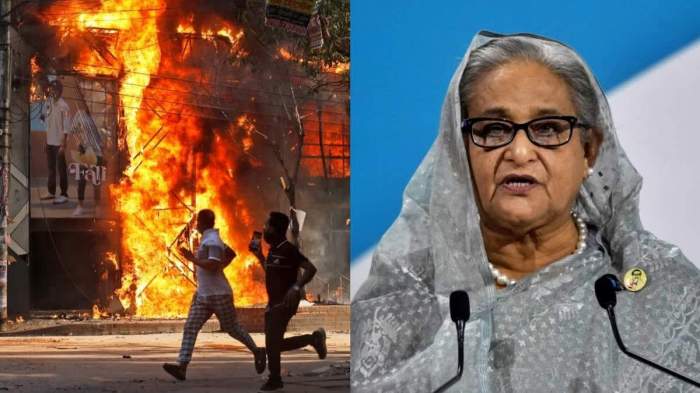
On Monday, after prolonged protests and political instability, Prime Minister Sheikh Hasina of Bangladesh stepped down from her position and fled the country on a military helicopter . This event marked the end of a 15-year rule that the opposition had labeled authoritarian. Thousands of people across the country celebrated this moment as the beginning of a new era filled with hopes for democratic change. However, behind the joy and celebration lie numerous questions about the country's future and the lessons to be learned from this episode.Historical background
Sheikh Hasina, daughter of Bangladesh's founder Sheikh Mujibur Rahman, first became Prime Minister in 1996. Her tenure saw significant economic growth, helping Bangladesh strengthen its position on the international stage. Nevertheless, she faced criticism for her authoritarian tendencies, suppression of political opposition, and restriction of freedom of speech. Despite these accusations, she remained in power, skillfully navigating external pressure and internal challenges. However, in recent years, her rule faced increasing discontent, which became more evident during the protests of 2024.
Causes of the protests
The protests against Hasina began in July as a reaction to the Supreme Court's decision to restore job quotas in government positions. This system, which reserved 30% of positions for descendants of independence war veterans, was perceived as unfair and discriminatory by the youth, who lacked access to much-needed jobs. Against the backdrop of rising unemployment and economic instability, the youth, particularly students, viewed this system as another example of nepotism and inequality.
The quotas were not only a symbol of the past but also a practical barrier to economic mobility for many citizens. Hasina, who supported this system, considered it necessary to preserve the memory of the independence struggle. However, protesters saw it as a means to keep power within the ruling party's loyalists. Amid growing protests, Hasina labeled the demonstrators as "razakars" — a term used to describe traitors during the independence war — further fueling anger.
Escalation and climax of the conflict
Clashes between demonstrators and security forces peaked on Sunday, resulting in the deaths of over 90 people. Police used rubber bullets and tear gas to disperse the protesters, but this only strengthened their resolve. A curfew with a shoot-on-sight order was imposed, yet thousands took to the streets to express their outrage against the violence and repression.
On Monday, the situation changed dramatically as protesters began handing flowers to the military, and officers embraced the demonstrators. This became a symbol of a new phase in Bangladesh's history, where the army, traditionally seen as a neutral force, decided not to intervene on the government's behalf. General Waker-uz-Zaman announced the formation of an interim government, delivering a final blow to Hasina's rule.
Hasina's escape and public reaction
According to local media reports, Sheikh Hasina fled the country on Monday in a military helicopter, seeking refuge in India, which had always been a strong ally. This event sparked a wave of emotions among the citizens. Many perceive her escape as a symbolic defeat, a confirmation that the era of authoritarian rule has come to an end. Crowds celebrated her resignation, storming the prime minister's residence, chanting and singing in triumph over dictatorship.
The Army's role and future government prospects
The army in Bangladesh has always played a key role in the country's political life. Despite its past interventions in politics, the current situation requires a more measured approach. General Zaman assured that an interim government would be formed in cooperation with major political parties, including the opposition Bangladesh Nationalist Party. However, given the historical context, the question arises whether the army can truly remain out of politics or if it will take a more active role.
Bangladesh's future: Challenges and hopes
Amid the celebrations and joy, many questions arise about Bangladesh's future. What reforms need to be implemented to steer the country back toward democratic development? How will the interim government address the economic and social problems that have accumulated over Hasina's years in power? Can political parties find a compromise to avoid repeating the mistakes of the past?
It's important to note that the path to democratic renewal will not be easy. The youth, who played a crucial role in Hasina's overthrow, expect real changes and reforms. Whether the new government can meet these expectations and restore citizens' trust remains to be seen. However, one thing is clear: the future of Bangladesh will be determined not only by political decisions but also by the active stance of its citizens, who are striving for justice and equality.
The fall of Sheikh Hasina is not just the end of one political era but the beginning of a new chapter in Bangladesh's history. The country, standing on the threshold of change, has a unique opportunity to rethink its past and build a fairer future. However, this will require wisdom and determination from not only the politicians but all Bangladeshis, who are ready to work together for the common good.


Similar news