The trade war heats up: China’s retaliation and what’s next for the US


.jpg)
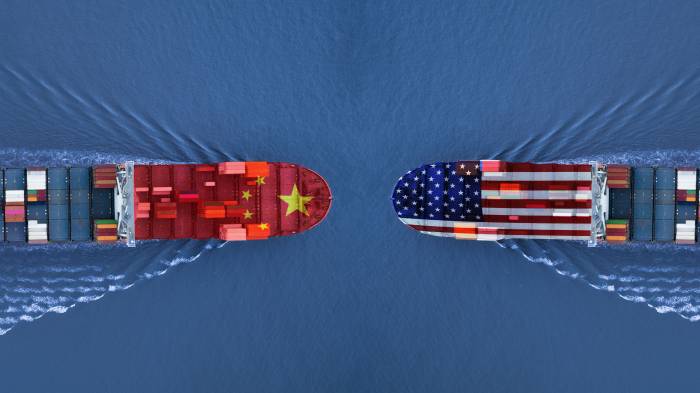
Photo: Getty Images
The ongoing China-US trade war, marked by retaliatory tariffs, export controls, and escalating geopolitical tensions, has entered a more precarious phase. Recently, the United States raised tariffs on Chinese goods, prompting China to retaliate by limiting exports of essential materials used in semiconductor manufacturing.
At the heart of the trade war lies a complex mix of economic and strategic concerns. The US has long criticized China’s trade practices, citing issues such as intellectual property theft, forced technology transfers, and extensive state intervention in markets. President Donald Trump's 2018 tariffs were introduced to address these issues, reduce the US trade deficit, and pressure China to reform its practices.Initially targeting steel, aluminum, and various manufactured goods, the conflict soon expanded to high-tech industries like electronics and semiconductors—sectors critical to the economic futures of both nations.
Over time, the trade war evolved into a symbolic battleground for larger geopolitical goals. The US aimed to curtail China's rise as a technological superpower, particularly in areas such as 5G, artificial intelligence, and semiconductor manufacturing. Meanwhile, China’s assertive global trade and technology ambitions have directly challenged the US-dominated global order, prompting Washington to adopt increasingly aggressive measures.
The potential return of Trump to the White House in 2025 adds further uncertainty to the trade war’s trajectory. What would renewed tensions between China and the US look like under his leadership?
Trump’s economic policies are expected to return to the aggressive, unilateral tactics that characterized his first term. His well-documented skepticism toward multilateral institutions like the World Trade Organization (WTO) and his history of imposing unilateral tariffs suggest that his administration could escalate the conflict, further disrupting global markets and international relations.
The tariffs have had substantial economic impacts on both nations. US manufacturers and consumers have faced higher costs on Chinese imports, ranging from electronics to everyday goods. For American businesses reliant on Chinese supply chains, rising expenses have often been passed on to consumers in the form of higher prices.
China has also felt the strain, experiencing a decline in exports to the US. However, Beijing has mitigated some of the damage by pivoting to new markets and doubling down on domestic innovation.
In response to US sanctions and technology restrictions—such as the blacklisting of Huawei— China has retaliated by halting exports of critical raw materials like gallium and germanium, essential for semiconductor production. This move underscores China’s growing leverage in the technology sector and signals its ability to disrupt industries critical to US national security and economic stability.
The semiconductor industry, in particular, remains a sensitive point for the US. Recent chip shortages have disrupted sectors such as automotive manufacturing and consumer electronics. China’s export controls exacerbate these vulnerabilities, adding pressure on Washington to secure its supply chains.
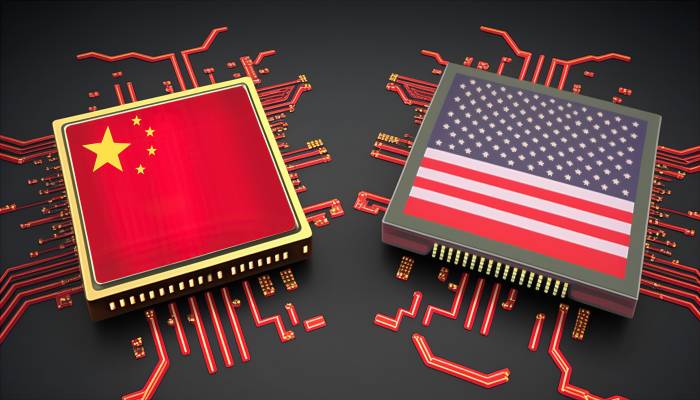
Photo: Shutterstock
China’s actions extend beyond semiconductors. The government has launched an antitrust investigation into Nvidia, a leading AI chipmaker, causing a drop in its stock price. Nvidia, which derives around 10% of its revenue from Chinese customers, now finds itself at the center of this economic standoff.
Additionally, reports suggest that Chinese manufacturers are limiting sales of key drone components to the US and Europe. Bloomberg sources indicate that Beijing is preparing broader export restrictions on drone technology, set to take effect in the coming year.
On December 19, Chinese President Xi Jinping warned that there would be “no winners” in a trade war with the US. Despite this, he reaffirmed China’s economic resilience and commitment to achieving its growth targets.
“Tariff wars, trade wars, and technology wars go against historical trends and economic rules, and there will be no winners,” Xi stated. However, he also expressed China’s openness to dialogue:
“China is willing to maintain dialogue with the US government, expand cooperation, manage differences, and promote the development of China-US relations in a stable, healthy, and sustainable direction.”
The future of the China-US trade war hinges on how both nations navigate their economic and geopolitical rivalry. If Trump returns to office, his policies could intensify economic nationalism and deepen the decoupling of the world’s two largest economies.
The global ramifications of this conflict are profound. Whether it leads to a new era of economic isolationism or sparks a reevaluation of global trade norms remains uncertain. What is clear, however, is that the stakes for both nations—and the world—are higher than ever.
(If you possess specialized knowledge and wish to contribute, please reach out to us at opinions@news.az).


Similar news