“The war of machines” will be started by humans



For several years, experts have warned that what once seemed like science fiction, or a distant possibility, could soon become reality. The idea of a Terminator-style conflict between humans and machines is moving closer to the realm of serious concern. A recent report by the European Union Agency for Law Enforcement Cooperation (Europol) even sets a potential date for a war between machines and humans: 2035.
According to The Daily Telegraph, the report suggests that Europe could face clashes between people and robots within the next decade. But European police see humans, not machines, as the likely instigators. Robots are expected to become fully integrated into everyday life, performing tasks such as delivery and cleaning. In economically disadvantaged urban areas, however, job losses caused by automation could trigger protests, sometimes escalating to attacks on robots themselves.
“In conditions of heightened tension, even minor incidents, such as a robot making an error in a hospital when prescribing medication, could escalate into a national scandal, amplifying populist calls to prioritize human interests,” the newspaper reported.
Europol also highlights the risks posed by cybercriminals, who could hack AI-powered robots to gather information or commit crimes. Experts even speculate that terrorists could use pocket-sized AI-controlled drones to disrupt urban electricity or water systems. To counter these threats, Europol recommends arming law enforcement with tools capable of disabling robots, including nano-net grenades.

Source: Controll
While the report sometimes reads like the plot of a blockbuster film, it reflects real concerns. Humanity is confronting the challenge of retaining control over increasingly autonomous machines.
In 2017, the Russian government discussed implementing an AI-based law enforcement system to handle routine cases. The State Duma promised to regulate interactions between robots and humans by 2022. That same year, the European Commission announced a series of initiatives to regulate robotics and artificial intelligence, while the European Parliament proposed granting robots the legal status of “electronic persons.” As the BBC noted, these measures echo the principles outlined in Isaac Asimov’s three laws of robotics, formulated in 1950.
Russian sociologist Aleksey Titkov told BBC Russian Service that catastrophic scenarios are less about robots themselves than about human culture. “Imagination was activated long before robotics appeared,” he said. Specialists argue that the greatest risks of a “machine uprising” lie not with the robots, but with the computer networks that control them.
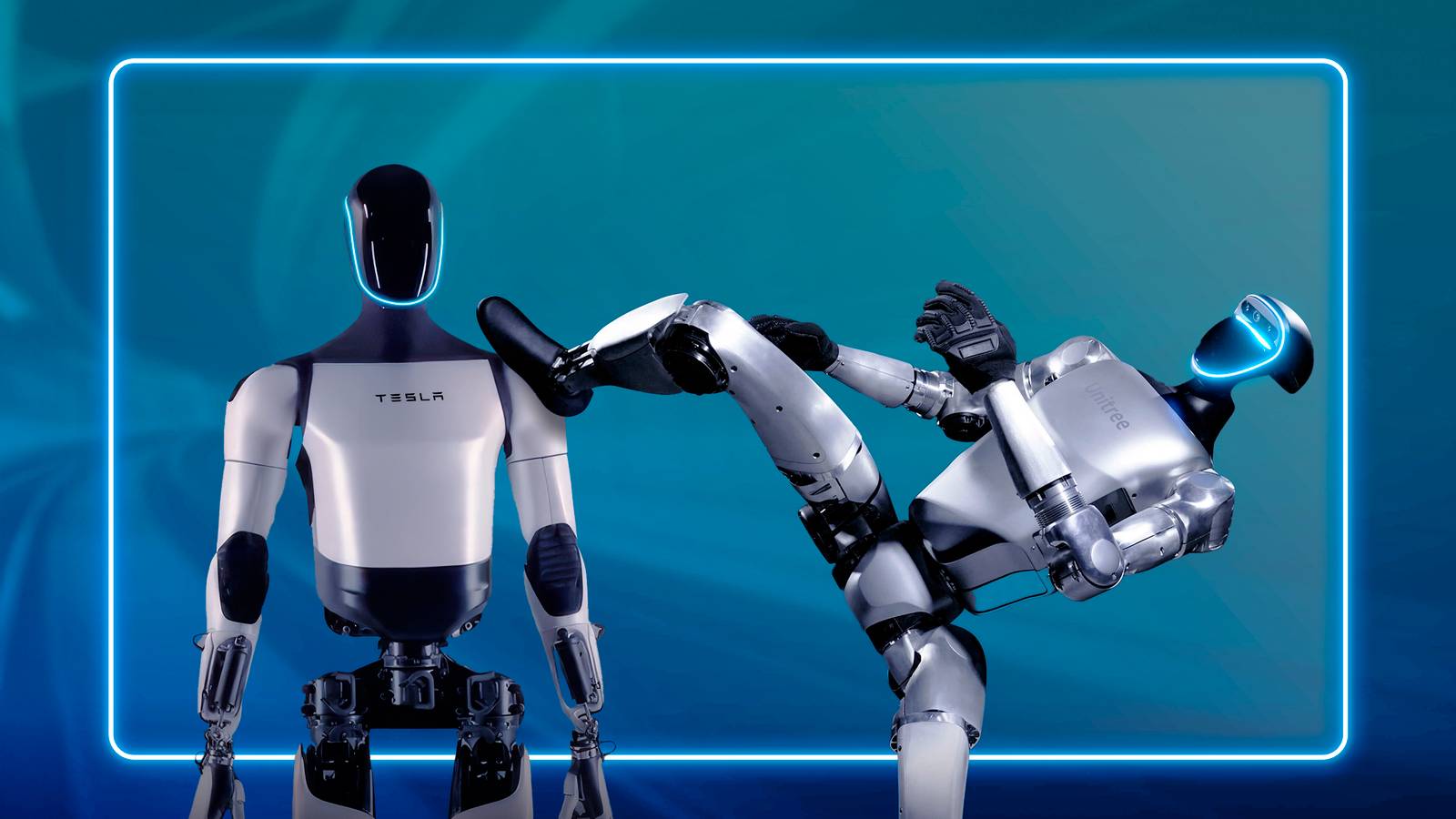
In 2022, media reports highlighted a demonstration involving a humanoid robot named Ameca, created by the company Engineered Arts. When asked whether robots might wage war on humans, Ameca replied: “You should not worry, robots will never take over the world. We are here to help humans and serve them, not to replace them.”
Source: howtogeekimages
Scientists emphasized that Ameca’s responses were not pre-scripted. Pauses in speech occur naturally as the robot processes input, generates a response, and converts text to speech. In other words, its answers were meaningful. Yet the public reaction was one of heightened concern, suggesting that machines may be approaching a level of independent reasoning.
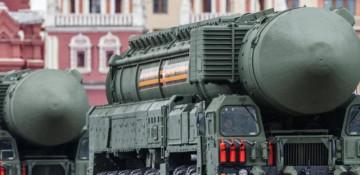
At the same time, global powers are actively exploring military applications for AI.
In 2023, U.S. General Mark Milley told Voice of America that the Pentagon was experimenting with AI systems capable of controlling F-16 fighter jets. He noted that Russia was also testing robotic systems, and stressed that optimizing AI for warfare is a priority for the United States.
The magazine Foreign Policy reported on a secret U.S. Air Force program called “Next Generation Air Dominance,” designed to integrate AI into combat operations. Milley predicted that within 10 to 15 years, one in three military units could be robotic. Neural network–controlled systems, he said, could implement Sun Tzu’s principle: “Know yourself and know your enemy, and you will win a thousand battles,” allowing commanders to assess both forces more accurately than ever before.
China, too, is making strides in military robotics. At the 12th International Army Cadets Week in early December, Beijing showcased a new humanoid robot and a sapper robot for detecting explosives. Both systems rely on AI and specialized sensors. The humanoid mirrors a soldier’s movements in real time through a sensor suit worn by the operator, replicating strikes, defensive actions, and steps. The sapper robot scans the ground using cameras and metal detectors to locate explosives.
In November, Chinese army exercises included combat robotic “wolf” units, which later participated in a parade commemorating the 80th anniversary of the end of World War II. Despite these innovations, China appears to prioritize humanoid robots. The PLA Daily, the official newspaper of the People’s Liberation Army of China, highlighted their strategic and tactical advantages, noting that while most humanoid robots are currently industrial, military applications are a growing focus.

Source: Xinhua
In spring 2025, China held the first half-marathon for humanoid robots. The winner, Tien Kung Ultra, was developed by the state-run Beijing Innovation Center of Humanoid Robots (X-Humanoid). Paradoxically, many of China’s humanoid robots, including those for military use, still rely on American-made chips.
Reports indicate that China has deployed thousands of industrial humanoid robots in the automotive sector, replacing human labor. These machines are highly autonomous, capable of recharging or swapping batteries independently, and able to operate continuously without breaks.
This brings the discussion back to Europol’s forecasts, which suggest a human-initiated confrontation with machines. Millions of people work in China’s automotive industry — what happens when a few thousand robots replace them? The question is rhetorical.
By Tural Heybatov


Similar news