Ukraine sees Paris talks as key step toward stronger defense and security guarantees


.png)
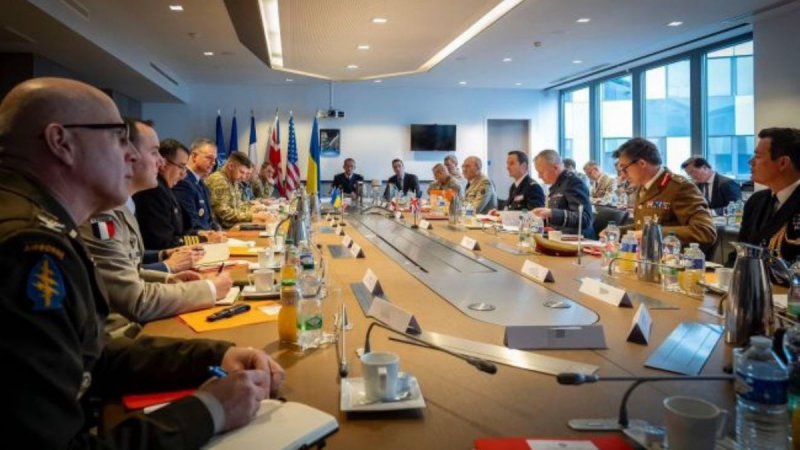
Ukraine views the upcoming meeting of the “Coalition of the Willing” in Paris as an important opportunity to strengthen international support for its defense and long-term security. Kyiv expects discussions to focus on the supply of additional weapons, ammunition, equipment, and training, as well as broader security guarantees for the future.
Although some decisions, particularly those related to the possible deployment of foreign security forces, are unlikely to be finalized without real movement toward peace negotiations, the meeting is still seen as part of the wider process of shaping Ukraine’s post-war security architecture.
The coalition plays a key role because it allows a smaller group of committed countries to coordinate assistance more quickly than traditional international organizations. At the same time, the war has exposed limits in Europe’s defense industry capacity, prompting efforts to expand production and secure longer-term commitments, including the potential use of frozen Russian assets.
Ultimately, sustained support is viewed as essential to weakening Russia’s ability to continue the war and creating the conditions for a just peace.
In an interview with News.Az, Ukrainian political scientist and military expert Alexander Kovalenko assessed Kyiv’s expectations from the upcoming meeting of the “Coalition of the Willing” in Paris and the broader role of the coalition in supporting Ukraine.
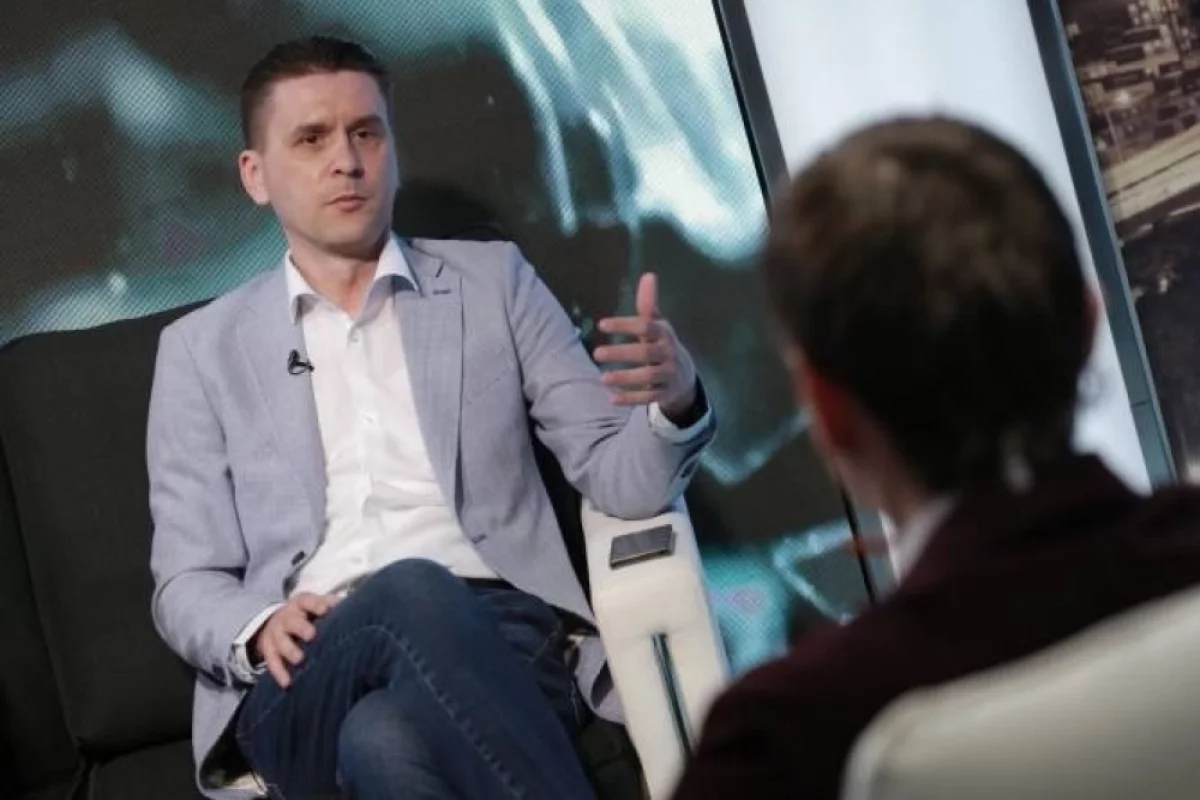
Photo: Alexander Kovalenko, Ukrainian political scientist and military expert
According to him, Ukraine is counting on discussions concerning the transfer of both ammunition and military equipment, as well as other forms of materiel support.
Kovalenko noted that the expansion of this assistance is critical not only to significantly strengthen, but also to maintain the stable defense capability of the Ukrainian Armed Forces in the face of current challenges. "These challenges exist not only on the battlefield but also on the diplomatic front," he said.
He emphasized that the issue of training and briefing Ukrainian military personnel will also remain on the agenda. However, he underlined that the situation has already begun to evolve to the point where Ukrainian military personnel themselves are now in a position to share their battlefield experience with European partners, rather than being solely on the receiving end of training programs.
Kovalenko added that another important topic for discussion is the question of long-term security guarantees for Ukraine. "These guarantees are directly linked to the potential deployment, including the possible deployment of a foreign military contingent, on Ukrainian territory," the expert said. In his view, the upcoming meeting in Paris encompasses an extensive and complex range of tasks that will require careful deliberation.
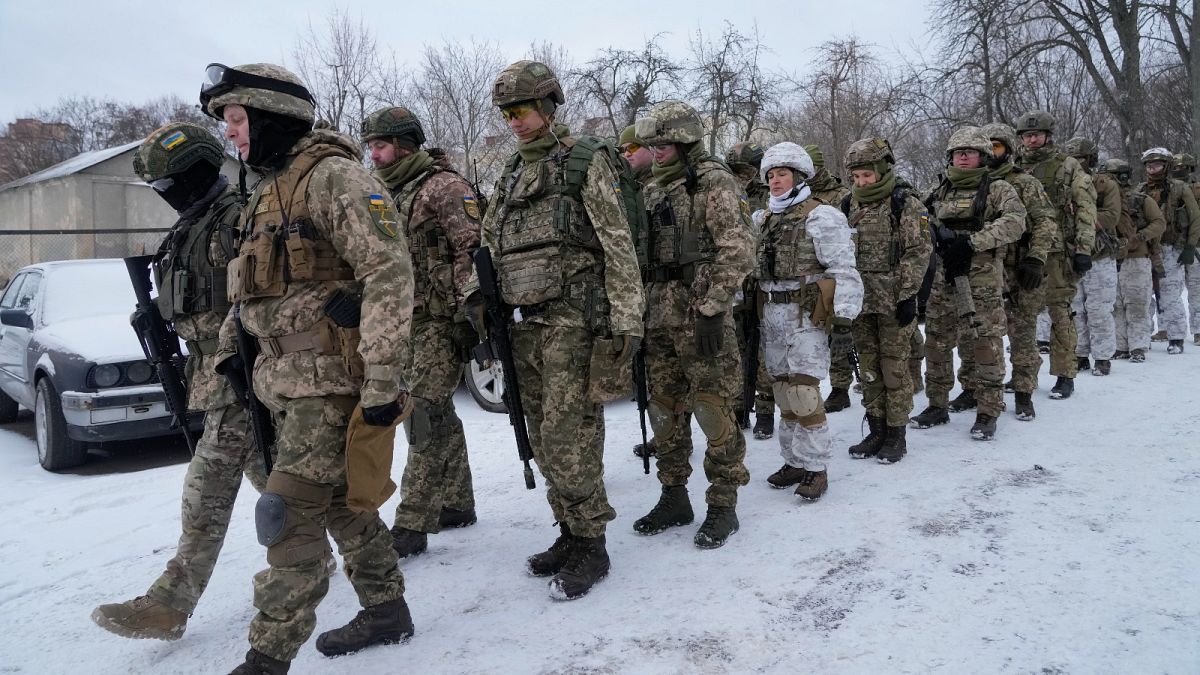
Source: Euronews
At the same time, Kovalenko cautioned that he does not expect concrete results on some of these issues, particularly those related to the deployment of foreign contingents. He explained that such measures are only realistic under conditions in which meaningful diplomatic progress is being made towards peace negotiations.
"Currently, Ukraine, its European partners, and the United States are demonstrating openness and interest in peace talks. However, the Russian Federation is showing no willingness to pursue peace or to engage in dialogue within the framework of peace initiatives," he noted.
For this reason, Kovalenko believes it is still premature to speak about the implementation of deployment-related guarantees. Nevertheless, he stressed that these matters are already being developed as part of a prospective long-term roadmap. According to him, this roadmap will inevitably be discussed again in future diplomatic arenas once Russia becomes compelled to participate in peace negotiations. "Such a situation could arise only under conditions of economic, military, or systemic exhaustion of the Russian Federation, or due to other significant factors that may limit its ability to continue the conflict," he suggested.
Kovalenko further stressed that the “Coalition of the Willing” plays an important and meaningful role in the current geopolitical context. Although the coalition operates in an informal format, with no official regulations, coordination structures, or secretariat, he emphasized that this informality actually makes it more effective than platforms such as NATO, the European Union, or even the Ramstein format. He explained that NATO decisions require full consensus among all member states. "Given that some countries, including Hungary and Slovakia, are currently taking positions that are not particularly supportive of Ukraine, achieving consensus within NATO remains extremely difficult," he added.
According to Kovalenko, this is precisely why the “Coalition of the Willing” exists: to enable participating states to adopt the necessary decisions to support Ukraine quickly and efficiently. The coalition includes countries such as Germany, France, the United Kingdom, the Baltic states, Scandinavian nations, and others. "While this is a smaller group than NATO, the EU, or the Ramstein format, it is also free from the bureaucratic and legal restrictions that slow decision-making within other frameworks," he said, adding that this significantly accelerates the process of approving and implementing support measures for Ukraine.

Source: Financial Times
However, Kovalenko noted that despite the support provided in 2022, 2023, 2024, and 2025, the level of assistance has still been insufficient to fully meet Ukraine’s needs. He recalled that at various times the United States restricted or blocked the supply of certain critical weapons systems. "Some types of weapons, such as Germany’s Taurus missiles, have still not been supplied to Ukraine despite Kyiv’s requests," the expert noted.
He pointed out that the scale of military operations in Ukraine has revealed the limited capabilities of Europe’s defense industry base. European countries, he said, have faced a “sobering realization” that their military industry capacity is not yet sufficient to fully sustain Ukraine’s needs. Nevertheless, he added, efforts are now underway to expand production and formalize long-term commitments, including financial arrangements,in support of Ukraine.
In this context, Kovalenko noted that there is now increasingly active discussion regarding the use of frozen Russian assets to finance Ukrainian defense and reconstruction. He expressed confidence that a decision will eventually be made on this matter and that the use of these assets will form the basis for long-term, durable support arrangements.
"While the 'Coalition of the Willing' remains a temporary mechanism, the work and discussions being carried out within its framework are already contributing to the development of forward-looking diplomatic strategies and roadmaps," Kovalenko stated. These strategies, he noted, may eventually become part of a comprehensive post-war security architecture for Ukraine — one that will likely be formalized through fully-fledged international treaties rather than informal agreements or memoranda.
The expert underlined once more that the end of the war will ultimately depend less on the coalition and more on the Russian Federation, which at present shows no interest in ending the conflict."Nevertheless, the coalition can accelerate the path to peace by continuing to support Ukraine militarily, diplomatically, economically, and through sanctions designed to weaken Russia’s military capabilities," he argued.
Kovalenko concluded that cooperation between Ukraine and the “Coalition of the Willing” will continue to evolve within its current framework. "The ultimate priority remains the achievement of a just peace for Ukraine — one built on sustainable security guarantees and long-term stability," he stressed.


Similar news