US develops its own Shahed drones: Could this help Ukraine?


The Pentagon has begun deploying a new fleet of attack drones, reverse-engineered from Iran's Shahed-136 model, according to a report by Bloomberg.
The US Central Command (CENTCOM) has established Task Force Scorpion Strike (TFSS), which is equipped with a squadron of small unmanned aerial vehicles (UAVs) based on the Iranian Shahed-136. The Shahed-136 is known for its low cost and high effectiveness, priced at around $35,000, in stark contrast to the American MQ-9 Reaper drone, which can cost up to $30 million.
As Bloomberg expert Becky Wasser points out, “The US can no longer rely solely on expensive and sophisticated weapons in modern conflicts.”
Meanwhile, Iran’s Islamic Revolution Guard Corps (IRGC) has tested a new jet-powered reconnaissance drone, the Shahed-161. During an exhibition of the IRGC Aerospace Force’s achievements in Iran, the drone was showcased with a flying wing design. It has a range of 150 kilometers, an endurance of two hours, and an operational altitude of eight kilometers.
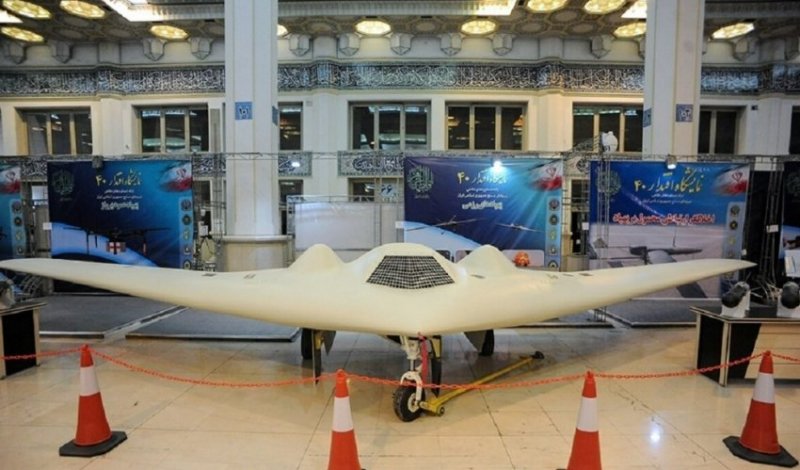 Photo: IRNA
According to The War Zone, the American drones are called LUCAS (Low-Cost Uncrewed Combat Attack System). Notably, TFSS is the first US military unit dedicated to operating kamikaze drones. An anonymous US official said TFSS consists of about two dozen service members who manage these drones. He emphasized that the systems are “precisely positioned and delivered in such numbers that they provide us with a significant level of capability.”
Sources indicate that the US military managed to acquire an Iranian Shahed drone, which was then reverse-engineered. A US official also hinted at the possibility of “flipping the script on Iran,” suggesting that the US could retaliate with drone strikes if necessary, mirroring Iran’s use of drones against Israel and Russia’s tactics in Ukraine.
Meanwhile, Russia has begun producing its own modified version of the Shahed, known as the Geran.
Since the start of the war, Russian forces have used Iranian-made Shahed-136 drones, which have become infamous for their distinctive engine sound, now recognized by many Ukrainians. The first reports of Iran supplying UAVs to Russia emerged in late August 2022, though both nations initially denied the transfer. By mid-September 2022, photographic evidence confirmed the use of Shahed drones, which Russia deployed not only against military targets but also against civilian infrastructure in Ukraine.
According to a Ukrainian source, in 2023, Russia opened its first UAV production facility in the Alabuga Special Economic Zone in Yelabuga. Another plant, located in Izhevsk at the Almaz-Antey facility, likely began production the following year. By mid-2025, Russia was reportedly producing approximately 170 long-range drones per day, with plans to reach 190 per day, Freeradio reports. By 2026, some estimates suggest Russian production could increase to 500 Shahed drones per day, according to another Ukrainian publication, Mezha.Media.
Russia uses the Iranian Shahed-131 and Shahed-136 drones under the names Geran-1 and Geran-2. In 2024, it was revealed by the Prana Network hacker group that Russia purchased a single Shahed drone from Iran for $193,000 in 2022. Current prices are not fully confirmed, but reports indicate that Russia now pays about $50,000 per drone — still more expensive than the $35,000 cost for the US.
 Photo: Shutterstock
Additionally, in 2024, Russia introduced another long-range drone, the Molniya, which is often used in tandem with the Shaheds to overwhelm Ukrainian air defense systems, Freeradio reports.
Ukrainian experts acknowledge that these small, low-flying drones are difficult targets for their air defense systems. In 2022, Ukraine was able to shoot down more than 80% of Shaheds, but as the use of drone swarms grows and Russian tactics evolve, this success rate has begun to decline.
Now, with the US developing its own versions of the Shahed drones, reportedly with Ukrainian input, there is a real possibility that these drones could one day be used to strike Russian territory. Russia, which has relied on drones from its Iranian ally, may find itself facing a new kind of threat from the very technology it has used against Ukraine.
By Tural Heybatov


Similar news