Valeriy Dymov: Trump enables Putin by undermining U.S. support for Ukraine – INTERVIEW


.png)

The June 2 meeting in Istanbul between representatives of Russia and Ukraine yielded limited results due to deep and fundamental disagreements. While Moscow advanced maximalist demands, Kyiv remained focused on humanitarian priorities, including the return of hostages and abducted children. With no substantial progress made, the talks were widely seen as symbolic. The event underscored Russia’s ongoing strategy of simulating diplomacy while applying continued military pressure.
In this exclusive interview with News.Az, Ukrainian political analyst Valeriy Dymov offers a frank and sobering assessment of the meeting, describing it as a theatrical maneuver by Moscow rather than genuine negotiations.
– How do you assess the June 2 meeting in Istanbul overall? Did it meet your expectations?
– I had no expectations to begin with, and you're right to call it a "meeting" rather than negotiations. When one party seeks your destruction and the other wants to live, it's hardly the basis for any meaningful agreement. If one side believes in the devil and the other in God, finding common ground is nearly impossible.
If you’re dealing with a killer who wants to eliminate you, and your only response is to cite international law, conflict resolution theory, or present memoranda in good faith, then you’re misunderstanding the situation—you could say you’re already a corpse. So, again, I had no expectations.
The only tangible outcome was the same as in previous rounds: Russia, a terrorist state, calls "exchanges" what is essentially hostage trading. Still, given the circumstances, we are grateful that some of our people—severely wounded or gravely ill—may now return home.
We’re relieved that some young men, aged 18 to 25, can finally be reunited with their families. And we welcome the possibility that relatives of around 6,000 Ukrainians killed by Russian forces might be able to recover their loved ones’ remains—because yes, Russia even trades in corpses.
These proposals have been made before. Despite chauvinistic remarks, sexist rhetoric, and blatant contempt, we press on. I’m referring here to [Russian negotiator] Medinsky’s appalling statement that the issue of abducted Ukrainian children is merely propaganda for “European grandmothers who don’t have their own children.” I won’t even dignify that with commentary—just quoting. Even Goebbels, I think, would turn in his grave.
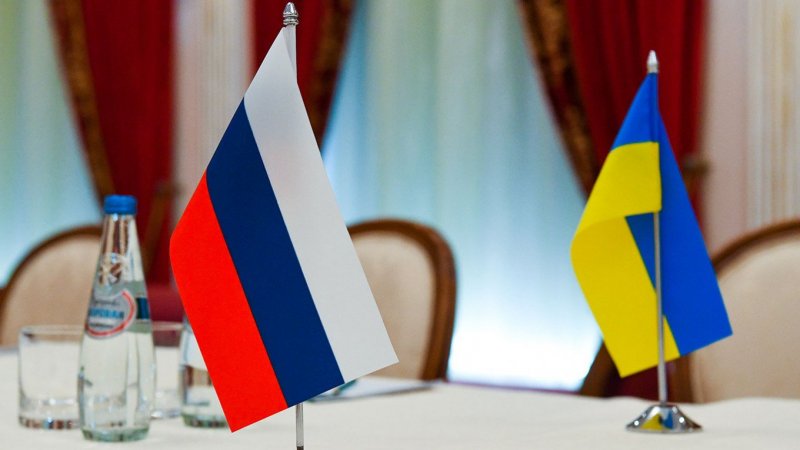 Photo: Reuters
– Were any specific agreements reached during the meeting?
– The only agreement was Russia's consent to return a limited number of hostages. And even this occurs in blatant violation of nearly every ethical principle and the key provisions of the Geneva and Hague Conventions regarding prisoners of war.
In a recent exchange, Ukraine received the body of journalist Viktoriya Roshchyna. Many of the returned bodies are missing internal organs—this has been confirmed by both Ukrainian and international prosecutors. Russia is engaged in hostage trading while simultaneously carrying out terrorist attacks on Ukrainian soil. Those responsible for these crimes are often promised spots on future exchange lists.
Despite this horrifying context, we are relieved that some hostages, and perhaps even abducted children, may soon return. That, at the very least, is one concrete result of the Istanbul meeting.
– How do Russia’s proposed conditions align with Ukraine’s sovereignty and territorial integrity?
– Let’s recall that the central topic of discussion was a proposed 30-day ceasefire. Ukraine accepted the U.S.-backed plan, first introduced in Jeddah, calling for an unconditional ceasefire. Russia, however, added its own conditions and funneled them through [negotiator] Vitkoff and Donald Trump.
Let’s be clear: Trump, by aligning himself with Putin’s worldview, is enabling this aggression. He publicly expresses understanding for Putin and insists on prolonged negotiations, ignoring the fact that Russian forces continue killing children in Sumy, Kryvyi Rih, and elsewhere through ongoing terrorist attacks.
In Trump’s view, only losers ask for peace—and since he perceives Ukraine as losing, he sees no reason to negotiate with Kyiv. But because he believes Russia is winning, that’s who he’s willing to talk to. This kind of thinking encourages Putin to keep escalating.
Furthermore, all sanctions and aid packages passed under President Biden have been obstructed by Trump allies in Congress. Their strategy is to deny Ukraine the weapons it needs, hoping to turn the war into an “internal Ukrainian problem.” Trump wants to wash his hands of it—Ukraine is a “suitcase without a handle.” Let it deal with the war itself, and let’s not “provoke” peace by sending more arms.
It was in this cynical and highly manipulative context that the Istanbul meeting took place. Russia is turning up the pressure: “Make a deal now, or things will get worse.”
We’re convinced Russia had already prepared long-range bombers for strikes the night before the meeting, intending to force our hand both militarily and diplomatically. Their message was clear: “Agree to our terms, or face more devastation.”
This is why Russia’s conditions were so extreme. They even withheld their memorandum until just a few hours before the meeting, likely to prevent the American side from reviewing or participating in any meaningful way. Their goal was never real dialogue. It was a political performance—pure simulation of diplomacy under the shadow of war.
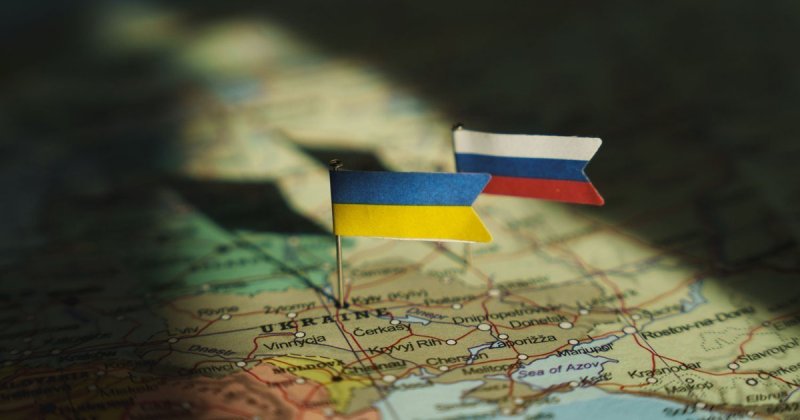 Photo: Reuters
– Were any concrete agreements reached regarding the abducted Ukrainian children?
– One of the few, yet extremely important outcomes for Ukraine is that we may now see even a tiny fraction—perhaps one hundredth or one thousandth—of the abducted children returned home.
Various mechanisms were discussed. Russia, while continuing to bomb maternity hospitals and civilian shelters in places like Mariupol, had the audacity to propose repatriation corridors—but only through its own territory.
We saw it all with our own eyes, and while not everything has yet been documented, a great deal of evidence has already been collected by the International Criminal Court in The Hague, under Chief Prosecutor Karim Khan.
Even though the Trump administration effectively shut down a U.S. commission tasked with investigating these crimes, its archives contain tens of thousands of documented cases. We are continuing this hard and painful work.
Russia, for its part, still refuses to admit that it abducts Ukrainian children. Let me remind you: the head of Russia’s delegation, Vladimir Medinsky, is the same man who claimed Russians have “an extra chromosome.” This grotesque statement reflects the paranoia and supremacist mindset of the Kremlin’s official representatives.
Medinsky also declared that Ukraine’s accusations regarding abducted children were merely propaganda aimed at “European grandmothers without children.” This rhetoric—sexist, chauvinistic, and inhuman—speaks for itself. With such people, meaningful dialogue is nearly impossible.
As Goebbels once claimed, the bigger the lie, the more people are likely to believe it. Russian propaganda about “crucified five-year-olds” and other grotesque fabrications shows just how far they’ve drifted from reality.
Again quoting Einstein: doing the same thing over and over and expecting different results is foolish. Expecting a rational change from the Russian delegation is delusional—and neither we nor our European allies can afford such illusions. Yet a few remaining Trumpists in Washington continue to indulge in them.
Historically, Russia has used terror to impose its worldview. As the Russian poet Tyutchev wrote, “Russia cannot be understood with the mind.” Medinsky’s chromosome remark is a prime example of that belief in Russian exceptionalism.
Some naïve observers still hope Russia might change. We are no longer among them.
As for actual progress, we submitted verified lists of abducted children, and Russia—reluctantly—accepted them. For a small number of children whom Russia can no longer deny holding, it agreed to include them in the review process. That alone is a significant outcome.
This means Moscow has tacitly acknowledged that these children are on Russian territory. It is a small but meaningful victory—not just for the families, but for Ukraine as a whole. We will never accept our children being stolen and turned against us by the enemy.
Russia’s acceptance of these lists—after months of denial—and Medinsky’s frantic rhetoric show that they are running out of ways to deflect accountability. The data we provided has been verified by Western partners and cannot be ignored.
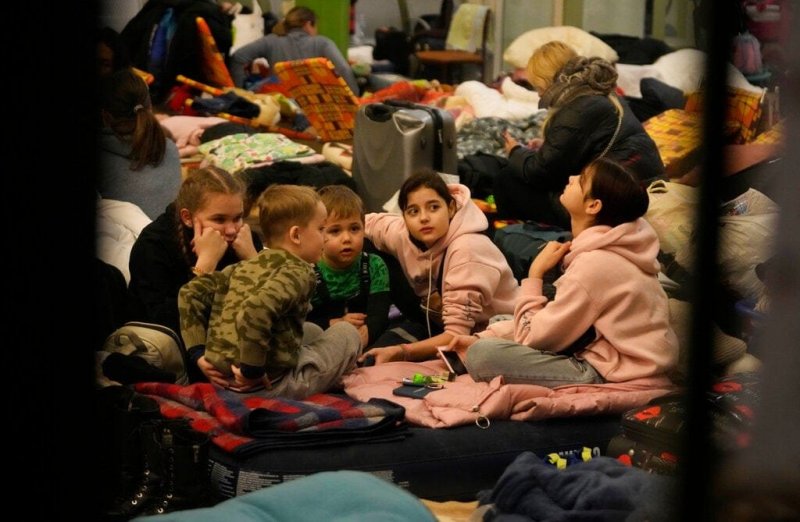 Photo: Reuters
We hope this is just the beginning. We hope these children will come home. And we hope that those responsible for their abduction will be punished. Because this is not just a war crime—it is a crime against humanity.
Even if Trump attempts to normalize Putin on the international stage, The Hague will proceed. The International Criminal Court will deliver justice.
And on the eve of Russian bombings of Ukrainian cities—where children were killed—we remembered the ancient Furies from Roman mythology: goddesses of vengeance, representing the pangs of conscience.
The Ukrainian strikes on Russian military airfields that night were just the beginning of a reckoning. And justice will find those who unleashed this war by murdering innocent people.


Similar news