VIDEO: Why did Belarus join the SCO?


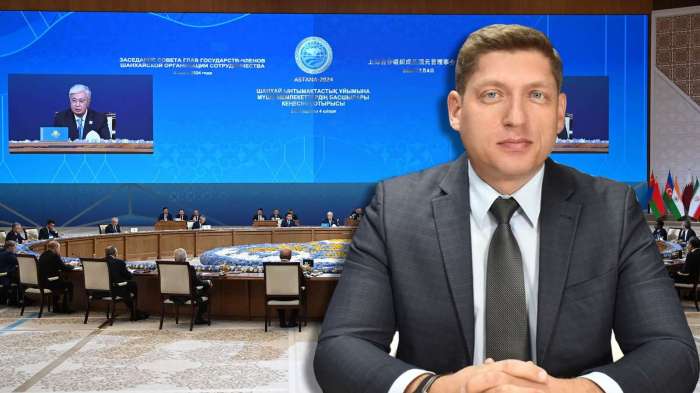

In a video, Belarusian expert Alexey Avdonin discusses that Belarus' membership in the Shanghai Cooperation Organization (SCO) is the result of meticulous and long-term efforts that the country has made with this organization and its key members, primarily China and the Russian Federation.
For Belarus, the SCO opens up vast prospects for trade and economic cooperation. As an export-oriented country, foreign markets are crucial and promising for the development of its economy.Therefore, Belarus's key task is to remove any barriers to the supply of its products to foreign markets. The SCO provides the opportunity to eliminate restrictions on exporting Belarusian products. It is well understood that this is not only a market for Belarusian products but also a tremendous opportunity for investments and the implementation of joint projects in scientific and technological fields. This will allow Belarus to increase the efficiency of its economy by generating more added value per unit of time through the work of its labor force. As a result, there is a natural interest in maximizing cooperation with SCO members. Additionally, having a strong economic foundation enables close interaction on security issues.
Initially, it was well-known that the SCO aimed to combat terrorism and any manifestations of aggression against sovereign states by destructive elements. At the same time, one of the key agendas at the SCO summit, including for Belarus, was the issue of reducing dependence on the dollar and the Federal Reserve System.
Why? Because it is impossible to build normal economic relations if they include foreign currency components. These foreign currency components come with costs, and transactions can be blocked at any moment. As a country that has long been under various sanctions since the 1990s, Belarus understands well that it does not need this, and neither do SCO member countries. Therefore, President Alexander Lukashenko clearly emphasized at the organization's summit that it is time to make decisions on creating the necessary currency instruments that would exclude foreign currencies, such as the dollar and the euro, from mutual transactions. Thus, the financial component is also key.


Similar news