What comes after Hamas: Gaza’s future at a crossroads



Editor's note: Moses Becker is a special commentator on political issues for News.Az, a PhD in political science and an expert on interethnic and interreligious relations. The article expresses the personal opinion of the author and may not coincide with the view of News.Az.
The war in Gaza has entered a decisive phase, with Israel now moving toward the complete destruction of Hamas. Yet even as military operations intensify, a far more complex question looms over the horizon: what comes next for this shattered territory? The answer is neither straightforward nor simple, as it requires grappling with the deep-rooted social structures of the Middle East and the geopolitical realities that have shaped Gaza for decades.
To understand Gaza’s future, one must first acknowledge the deeply patriarchal and clan-based nature of its society. In much of the region, loyalty to family and tribe outweighs loyalty to the state, with even marriages often arranged within the same extended clan. The authority of a sheikh is absolute, and no external power can easily replace this traditional order. Hamas, for all its radicalism, was the only force capable of uniting these disparate factions under a common ideology. It built a semblance of centralized control where none had previously existed. But in recent years, Hamas has become a growing concern for moderate Arab regimes determined to preserve the status quo. Even its former patron, Shiite Iran, whose support angered many Sunni Arab states, has found its influence increasingly questioned. Today, Hamas has few friends left, and if Israel manages to destroy it, few in the region will shed tears.
The second phase of Israel’s “Chariot of Gideon 2” operation is now underway. The goal is clear: capture Gaza City, evacuate its residents, and strip Hamas of its lifeblood—its human base of support. In recent days, Israel has demolished 30 high-rise buildings, a stark demonstration of its resolve. Prime Minister Benjamin Netanyahu has warned that this is “only a prelude to the main intensive operation—the ground invasion.” Should this invasion succeed, Israel will face an even more difficult challenge: deciding what to do with Gaza itself.
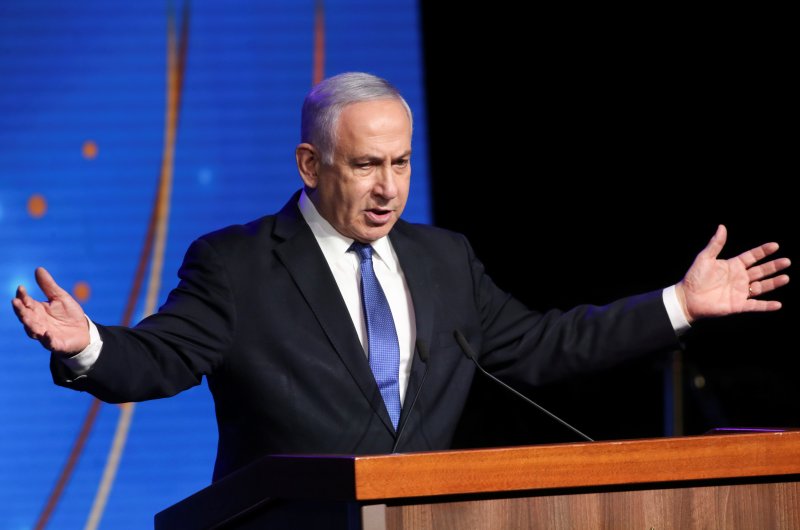
Some in Israel have floated the idea of reestablishing direct military occupation. Netanyahu himself hinted at this when he stated, “I believe that Israel will, for an indefinite period of time, have overall responsibility for security in the Gaza Strip because we have seen what happens when we do not.” Yet even he admits this would be a temporary measure. Israel has little appetite for ruling over two million hostile Palestinians. The financial burden alone would be crushing, to say nothing of the security risks and political fallout.
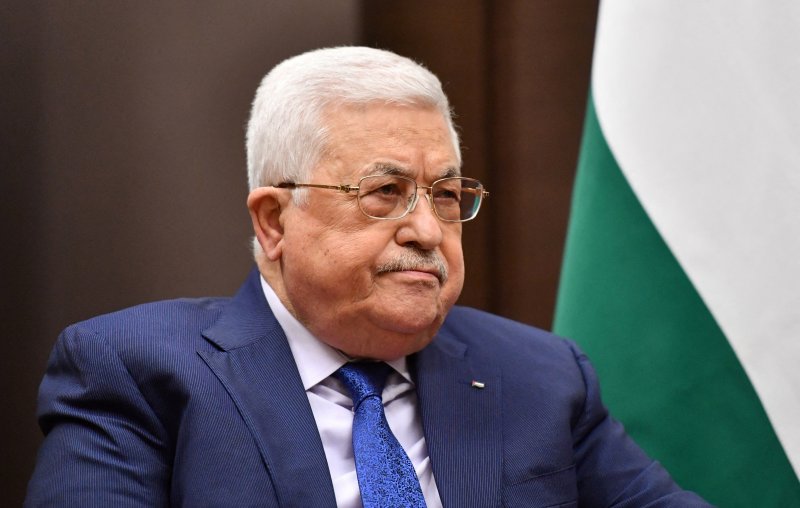
Nor is there a credible Palestinian alternative. The Palestinian National Authority, led by Mahmoud Abbas, has virtually no legitimacy among the people of Gaza or even the West Bank. Powerful clans in places like Hebron are already threatening to break away from Ramallah’s control. For Israeli leaders, neither a Hamas-run statelet (“Hamastan”) nor a Fatah-dominated mini-state (“Fatahstan”) is an acceptable option on their borders.
This has led to speculation about involving neighboring Arab states. A recent report by the Washington Institute for Near East Policy suggested that public safety and law enforcement could be handled by a consortium of five Arab countries that have signed peace agreements with Israel: Egypt, Jordan, the UAE, Bahrain, and Morocco. There were even rumors, cited in Western media, that Israel might hand over control of Gaza to Egypt, which governed the enclave from 1948 to 1967. Yet this scenario seems unlikely. Egypt rejected such responsibility decades ago, and with its own economic troubles and jihadist insurgency, Cairo has no desire to inherit Gaza’s problems.
Another theoretical option would be to place Gaza under temporary UN administration, similar to what was done in Kosovo in 1999. But this would require unanimous support from the world’s major powers and a willingness by the UN to undertake an extraordinarily risky mission. Given Israel’s deep mistrust of the UN—long accused by Jerusalem of harboring pro-Hamas biases—this scenario borders on fantasy.
Meanwhile, the grim reality on the ground cannot be ignored. Gaza has been reduced to rubble. Its housing stock is gone, its fragile infrastructure obliterated, its logistics destroyed. The enclave is entirely dependent on humanitarian aid, and there is no guarantee that the international community will continue to provide billions of dollars’ worth of free food and medicine year after year, especially when even wealthy nations like France, Germany, and the UK are grappling with their own economic crises.
Netanyahu has stated that “the war could end tomorrow if Hamas lays down its arms and releases all remaining hostages.” In his vision, Gaza would be demilitarized and run by a civilian administration committed to peaceful coexistence with Israel. It is an admirable goal—but who would actually be willing to take on this responsibility?
Some of Netanyahu’s proposals suggest a phased approach. Civilians would first be moved into designated “humanitarian zones” where they would receive food, water, and medical care. These zones could later evolve into semi-autonomous entities governed by local clan leaders and militias working in coordination with Israel. This model already has a precedent: the area around Rafah, near the Egyptian border, where Yassir Abu-Shabab’s group has taken control with Israeli cooperation.
Military analyst Sergey Migdal, a former Israeli intelligence and police officer, argues that creating a new governance structure is part of a broader, step-by-step strategy to establish lasting control over the territory. Arab states opposed to Hamas could also play a role in building this new system, he suggests.
But perhaps the most controversial idea on the table is the temporary relocation of Gaza’s population to other countries. History teaches us that “temporary” often becomes permanent, yet this option refuses to disappear. The Washington Post recently reported on a bold U.S. proposal: Washington would take control of Gaza for a decade, transforming it into a gleaming hub of tourism and technology. Under this plan, Gaza’s residents would either emigrate voluntarily or move to safe zones within the enclave while reconstruction takes place. Landowners would receive digital tokens in exchange for redevelopment rights, which could be used to finance a new life abroad or claim housing in one of six to eight planned AI-driven “smart cities” to be built on Gaza’s ruins. Each Palestinian who agrees to leave would receive $5,000 in cash, plus subsidies covering four years of rent and one year of food.
These are bold, even radical ideas. Some are pragmatic, others border on the fantastical. But one thing is certain: the destruction of Hamas will not, by itself, bring peace. The war may soon end, but Gaza’s future remains a question mark—and the decisions made in the coming months will shape not only the fate of two million Palestinians but also the security and stability of the entire region.
(If you possess specialized knowledge and wish to contribute, please reach out to us at opinions@news.az).


Similar news