When France forgot human rights: Shameful war in Algeria


The conflict that erupted in Algeria between France and local insurgents in 1954 can aptly be described as a form of "special military operation." This was a war without frontlines or clear divisional boundaries, where insurgent bases were identified and dismantled through tactics more akin to special operations than traditional combat. The French army segmented Algeria into sectors, "squares," into which military units were deployed via helicopters to locate and eliminate insurgents. Simultaneously, intelligence agencies worked to infiltrate the National Liberation Front (FLN), creating conditions for internal fragmentation.
Despite this complex internal control mechanism, Algeria slipped out of French hands because French society was no longer willing to go to extremes to retain colonial territories. By the 1950s, France was mired in an ideological conflict—on one hand, striving to hold on to a territory declared part of the French Republic, while on the other, facing a mounting wave of decolonization that heralded a new concept of global order.France’s counterinsurgency war in Algeria: Unique tactics and methods
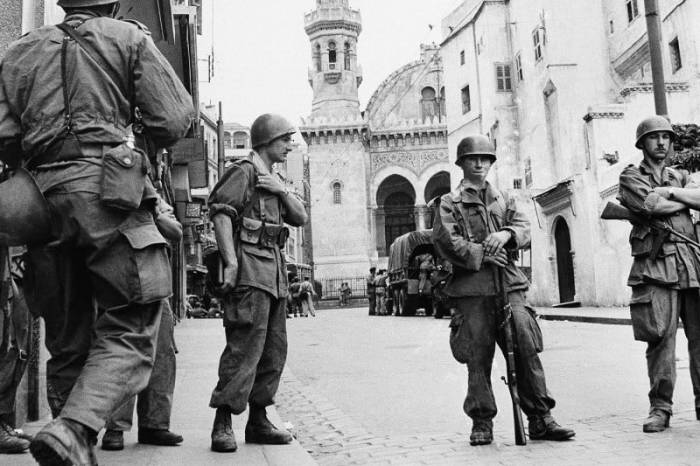
The battle against Algerian insurgents was a truly unique military campaign for France, unlike traditional wars with clear frontlines and defined boundaries. Although France technically controlled all of Algeria, it had to devise new tactics to effectively combat a hidden enemy concealed in the mountains and villages. Sustaining control and clearing the territory without extensive mobilization and prolonged service was impossible, so by 1956, France had stationed around 400,000 soldiers in Algeria.
Through the lens of this operation, it becomes apparent that counterinsurgency warfare demands specialized methods to sway the local population and stem the flow of recruits to the enemy. French intelligence recruited around 180,000 Algerians into the so-called “Harkis” units—formally volunteer militias who, more familiar with local mentalities and traditions than the regular army, assisted in identifying potential insurgents by subtle signs invisible to French soldiers.
Methods of the French intelligence: Infiltration and counterintelligence
France’s intelligence agencies, particularly the Directorate of Territorial Security (DST) , infiltrated the National Liberation Front, developing a comprehensive counterintelligence system. Embedded agents operated deeply and cleverly: they spread disinformation about betrayal and corruption among FLN leaders, undermining the internal cohesion of the rebels and fostering distrust within the movement. One technique involved publicly showcasing “disillusioned” and re-recruited FLN fighters, who spoke out against their former comrades, illustrating that resistance was futile and doomed.
The DST also created fake insurgent groups that, through provocative acts of violence, sowed mistrust and fear among the local population, discouraging potential recruits from joining the movement. This tactic, though harsh, had a profound psychological impact, fueling disorganization within the FLN and heightening internal conflicts. Between April and September 1957, France managed to incite a veritable “internal terror” within the FLN, forcing nationalists to turn on each other. Historian Alexandre Martin aptly described this period: “Nationalists were killing nationalists, doing France’s work for it.”
Yet, despite DST’s successes and the formidable size of the French army, the insurgent resistance did not weaken.
Counterinsurgency strategy of “Quadrillage”: New methods, old brutality
For those who resisted the persuasive tactics of the intelligence services, they faced the military might of a strategy developed by General Raoul Salan, known as “quadrillage.” Algeria was divided into squares, each one controlled by military forces to create the illusion of total territorial control and to ensure rapid access to potential insurgent hotspots. Within these sectors, the French army deployed mobile units composed of elite forces—the Foreign Legion and paratroopers. These forces, for the first time in history, relied on helicopters as their primary mode of transportation in anti-insurgency operations.
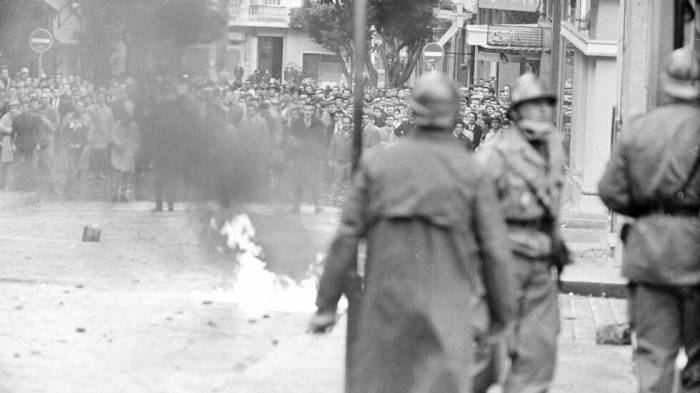
The mobility and speed of the paratroopers allowed them to cross hundreds of kilometers swiftly, responding immediately to signals from informants and security garrisons. When an FLN base or its supporters were identified, soldiers often showed no mercy—any collaboration with insurgents could lead to severe repercussions for an entire village. If, for any reason, helicopter forces couldn’t arrive in time, the village would be subjected to airstrikes, leaving it in ruins.
However, physically isolating the insurgents was only one aspect of this tactic. Alongside the internal clearing operations, France sought to cut off all external support to the rebels by tightening control over the borders with Tunisia and Morocco. These borders were fortified with electrified wire to prevent the delivery of resources and the recruitment of new fighters. Any attempt to cross the border was met with a swift response from mobile helicopter units. Despite high casualties among Algerians, attempts to breach the border continued.
Perhaps the most controversial method employed by the French army was the mass deportation and relocation of residents from remote areas to more densely populated zones under military control. By denying insurgents the opportunity to hide and seek support in the mountains, French authorities believed they were undermining the resource base of the resistance. However, for many Algerians, this policy became a symbol of cruelty rather than protection—displaced people faced poverty, loss of their traditional way of life, and anger toward those who had left them homeless.
Tactical success and political failure
By 1958, the French army believed it had militarily broken the resistance: the guerrilla units had largely been destroyed, and the last insurgent bases were on the verge of capture. However, the political climate had shifted. In France itself, public opinion increasingly condemned these methods, despite their tactical success. The brutality of the military operations, the de facto ethnic cleansing, and mass relocations shattered France’s image as a protector of “civilized” order.
Consequences of the Algerian war: From the march on Paris to independence
France’s military campaign in Algeria gradually eroded public support, not only due to the colonial nature of the conflict but also because of the brutal methods associated with the French army. As the war dragged on longer than expected, dissatisfaction among the French public grew. Many of those mobilized were adult men with families and jobs, who anticipated a swift resolution. Instead, they found themselves embroiled in a prolonged and bloody conflict.
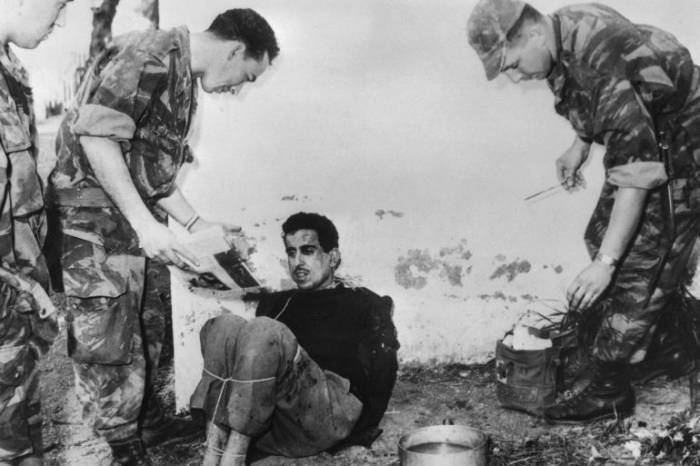
The harsh actions of the French army in Algeria caught the attention of the press: reports of torture, extrajudicial executions, and crackdowns on local residents could no longer be kept secret. In 1957, the newspaper Le Monde published an article stating that France had lost the moral authority to condemn the crimes of the Gestapo or the destruction of Oradour, as the army was employing methods once considered unacceptable by the French themselves.
The case of Maurice Audin, a French professor and communist who supported the Algerian insurgents, became particularly notorious. Arrested by the French army, he was tortured, and his body was never found. This incident shocked the public: while many had turned a blind eye to violence against Muslims, the disappearance of a French citizen revealed that the methods used in Algeria could also be directed at the French themselves.
Internal conflict: General Salan and the attempted coup
For General Salan and the army’s high command, public outrage and the government’s caution felt like “betrayal.” Salan believed there was subversive activity on French soil aimed at undermining the war effort. In response, he took a radical step by initiating a military coup, seizing control of Algeria’s civilian administration. Soon after, airborne troops landed in Corsica, and Salan demanded the resignation of “traitors” and the transfer of power to General Charles de Gaulle. Otherwise, he threatened to march troops into Paris and take over government buildings.
The political crisis and the apparent impossibility of retaining Algeria by force led France to agree to negotiations, offering the insurgents terms under which they could remain part of the country. One proposal included full equality for Muslim Algerians. However, this sparked protests: at a fundamental and political level, the French were not prepared for such radical change.
“If we integrate them, if all Arabs and Berbers in Algeria are considered French, how can we prevent them from settling in France, where the standard of living is much higher?” argued one opponent of integration, hinting at the fear that rural French villages could transform into “Colombey-les-Deux-Mosquées” instead of “Colombey-les-Deux-Églises,” De Gaulle’s hometown.
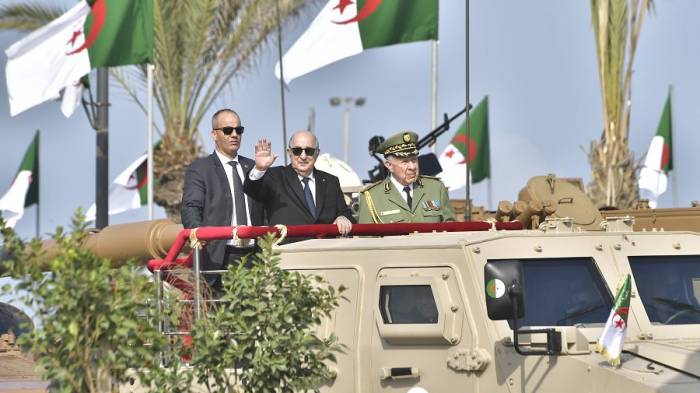
In 1962, Algeria gained independence , confirmed in a referendum where almost 100% of voters supported separation. This decision had significant consequences for France and for de Gaulle, who became a target for nationalists dissatisfied with the loss of Algeria. The main lesson of the war was clear: by the mid-20th century, Western democracies could no longer exercise control over overseas territories with unchecked violence. Public opinion and the drive for human rights had become new obstacles to colonialism, forcing France to recognize that the era of colonial empires was over.
(If you possess specialized knowledge and wish to contribute, please reach out to us at opinions@news.az).


Similar news