Why Africa’s instability threatens global security, Nigerian expert explains


.png)

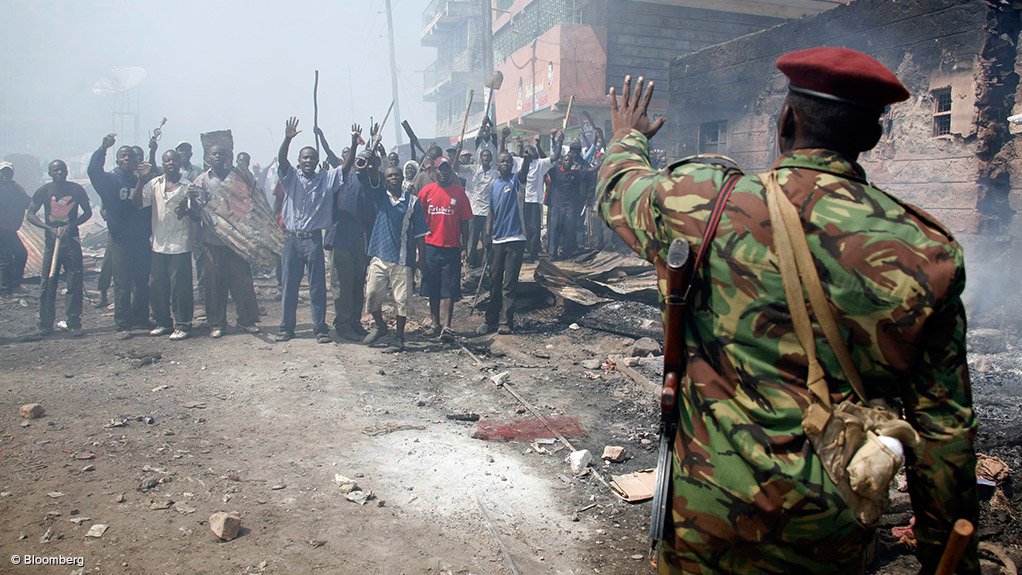
Africa is entering one of its most volatile periods in decades, as overlapping security crises escalate across the Sahel, the Horn of Africa, Central Africa and the Great Lakes region. What sets this moment apart is the way these conflicts are becoming interconnected, the weakening of traditional security guarantors, and the emergence of new geopolitical actors.
Sudan remains the starkest example of this instability. The brutal war between the Sudanese Armed Forces and the Rapid Support Forces has displaced millions and now threatens to destabilize the entire Red Sea corridor. Fragmented armed groups and growing external interference have made peace efforts increasingly fragile.
In the Sahel, military juntas in Mali, Burkina Faso and Niger have expelled Western forces and forged new alliances, yet insecurity continues to worsen. ISIS- and al-Qaeda-linked groups are expanding their reach, raising fears that violence could spread toward coastal West Africa.
Source: aljazeera
Central Africa is also facing rising conflict as fighting between the Congolese army and M23 intensifies, inflaming tensions with Rwanda and Uganda. Millions have been displaced in what analysts describe as a “silent catastrophe.”
The Horn of Africa remains strained as well. Ethiopia’s unresolved internal tensions and Somalia’s renewed Al-Shabaab activity are destabilizing two of the region’s pivotal states. Meanwhile, the Red Sea and Gulf of Aden, critical global trade routes, are increasingly exposed to militant threats.
These converging crises are reshaping Africa’s geopolitical landscape at a time of declining Western influence and growing involvement from Russia, China and Gulf states. With more African governments pursuing independent strategies, the continent’s security challenges have become a defining test for a shifting international order.
Saidu Ahmed, Special Assistant for Research and Strategy to Nigeria’s Minister of Information and National Orientation, told News.Az that Africa’s security landscape is undergoing a profound transformation driven by resurging nationalism, radicalization, shifting geopolitical alignments and renewed global power competition.
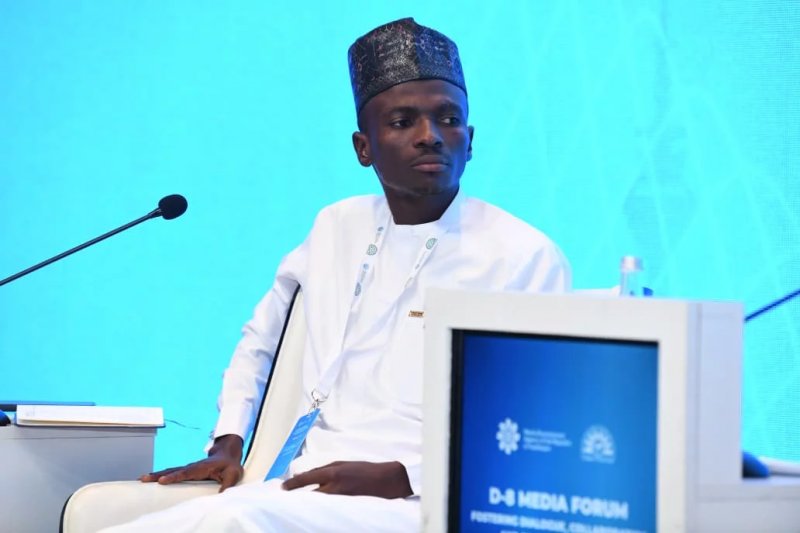
Photo: Saidu Ahmed, Special Assistant for Research and Strategy to Nigeria's Minister of Information and National Orientation
He said the continent is entering a period in which traditional military actors are reasserting their influence, while new regional dynamics and homegrown solutions are gaining momentum.
According to Ahmed, rising nationalism is unfolding alongside deepening ideological radicalization, amplifying terrorism and violent extremism. He stressed that African states must adopt a holistic understanding of how multiple crises overlap. Climate change, poverty, public health emergencies and emerging disruptive technologies, he noted, are not isolated challenges but interconnected pressures that reinforce one another and widen security vulnerabilities.
He emphasized that strategic foresight among African policymakers has become essential in anticipating risks and strengthening national and regional resilience. “Leaders increasingly recognize that insecurity itself is a precondition for warfare, and that deeper structural challenges — resource scarcity, economic hardship and political instability — must be addressed to reduce the risk of future conflict,” he said.
Ahmed also underscored that security strategies must reflect the reality that the experience of safety and insecurity differs across states, communities and individuals. Cultural, historical, gender-based and economic factors shape how societies understand and respond to threats. “Security cannot be treated as a one-size-fits-all concept,” he said, calling for people-centered and context-specific approaches to conflict prevention.
Within Africa, Ahmed noted a “palpable shift toward inward-looking solutions,” as governments increasingly explore alternative development models that break from old patterns of dependency. He highlighted regional initiatives such as the African Continental Free Trade Area (AfCFTA) and the African Union’s Agenda 2063 as key frameworks meant to translate political independence into real economic sovereignty. These platforms, he argued, represent an overdue rethinking of Africa’s development trajectory.
However, he cautioned that as Africa diversifies its partnerships, old patterns of extraction often persist. “Many of Africa’s new partners speak the language of South–South cooperation and mutual benefit, yet continue operating through the same resource-driven logic that defined earlier eras of Western dominance. Without addressing these systemic dynamics, Africa risks re-entering asymmetrical relationships under new branding,” he said.
Source: Ainvest
Reflecting on decades of foreign policy practice, Ahmed said Africa’s geopolitical posture has long been shaped by Western influence. After the Cold War and the collapse of the Soviet Union, he noted, the United States and its European allies dominated global decision-making, and African states generally aligned their economic, diplomatic and security priorities with Western powers. Dependency persisted, even when framed as development cooperation.
Today, the intensifying rivalry between the United States and China is prompting African governments to recalibrate their foreign policy strategies. “Many states are using this competition as leverage to secure better terms in infrastructure financing, debt restructuring and technology partnerships,” he said, pointing to Kenya’s balancing act between Chinese Belt and Road investments and U.S. security cooperation as a clear example. Angola’s efforts to diversify its oil partnerships away from heavy reliance on Chinese lenders toward Gulf and Western actors, he added, reflect the same pragmatic shift.
Yet Ahmed warned that diversification alone cannot substitute for structural transformation. “The core problem lies not in engaging multiple global powers, but in the lack of a radical break from economic models that measure national progress in profit rather than redistribution,” he argued. Africa’s experiment with multipolarity — while necessary and potentially beneficial — risks becoming another iteration of externally shaped development unless it is grounded in people-centered, equitable growth.
He concluded that the reshaping of Africa’s security architecture must go hand in hand with rethinking the continent’s development priorities. “Only then can Africa move beyond cycles of dependency and chart a path toward true stability, sovereignty and long-term resilience,” he said.


Similar news