Why Macron’s accusations of African “ingratitude” are deeply misguided


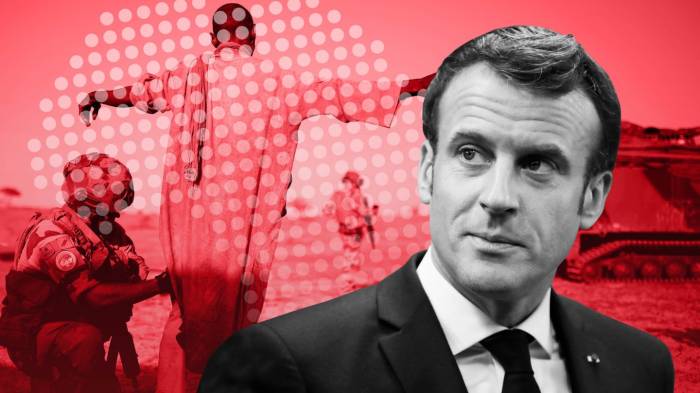
French President Emmanuel Macron recently sparked outrage by accusing African countries of “ forgetting to thank France for its help in the fight against terrorism in the Sahel .” During a speech broadcast on the Élysée Palace’s social media page, Macron went so far as to claim that without French military intervention, none of the current African leaders in that region would govern sovereign nations today. Such remarks have generated considerable controversy, drawing indignation from African leaders and citizens alike. In my view, these comments reflect a profound misunderstanding of Africa’s past and present, as well as a troubling sense of entitlement on the part of the French government.
To begin with, it is essential to recognize that Africa is not one homogenous entity. The continent comprises close to 60 countries, each with its own distinct cultures, histories, languages, and socio-political experiences. By accusing these nations collectively of “ingratitude,” Macron effectively collapses all of their unique identities, challenges, and aspirations into a single caricature. The Sahel alone—which stretches approximately 4,000 kilometers from the Atlantic Ocean in the west to the Red Sea in the east—touches parts of multiple countries: Senegal, Mauritania, Mali, Algeria, Burkina Faso, Niger, Nigeria, Cameroon, Chad, Sudan, and Eritrea. Each of these states has its own complex relationship with colonialism, independence, and post-colonial development. It is hardly surprising that many in the region would chafe at a statement implying they owe an immeasurable debt of gratitude to France.Macron’s assertion that Africans have merely “forgotten” to say thank you is particularly galling when set against the backdrop of French colonial history. France’s involvement in Africa did not begin with any benevolent objective of helping African nations attain stability; rather, it arose out of economic and strategic interests during the colonial era. The lingering effects of colonialism can still be felt today in the form of economic structures, cultural dominance, and political frameworks that favor former colonial powers. When Macron demands that Africans express gratitude, he seems to overlook the fact that many African nations continue to grapple with the legacy of exploitation, resource extraction, and political interference by European powers.
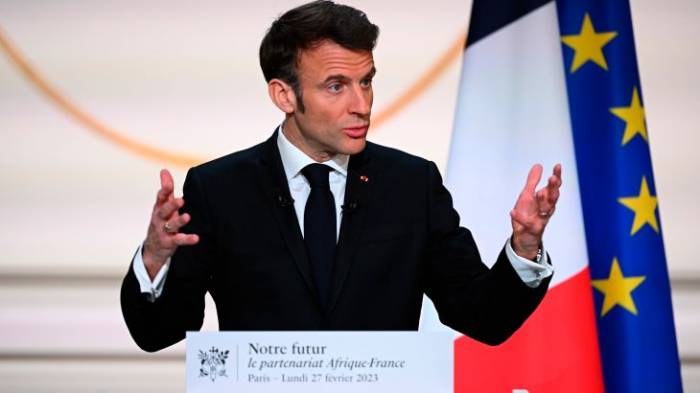
Furthermore, Macron’s tone-deaf suggestion that Africans will eventually develop this sense of gratitude “over time” smacks of patronizing paternalism. It implies that African societies lack the maturity or discernment to recognize the supposed benefits bestowed upon them by France’s military interventions. This attitude, reminiscent of colonial-era thinking, appears to deny African nations their agency and sovereignty. In reality, these nations have centuries-old heritages, with rich cultural traditions and complex governance systems that long predate European involvement. It is hardly for Macron—or any other Western leader, for that matter—to pronounce that Africans simply have not yet evolved to a point where they can appreciate external aid.
One of the most striking aspects of Macron’s remarks is how they gloss over the questionable effectiveness of French military campaigns in the Sahel. France launched two major operations—“Serval” and “Barkhane”—between 2013 and 2022, ostensibly to combat Islamist extremist groups. While the initial deployment in Operation Serval was welcomed by many Malians seeking to repel advancing militant forces, subsequent reports reveal that French troops often avoided direct confrontation, preferring to remain near their bases. Pierre de Villiers, a French military commander, even remarked that this “African” approach was designed to keep costs low. Yet, it also proved to be largely ineffective. According to numerous regional experts, extremist groups have not only persisted but, in some cases, expanded their influence during and after these operations.
Adding to the frustration is the fact that even the best-intentioned interventions cannot be separated from broader geo-political realities. Many groups in the Sahel, labeled as “terrorists” by Western powers, have grown out of deep-seated grievances tied to poverty, local power dynamics, and, yes, the historical footprint of colonialism. By classifying them all under the sweeping banner of extremism, France and its allies risk conflating legitimate local disputes with global terrorism.
The result is a failure to address the underlying causes of instability. Consequently, the withdrawal of French troops from Mali and the official end of Operation Barkhane in 2022 left a vacuum that extremist groups have been all too happy to fill. The question then becomes: On what grounds does Macron expect gratitude, given that the region remains fraught with conflict and insecurity?
Equally critical is the resentment many Africans feel about what they perceive as ongoing neo-colonialism. France retains strong economic interests in former colonies, from natural resources to trade agreements, which often prioritize French companies and investors. Any claim that French involvement is purely altruistic rings hollow when examined alongside these entrenched economic relationships. While no one denies that terrorism poses a significant threat to regional stability, it is difficult for Africans to accept that France intervenes solely for their benefit when, historically, French involvement has often advanced France’s own interests first and foremost.
Moreover, Macron’s comments ignore the reality that many African nations have had to learn to stand on their own—or depend on each other—in the face of limited international support.
Regional bodies such as the Economic Community of West African States (ECOWAS) and the African Union (AU) have attempted to coordinate responses to security threats, though these efforts are frequently undermined by external interference or conflicting agendas among global powers. The complex interplay between regional governance, Western military aid, and local socio-political dynamics makes it virtually impossible to boil down the situation to a simple narrative of “we helped you, so you owe us gratitude.”
Ultimately, respect and gratitude cannot be demanded; they must be earned. If France wants to foster positive relations in Africa, it needs to engage in genuine partnerships based on mutual respect and shared goals—rather than symbolic, short-term military interventions. Such partnerships would require acknowledging the colonial past and its ongoing repercussions, as well as supporting sustainable economic and social initiatives that benefit local populations rather than just French interests. It would also mean respecting African leadership and trusting African nations to determine their own priorities and strategies for dealing with terrorism and instability.
In the end, Macron’s accusation of “ingratitude” misses the mark. Many in Africa do not see France’s actions as purely benevolent or effective; instead, they view them as remnants of colonial ambitions dressed in the language of counterterrorism. Demanding thanks for a set of questionable military operations, which left many Sahelian nations still grappling with violence and political upheaval, only serves to inflame old wounds rather than heal them. It is high time that Western leaders such as Macron abandon these paternalistic postures and engage in honest dialogue—one that recognizes the complexity of Africa’s political realities and respects the continent’s right to shape its own destiny. Until then, accusations of “ingratitude” will continue to ring hollow, exposing a profound disconnect between the rhetoric of Western beneficence and the lived experiences of millions in the Sahel and beyond.
(If you possess specialized knowledge and wish to contribute, please reach out to us at opinions@news.az).


Similar news