Why the new Gaza peace plan matters more than ever



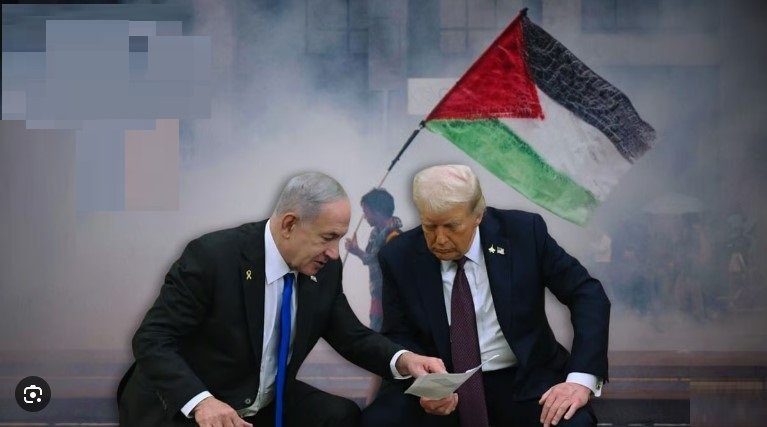
Editor's note: Moses Becker is a political commentator for News.Az, holding a PhD in political science and specializing in interethnic and interreligious relations. The article reflects the author’s personal views and may not represent the position of News.Az.
On September 29, the 47th President of the United States, Donald Trump, unveiled an ambitious 21-point plan aimed at ending the war in the Gaza Strip. The document, complex and multilayered, outlines a roadmap for disarming Hamas, freeing Israeli hostages, restoring order, and setting the foundations for long-term regional stability. Yet what makes this initiative stand out is not only its content, but the coalition Trump managed to build around it.
In a striking diplomatic achievement, the U.S. president secured the participation of major Islamic countries — Indonesia, Pakistan, Saudi Arabia, the United Arab Emirates, Egypt, Jordan, Qatar, and Türkiye. This alignment is historic in itself: two of these nations, Türkiye and Qatar, have for years supported Hamas as part of the wider Muslim Brotherhood movement. Their willingness to now engage in a plan that envisions the disarmament and removal of Hamas from power underscores a profound shift in the Muslim world — a turn from ideological loyalty toward pragmatic stability.
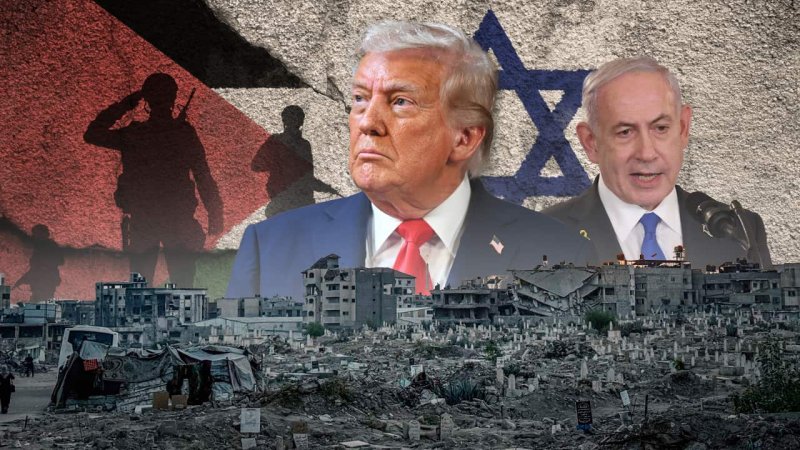
Source: Reuters
Trump’s plan is comprehensive. It calls for the disarmament and removal of all radical factions in Gaza, the release of Israeli hostages, and the total destruction of Hamas’s tunnels and weapons production facilities. The proposal also envisions a gradual withdrawal of Israeli troops — contingent upon a verified ceasefire and an amnesty for Hamas leaders who agree to lay down their arms and accept peaceful coexistence. Perhaps the most controversial element is the creation of a “Council for Peace” to govern Gaza, co-chaired by Donald Trump himself and former British Prime Minister Tony Blair.
Israel quickly endorsed the initiative. Prime Minister Benjamin Netanyahu’s office issued a statement declaring Israel’s readiness to implement the first stage of Trump’s plan — the immediate release of hostages. The Israel Defense Forces were instructed to prepare for the operation and remain on alert in case Hamas attempts to sabotage it. “We will continue to work in full coordination with President Trump and his team to end the war in line with the principles outlined by Israel and consistent with President Trump’s vision,” Netanyahu’s office said.
Trump, for his part, was characteristically direct: “Hamas is being given one last chance to avoid total destruction.” With most of the international community expressing varying degrees of support for Washington’s effort, the plan has placed unprecedented pressure on Hamas, forcing the group to either accept peace or face annihilation.
But as always in the Middle East, things are never that simple.
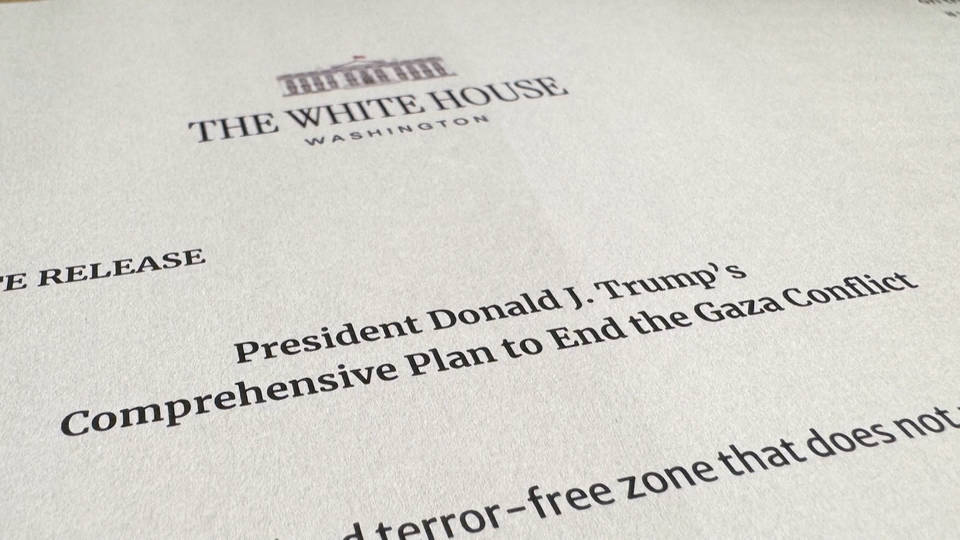
Source: Democracynow
Hamas’s initial response was ambiguous. Walid Kilani, the group’s spokesperson in Lebanon, announced that the proposal “does not include the surrender of resistance weapons.” In other words, Hamas selectively interpreted the plan — embracing the call for a ceasefire, while rejecting the requirement to disarm. Yet the document explicitly states that “members of Hamas who agree to lay down their weapons and declare readiness for peaceful coexistence will be granted amnesty.”
Despite these contradictions, negotiations are moving forward. Delegations from Hamas and other parties have already arrived in Cairo, where talks will be held under Egyptian mediation. An American delegation led by Steve Witkoff, Trump’s envoy for Middle East coordination, is also on its way, a sign that the U.S. administration views the process as a serious diplomatic mission rather than a symbolic gesture.
Qatar, a long-time mediator in Gaza-related talks, welcomed Hamas’s initial reaction and reaffirmed its commitment to Trump’s initiative. “We confirm our support for the president’s statements calling for an immediate ceasefire to ensure the safe and swift release of hostages and achieve results that will end the bloodshed,” Doha announced, adding that it is coordinating closely with Egypt and the United States.
Israel, meanwhile, remains cautious but pragmatic. According to the Prime Minister’s Office, “in light of Hamas’s response, Israel is preparing to immediately implement the first phase of the Trump plan for the release of all hostages.” The statement emphasized that the Israel Defense Forces will remain vigilant and ready to resume operations at any moment: “Given the sensitivity of the situation, all forces must remain on high alert and respond rapidly to any threat.”
Source: NPR
Türkiye and several Arab states acting as mediators have applied significant pressure on Hamas to support the plan. According to the BBC, intermediaries contacted the head of Hamas’s military wing in Gaza, who made it clear that he opposes the U.S.-proposed ceasefire plan. A source close to the movement’s leadership told AFP that Hamas is seeking amendments to several provisions of the agreement — most notably the clause on disarmament. Yet it is difficult to imagine that either Trump or Netanyahu would agree to such a revision.
Hamas has also demanded “international guarantees” ensuring the complete withdrawal of Israeli troops from Gaza and a commitment from Israel not to target members of the group inside or outside the enclave. Essentially, the organization is bargaining for its survival, trying to secure what might be termed the “right to exist” for its leadership. The comfort and power Hamas’s leaders have enjoyed for years make surrendering that position extraordinarily difficult.
The political bureau of Hamas, based in Qatar, has shown more flexibility, indicating readiness to accept the plan with minor adjustments. However, their influence is limited: they do not control the hostages held by Hamas fighters in Gaza. As The Wall Street Journal reported, “Hamas agreed in principle to the main provisions of Trump’s Gaza plan, but sharp internal disagreements remain.” The New York Times echoed this assessment, noting that “even if implemented, the plan will likely move forward only with great difficulty.”
The divisions are not limited to Hamas. Tensions have also emerged within the coalition of Arab and Muslim states that endorsed Trump’s initiative. Some leaders are uneasy about the pace of Israeli troop withdrawal, while others worry that rapid disarmament of Hamas could leave a power vacuum in Gaza. Netanyahu, for his part, reportedly adjusted certain elements of the plan in Israel’s favor, particularly the timeline for troop withdrawal and the sequencing of disarmament, ensuring that Israeli security concerns take precedence.

Source: Dailymail
According to Bloomberg, Hamas’s reaction can best be summarized as “Yes, but…” The group insists that all twenty-one points of the American proposal, including disarmament, must be carefully reviewed and renegotiated. This cautious stance, while diplomatically polite, reveals the group’s reluctance to commit to the fundamental changes the plan demands.
In a surprising twist, Palestinian Islamic Jihad, traditionally aligned with Hamas, also expressed support for Trump’s proposal. As Reuters reported, the group’s statement described Hamas’s response as “fully consistent with the broader position of Palestinian resistance.”
For now, the world waits. Trump’s plan represents the most significant and controversial American intervention in the Israeli–Palestinian conflict in years. It is a gamble — a wager that pragmatic cooperation between Arab states, Israel, and the U.S. can succeed where decades of diplomacy have failed.
The stakes are enormous. If successful, the plan could reshape the Middle East’s security architecture and redefine America’s role as a regional powerbroker. If it collapses, the result will likely be another spiral of violence, reinforcing the cynicism that has long surrounded every “final” peace initiative in the region.

Source: The Jerusalem Post
Hamas’s leaders know this is their last opportunity to survive politically. Trump’s declaration that “Hamas is being given one last chance to avoid total destruction” was not rhetorical bravad, it was a signal. For the first time in years, the movement faces united pressure from both Washington and its former allies in the Muslim world.
Whether this unity can be sustained long enough to transform words into peace or whether it will dissolve into yet another cycle of violence remains to be seen. But one thing is clear: the Trump Plan has already changed the dynamics of the Gaza conflict. It has forced every player — Israel, Hamas, and the Arab world — to make a choice between endless war and an uncertain peace. And in the Middle East, uncertainty has always been the hardest choice of all.
(If you possess specialized knowledge and wish to contribute, please reach out to us at opinions@news.az).


Similar news