Why Turkiye replaced "Central Asia" with "Turkestan"- Expert Opinions


.png)
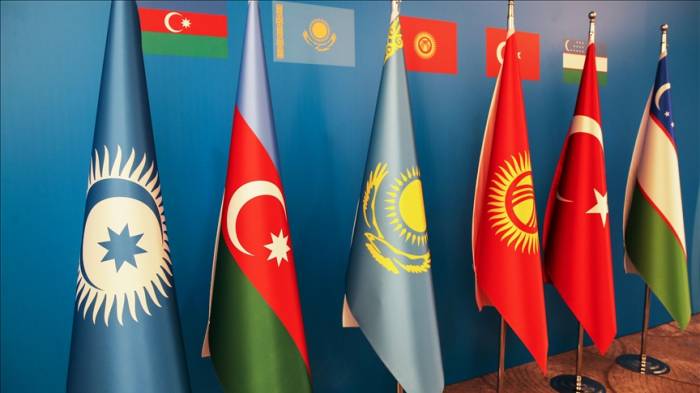
The Turkish Ministry of National Education has decided to replace the term "Central Asia" with "Turkistan" in its history curriculum , a move that experts believe is designed to strengthen national identity and patriotism among future generations.
Turkish President Recep Tayyip Erdogan emphasized the importance of Turkic unity, stating: "We will work hand in hand to make the coming era the era of the Turks, extending our vision of the 'Turkish Century' to the Organization of Turkic States."Experts note that this change is part of a broader strategy to deepen ties within the Turkic world , including efforts to create a shared history, literature, maps, and even a common alphabet.
News.Az 's analytical portal sought to delve deeper into the political and economic factors behind this decision, as well as gauge reactions from global powers. Turkish political scientist and analyst Engin Ozer, along with Elnur Hasan Mikail, Head of the Department of Political Science at Kars Kafkas University, in exclusive interviews with News.Az, shed light on the historical and strategic significance of this shift.
According to Ozer, the term "Turkistan" was traditionally used in Turkiye until the Russian Revolution: "The term refers to the region now known as Central Asia. Names such as Uzbekistan were largely introduced during the Soviet era, but historically, the region was known as Turkistan. Even during the Russian Empire's time, it was referred to as Turkistan. The term 'Central Asia' was coined by English Orientalists, much like 'Near East' or 'Middle East,' which have also been adopted in Türkiye. This shift in terminology weakened Türkiye’s ties with the region over time."
Ozer also emphasized the potential political ramifications: "Recently, the Organization of Turkic States agreed on a common alphabet. This cultural cooperation could evolve into a political union in the future, potentially resembling the structure of the European Union. Economic factors, such as increasing trade and resolving logistical challenges, make this vision more feasible."
Ozer acknowledged potential complications arising from this decision, particularly regarding Russia’s influence in the region: "Russia will likely reassess its relations with CIS countries. For instance, Kazakhstan may continue to balance its membership in the Turkic union and its relations with Russia, as long as the Organization of Turkic States remains focused on economic and political collaboration rather than military alignment. However, if the CIS disintegrates or a military alliance forms, it could prompt a stronger reaction from Moscow."
Regarding China, Ozer remarked that this development might be seen positively for Chinese logistical routes: "China’s Belt and Road Initiative faced disruptions following the Ukraine war. A union of Turkic states could facilitate trade routes to Europe. Therefore, while Russia may experience some discomfort, China is less likely to perceive this as an immediate threat."
In another interview with News.Az, Elnur Hasan Mikail, Head of the Department of Political Science at Kars Kafkas University , reiterated the historical significance of the term: "The region now known as Central Asia, including Kazakhstan, Kyrgyzstan, Uzbekistan, Turkmenistan, and Tajikistan, was historically called Turkistan, dating back to the time of Tamerlane and even earlier, as these lands were inhabited by Turks. After the Russian Empire annexed the region, the name 'Central Asia' was introduced."
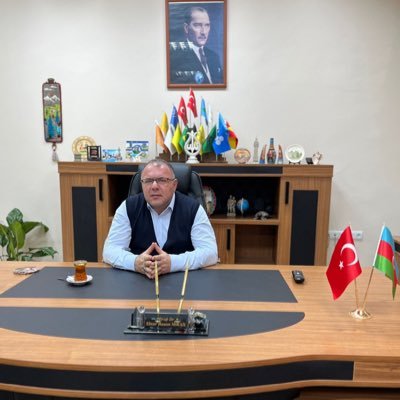
Hasan Mikail further elaborated that Türkiye’s adoption of "Turkestan" is part of the expansion of the Organization of Turkic States (OTS). "Russia historically viewed this region as its own, but these countries are now independent. It is only natural for them to reclaim their historical names. However, Russia may react to this decision, as it still sees the region as within its sphere of influence through the CIS."
Hasan Mikail also touched upon the potential economic ramifications of a Turkic union : "A union of Turkic states led by Türkiye could create a substantial economic bloc. Currently, the combined GDP of the seven member states of the OTS is approximately $4 trillion, positioning it as the 7th or 8th largest economy in the world. This economic power could cause concern for global powers like Russia, China, and the United States, none of whom would want to see such a significant new player emerge on the global stage."
In conclusion, Türkiye's decision to reintroduce the term "Turkistan" is more than just a historical restoration; it reflects broader geopolitical ambitions, aiming to unite the Turkic world culturally, economically, and potentially politically. While the move is unlikely to pose an immediate threat to major powers, it may set the stage for long-term shifts in regional dynamics.


Similar news