Bus-sized asteroid to make close flyby of Earth


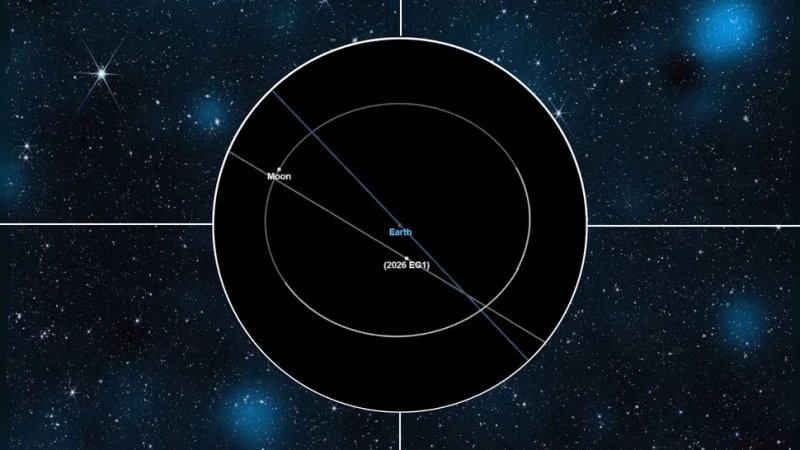
A newly discovered bus-sized asteroid is set to fly past Earth late on March 12, passing closer than the Moon while posing no threat to the planet or its natural satellite.
The asteroid, designated 2026 EG1, will make its closest approach at 11:27 p.m. EDT on March 12 (03:27 GMT on March 13), News.Az reports, citing Space.com.
At that moment, it is expected to pass about 197,466 miles (317,791 kilometers) from Earth as it travels beneath Antarctica.
According to NASA estimates, the asteroid measures between 32 and 72 feet (10–22 meters) in diameter and will be moving at roughly 21,513 miles per hour (34,621 kilometers per hour) relative to Earth. After passing our planet, it will continue its path following a distant flyby of the Moon.
Scientists first detected the object on March 8, and early observations indicate that 2026 EG1 follows a 655-day elliptical orbit around the Sun. During this orbit, the asteroid travels from a point inside Earth’s orbital path to well beyond the orbit of Mars.
The asteroid is not expected to make another close planetary approach until September 13, 2186, when it will pass about 7.5 million miles (12.1 million kilometers) from the surface of Mars.
NASA currently tracks more than 41,000 near-Earth asteroids with the help of international partners. That number is expected to grow significantly as new observatories, including the Vera Rubin Observatory, expand their surveys of the solar system. The facility has already identified around 2,000 previously unknown objects in its initial observations.
Despite the large number of known near-Earth asteroids, NASA’s Center for Near Earth Object Studies says there is no predicted asteroid impact capable of causing major damage to Earth within the next 100 years.
Nevertheless, NASA and its partners continue to develop planetary defense strategies. These efforts include conducting simulation exercises to improve global response to potential asteroid threats and testing technologies designed to redirect hazardous space objects.
By Nijat Babayev


Similar news