Can a nuclear accident happen without a war: realistic scenarios


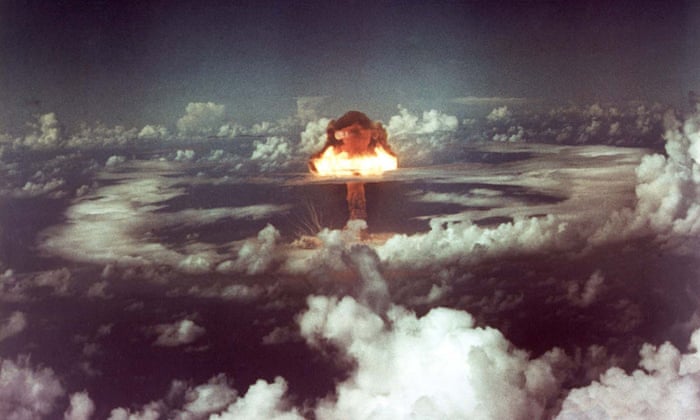
The word “nuclear” is most often associated with war, deterrence, and geopolitical confrontation, News.Az reports.
Yet history and expert assessments show that nuclear accidents can and do occur outside the context of armed conflict. These incidents may not involve deliberate attacks or hostile intent, but they can still produce severe humanitarian, environmental, economic, and political consequences. Understanding how a nuclear accident can happen without a war is essential for realistic risk assessment, public awareness, and policy planning.
This evergreen analysis examines credible scenarios in which nuclear accidents could occur in peacetime, why they remain plausible today, and what lessons can be drawn to reduce future risks.
Defining a nuclear accident
A nuclear accident refers to an unintended event involving nuclear materials or facilities that leads to the release of radiation or creates a serious risk of such release. These accidents can occur in civilian nuclear power plants, research reactors, medical facilities, nuclear fuel cycle sites, or military-related installations handling nuclear weapons or materials.
Importantly, a nuclear accident does not require the detonation of a nuclear weapon. Radiation exposure, environmental contamination, and long-term health effects can arise from failures in safety systems, human error, or external factors, even in the absence of conflict.
Historical proof that war is not required
History already provides clear evidence that nuclear accidents can happen without war. The most prominent examples occurred during peacetime and reshaped global nuclear safety standards.
The Chernobyl disaster in 1986 resulted from a flawed reactor design combined with operator error during a safety test. No war was involved, yet the consequences were transnational and long-lasting. Large areas became uninhabitable, public trust in nuclear energy declined sharply, and health effects are still debated decades later.
The Fukushima Daiichi accident in 2011 followed a massive earthquake and tsunami. The reactors shut down as designed, but the loss of power and cooling systems led to core meltdowns. Again, no military action occurred. The event demonstrated how natural disasters can overwhelm even advanced technological systems.
These cases underscore a central point: nuclear accidents are not hypothetical peacetime risks. They are documented realities.
Aging nuclear infrastructure
One of the most realistic scenarios for a nuclear accident without war involves aging infrastructure. Many nuclear power plants around the world were built in the 1970s and 1980s. While their operating licenses are often extended, aging components pose increasing safety challenges.
Metal fatigue, corrosion, outdated control systems, and declining institutional knowledge can all contribute to higher risk. Even with rigorous inspections, complex systems degrade over time. If maintenance is deferred due to budget constraints or political pressure to keep reactors running, the probability of failure increases.
This scenario is particularly relevant in regions where nuclear plants are critical to national energy supply and alternatives are limited. Economic incentives can quietly erode safety margins.
Human error and organizational failures
Human error remains one of the most persistent risk factors in nuclear safety. Nuclear facilities depend on highly trained personnel, clear procedures, and strong safety culture. When these elements weaken, accidents become more likely.
Organizational failures can include poor communication, inadequate training, fatigue, or complacency. In some cases, management pressure to meet production targets may encourage shortcuts. In others, staff may misinterpret data or delay critical decisions during emergencies.
Nuclear technology is unforgiving of small mistakes. A chain of minor errors, none of which seem catastrophic on their own, can align into a major accident. This “Swiss cheese” effect has been identified repeatedly in safety studies across high-risk industries.
Natural disasters beyond design assumptions
Climate change is altering the risk landscape for nuclear facilities. Extreme weather events are becoming more frequent and severe, challenging assumptions made during the original design of many plants.
Flooding, heatwaves, wildfires, and rising sea levels all pose threats. Cooling systems require reliable access to water at certain temperatures. Prolonged heatwaves can reduce cooling efficiency, while droughts may limit water availability altogether.
Earthquakes and tsunamis remain relevant in seismically active regions, but climate-driven hazards now add new layers of complexity. A nuclear accident triggered by a natural disaster would still be a peacetime event, yet its consequences could rival those of intentional attacks.
Cybersecurity and digital vulnerabilities
Modern nuclear facilities rely heavily on digital control systems. While this improves efficiency and monitoring, it also introduces cybersecurity risks. A cyber incident does not require war, nor does it necessarily involve a state actor.
Malware, software errors, or insider threats could disrupt safety systems, falsify sensor readings, or disable backup controls. Even if a cyberattack is not designed to cause physical damage, unintended consequences could arise.
Experts increasingly warn that cyber risks blur the line between accident and attack. A poorly secured system could experience cascading failures that resemble a traditional industrial accident, even though the initial trigger was digital rather than mechanical.
Transportation and fuel cycle accidents
Nuclear risk is not confined to power plants. The nuclear fuel cycle includes mining, enrichment, fuel fabrication, transportation, storage, and waste disposal. Each stage carries its own accident scenarios.
Transporting nuclear fuel or radioactive waste involves road, rail, or sea routes. Accidents involving vehicles carrying radioactive materials, while rare, are possible. A severe crash, fire, or mishandling incident could lead to contamination and public exposure.
Similarly, storage facilities for spent fuel must remain secure for decades. Cooling failures, structural degradation, or mishandling during transfer operations could cause radiation releases without any wartime context.
Research reactors and medical facilities
Beyond large power plants, smaller reactors and radioactive sources are used in research, industry, and medicine. These facilities often operate with less public scrutiny, yet they still require strict safety controls.
A realistic scenario involves improper storage or handling of radioactive sources in medical or industrial settings. Past incidents have shown that lost or abandoned sources can cause serious exposure when unknowingly handled by civilians.
While such events may not reach the scale of major power plant accidents, they demonstrate how nuclear risks extend into everyday civilian life, far removed from military considerations.
Military nuclear accidents without war
Even military-related nuclear accidents do not necessarily involve war. During the Cold War, several incidents occurred involving nuclear weapons, aircraft crashes, or submarine accidents, often referred to as “broken arrow” events.
These incidents typically happened during routine operations, training exercises, or transportation. Although safeguards prevented nuclear detonations, some events led to radioactive contamination and long-term cleanup efforts.
The continued existence of nuclear arsenals means that peacetime accidents remain possible. Maintenance errors, aging delivery systems, or accidents involving nuclear-powered submarines represent ongoing risks.
Political and economic pressures
Another realistic scenario involves political or economic pressure undermining safety. Governments facing energy shortages, financial crises, or political instability may prioritize short-term needs over long-term risk management.
Regulatory agencies may lack independence or resources. Safety inspections could be rushed, and whistleblowers discouraged. Over time, this environment increases the likelihood of accidents.
This risk is not confined to any single country or political system. It can emerge wherever transparency, accountability, and investment in safety are compromised.
Consequences beyond radiation
A nuclear accident without war would still have profound consequences. Immediate health impacts may be limited compared to nuclear weapons use, but long-term effects can be extensive.
Evacuations displace communities, sometimes permanently. Agricultural land may become unusable. Economic losses can reach hundreds of billions of dollars. Psychological stress and social disruption often persist long after radiation levels decline.
Politically, such accidents can destabilize governments, reshape energy policy, and strain international relations. Neighboring countries may demand information, compensation, or changes in operations, turning a domestic accident into a regional issue.
Can these risks be reduced?
While nuclear accidents cannot be eliminated entirely, their likelihood and impact can be reduced. Key measures include rigorous safety culture, independent regulation, continuous training, and transparent reporting.
Modern reactor designs emphasize passive safety systems that function without human intervention or external power. Strengthening cybersecurity, climate resilience, and emergency preparedness is equally critical.
International cooperation plays a vital role. Information sharing, peer reviews, and adherence to global safety standards help identify weaknesses before accidents occur.
A realistic conclusion
A nuclear accident can happen without a war, and history confirms that it already has. The most realistic scenarios involve aging infrastructure, human and organizational error, natural disasters, cyber vulnerabilities, and political or economic pressures. None of these require hostile intent, yet all carry serious consequences.
Understanding these risks is not about promoting fear but about encouraging realism. Nuclear technology offers benefits, but it demands constant vigilance. In a world facing climate change, digital threats, and complex political pressures, the risk of peacetime nuclear accidents remains a critical issue that deserves sustained attention and informed debate.


Similar news