China brain implant lets paralyzed patient control devices


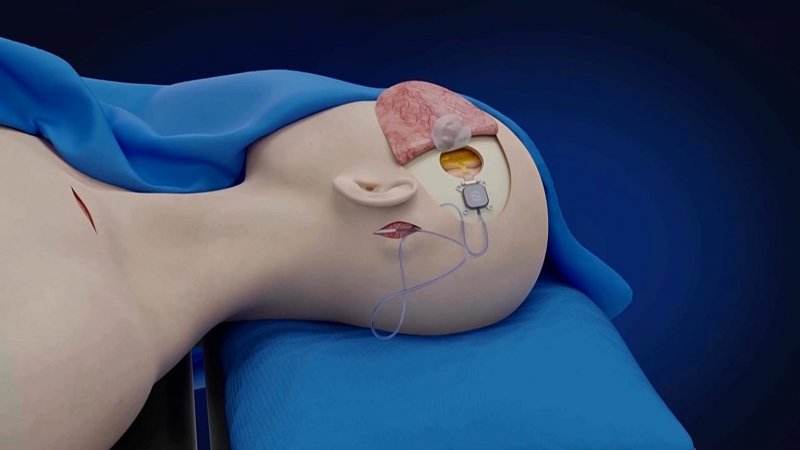
Chinese scientists have reported encouraging results from a clinical trial using an invasive brain-computer interface (BCI) that allowed a paralyzed patient to control multiple devices using only neural signals, marking a major step toward real-world applications of brain implant technology.
According to researchers from the Chinese Academy of Sciences (CAS), the trial involved a patient with tetraplegia following a spinal cord injury sustained in 2022. After receiving a brain implant in June 2025, the patient was able to control a computer cursor, operate a tablet, navigate a smart wheelchair and command a robotic dog to perform tasks such as retrieving objects, News.Az reports, citing Reuters.
The trial demonstrated stable, real-world control outside laboratory conditions, a key milestone in BCI research. Scientists said the patient successfully maneuvered the wheelchair in his neighborhood after several weeks of training, highlighting the system’s potential for daily use.
The implant was developed by the CAS-affiliated Center for Excellence in Brain Science and Intelligence Technology. The wireless invasive interface records neural activity at high resolution and translates brain signals into commands for external devices.
To enhance performance, the research team combined two neural decoding methods to extract clearer signals from background noise, improving overall control accuracy by more than 15%. They also reduced system latency to under 100 milliseconds — faster than typical human reaction time — making device control smoother and more intuitive.
Brain-computer interfaces aim to create a direct communication pathway between the brain and machines, offering new possibilities for patients with paralysis or severe mobility impairments. While earlier studies have focused on tasks such as robotic arm movement or text input in controlled environments, researchers say reliability in everyday settings remains a major challenge.
The latest trial suggests progress toward practical mobility solutions that extend beyond screens and laboratory demonstrations, potentially improving independence and quality of life for people with paralysis.
The report comes amid growing global interest in neural interface technologies, as research teams worldwide race to turn experimental brain implants into safe, reliable tools for real-world use.


Similar news