China criticizes Thai art exhibition for ‘distorting’ policies on Tibet, Xinjiang, and Hong Kong


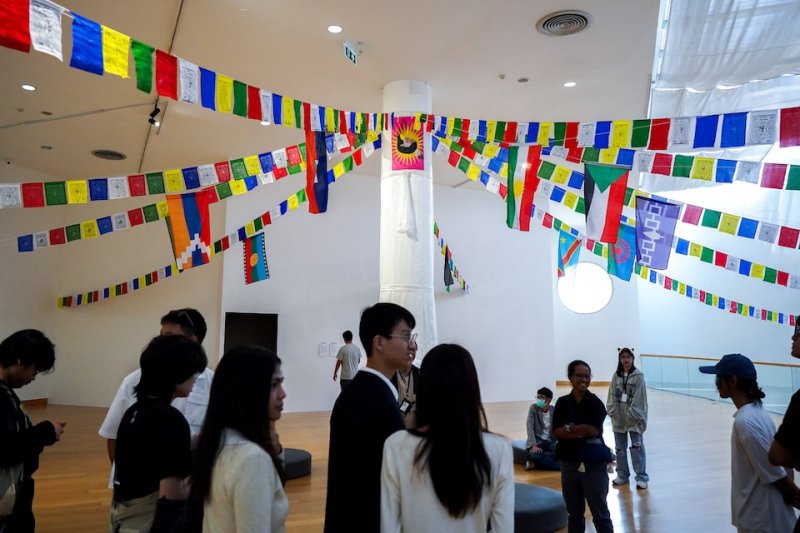
China has accused organizers of a recent art exhibition in Thailand of misrepresenting its policies on Tibet, Xinjiang, and Hong Kong. The controversy arose after the show’s co-curator revealed that certain artworks were removed or altered at Beijing’s request.
The exhibition, titled “Constellation of Complicity: Visualising the Global Machinery of Authoritarian Solidarity,” opened on July 24 at the Bangkok Arts and Cultural Centre (BACC), one of Thailand’s leading galleries. It focused on authoritarian regimes and included works by several artists living in exile, News.Az reports, citing Reuters.
China’s Foreign Ministry condemned the exhibition, stating it promoted “fallacies” such as “Tibetan independence,” the “East Turkestan Islamic Movement,” and “Hong Kong independence.” The ministry said these themes distorted China’s policies and undermined its core interests and political dignity.
In response to what it described as pressure from the Chinese Embassy, BACC removed or altered some artworks addressing Hong Kong and China’s treatment of ethnic minorities in Tibet and Xinjiang. However, China’s Foreign Ministry neither confirmed nor denied involvement of the embassy in these changes.
The ministry also criticized the use of cultural and artistic exchange as a cover for political interference in China’s internal affairs.
China’s growing influence in Southeast Asia means regional governments often balance economic cooperation with concerns over political sovereignty. This incident highlights the sensitive nature of that balance.
Requests for comment from the exhibition’s co-curator, the gallery, and Thailand’s Foreign Ministry were not immediately answered.


Similar news