US-Iran tensions escalate after helicopter incident in Hormuz - VIDEO


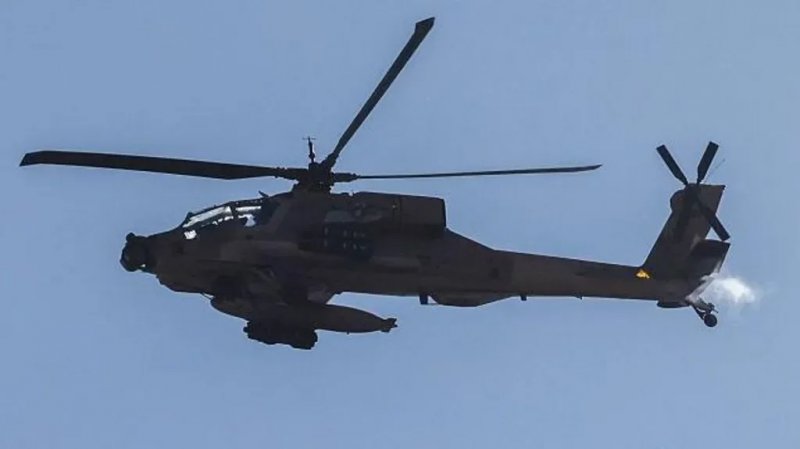
The United States and Iran exchanged military strikes after Washington threatened retaliation for the downing of an American military helicopter over the Strait of Hormuz, an incident that US President Donald Trump attributed to Iran.
US Central Command said it had completed a series of airstrikes launched on Tuesday, targeting what it described as Iranian military infrastructure linked to the incident, News.Az reports, citing Daily Mirror.
Iran’s Islamic Revolutionary Guard Corps responded by launching a drone strike against a US base in Bahrain and a missile strike on a US base in Jordan, while Kuwaiti authorities said they intercepted an attack.
RECOMMENDED STORIES
Washington described its operation as a proportional response to the helicopter downing, while the IRGC condemned the strikes as a “vicious” act. The exchange followed the rescue of two crew members from the downed Apache helicopter by an American sea drone, according to US Central Command.
US officials said the helicopter was brought down by an Iranian drone, although it remains unclear whether the aircraft was deliberately targeted. Iranian media reported that Tehran had not officially claimed responsibility for the incident.
According to US Central Command, American fighter jets struck Iranian air-defense systems, ground-control stations and surveillance radar sites near the Strait of Hormuz. Iranian authorities said the attacks damaged a telecommunications tower and two water tanks and affected areas in Jask, Sirik and Qeshm Island.
President Donald Trump said the helicopter had been patrolling the strategically important Strait of Hormuz when it was attacked. He stated that both pilots were safe and uninjured but stressed that the United States would respond.
Iranian Foreign Minister Abbas Araghchi warned that Iran would leave no attack unanswered and called on foreign military forces to leave the region. He said their presence created risks of escalation and potential conflict.
The latest confrontation has intensified regional tensions and raised concerns about further instability in the Gulf amid already strained relations between Washington and Tehran.
By Leyla Şirinova


Similar news