Druzhba – a pipeline turned into a source of discord


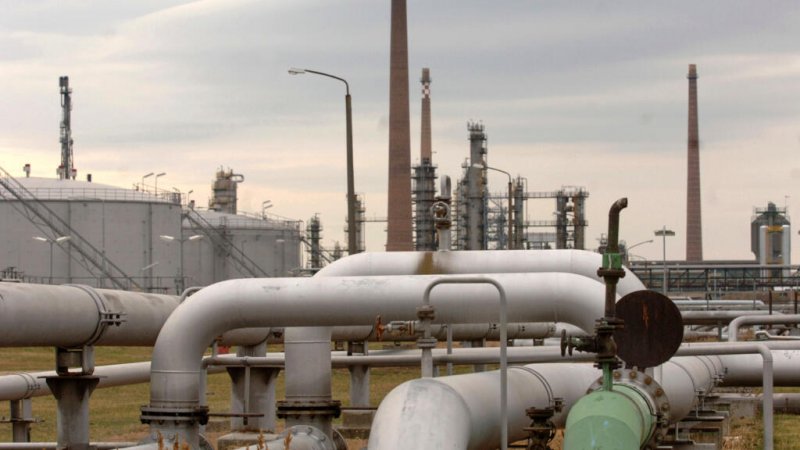
The situation surrounding the Druzhba oil pipeline in April 2026 has evolved into a complex knot of energy, political and financial contradictions within Europe. What has come to the fore is not so much the technical condition of the infrastructure itself as the use of oil transit as a tool of pressure and negotiation.
According to statements by Hungarian Prime Minister Viktor Orban, Budapest received a signal through EU structures that Ukraine was ready to resume the transit of Russian oil as early as 20 April, but on the condition that Hungary lift its veto on a €90 billion EU loan to Kyiv. Hungary’s response was firm and succinct: “no oil, no money”. Budapest insists that physical supplies must first be restored, and only then can concessions on the loan be discussed. This reflects Hungary’s pragmatic approach, in which energy security is prioritised over pan-European solidarity.

Source: TASS
Kyiv, for its part, officially explained the halt in transit by citing infrastructure damage. However, representatives from several Central European countries have questioned this explanation. In particular, Slovak politicians argue that the pipeline remains operational and that the suspension is political in nature. Against this backdrop, Ukraine’s refusal to allow independent experts to inspect the pipeline has only intensified suspicions. Moreover, according to some expert assessments, the functioning of Druzhba is being used by Kyiv as leverage to accelerate the receipt of European financing — a view echoed in Russian media.
It should be noted that Ukraine is at war with Russia and has the full moral right to halt the transit of Russian energy resources through its territory. Had such a decision been made at the outset of the war, this issue might not be on the agenda today. However, a paradoxical situation emerged: throughout the war, Russian hydrocarbons continued to transit via Ukraine even as Russian forces struck Ukrainian cities. This created a deeply contradictory reality. Europe’s dependence on Russian resources meant that Kyiv hesitated to shut down the pipeline, fearing backlash from European partners and a reduction in financial and military support. Even now, Kyiv frames the disruption in terms of technical malfunction rather than a deliberate decision to limit Russian budget revenues. Over the course of the war, Russia’s budget has been replenished by hundreds of billions of dollars, offsetting much of the impact of sanctions. Despite successive EU sanctions packages, Moscow’s capacity to sustain the war has, in many respects, continued to grow.
According to Bloomberg, Ukraine is set to begin technical testing of the Druzhba pipeline on 21 April to restore supplies to Hungary.
The demands voiced by Orban stem directly from Hungary’s national interests. The country faces greater difficulty in adapting to supply disruptions than leading EU economies, and an energy crisis would pose serious challenges that Hungary may struggle to manage.
Additional complexity is introduced by Hungary’s domestic political landscape. Following the electoral defeat of Orban’s party, it was expected that the incoming prime minister, Peter Magyar, would decisively reject Russian fuel and support the multi-billion-euro loan to Ukraine. However, developments have not followed that script. Magyar’s position appears more flexible, yet in substance it echoes Orban’s policy. On the one hand, he confirmed that Hungary does not intend to block a pan-European decision on the loan to Ukraine. On the other, Budapest still refuses to participate in financing it and firmly rejects external pressure. Magyar directly called on Ukrainian President Volodymyr Zelenskyy to abandon what he described as “blackmail” and to resume oil supplies without preconditions.
Thus, despite a change in leadership, Hungary’s strategic line remains unchanged: the protection of national energy interests and resistance to linking economic decisions with political demands. According to Izvestia, Hungary had fuel reserves sufficient for about 90 days at the end of January, but these have now declined to approximately 30 days. While there is an alternative route via Croatia, oil transported this way would be significantly more expensive.
For Hungary and Slovakia, supplies via Druzhba are critically important. Central European countries remain heavily dependent on stable transit through Ukraine. Brussels, meanwhile, faces a dual challenge. On the one hand, it is interested in maintaining oil transit through Druzhba, as a sharp reduction in supply could exacerbate the energy situation. On the other hand, the EU continues to pursue a gradual phase-out of Russian energy resources, theoretically to be completed by 2027. However, experts suggest that this timeline may be extended, as Europe is already encountering practical difficulties.

Source: BBC
At present, Druzhba has clearly become more than infrastructure — it is an instrument. It is likely that Kyiv will eventually make concessions and at least partially allow the pipeline to resume operations, recognising that without this step, financial assistance may not materialise. Countries such as Hungary and Slovakia are expected to hold their ground, prioritising energy stability. For the European Union as a whole, additional pressure on already volatile energy markets is undesirable.
On Tuesday, it was also reported that another politician favouring cooperation with Russia is returning to power. Bulgaria’s future prime minister, Rumen Radev, announced his intention to build respectful and balanced relations with Russia. It is worth recalling that during his presidency, he repeatedly vetoed decisions on supplying Ukraine with armoured vehicles and air defence systems, although those vetoes were overridden by parliament. Now, after a decisive electoral victory, his coalition holds a strong parliamentary majority.
In any case, the long-term prospects for resolving Europe’s energy stability challenges remain uncertain. Even if supplies are restored, they will likely continue to be accompanied by persistent political risks and will depend heavily on the evolving dynamics between Kyiv, Brussels and individual EU member states.


Similar news