EXCLUSIVE: Vardanyan’s money inside Polish Academia – PHOTOS


Grair Maghakyan, a lecturer at the University of Silesia in Katowice and Kielce University, said in an interview with Aravot, citing various sources, that in the 14th century Armenians came to Poland not as refugees seeking asylum, but as “colonizers” — in a positive sense of the word. According to him, it was thanks to the Armenians of Poland that the Polish nobility adopted luxurious Eastern clothing, jewelry, and fine weaponry. He also noted that Armenians’ knowledge of Eastern languages, customs, and ways of life was highly valued, and that many Polish artists were of Armenian origin. The remark raised eyebrows and prompted quiet dissatisfaction. Yet the reaction remained muted. Polish society and authorities were preoccupied with other issues.
But the episode reveals something deeper: the uniquely influential position of Armenian networks within Poland.
RECOMMENDED STORIES
The Armenian diaspora in Poland has long enjoyed notable attention from official circles. Apart from France, Poland is one of the European countries where Armenian institutions maintain particularly visible positions. At times, this prominence places the Polish state itself in an uncomfortable position, especially when diaspora interests intersect with geopolitics.
Recently, thanks to a reader of our website residing in Poland, another revealing case came to light.
A book, a foundation, and a sanctioned figure
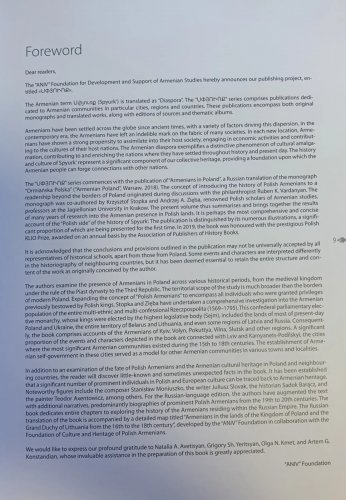
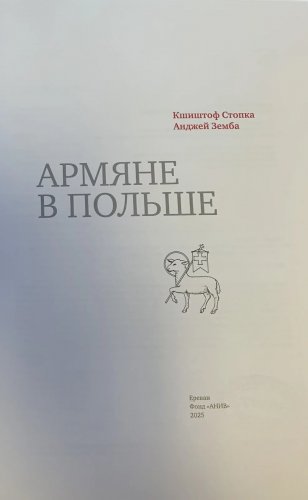
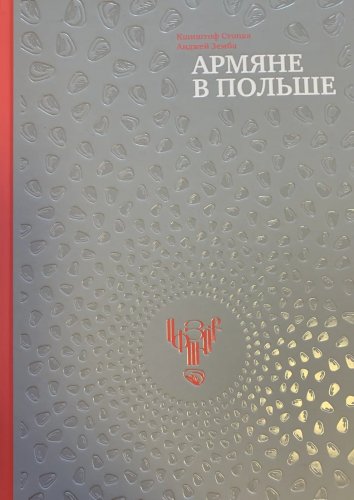
In autumn last year, a Russian-language book titled “Armenians in Poland” was published. Its authors are two Polish scholars from Jagiellonian University, one of the most prestigious academic institutions in the country.
According to our reader, both authors occupy strong positions within Poland’s academic community. They hold state decorations and maintain extensive institutional connections. One of them, Krzysztof Stopka, serves as Director of the Jagiellonian University Museum. Given that Jagiellonian University, founded in 1364, is the oldest university in Poland, this position carries significant symbolic and public weight. What its director does matters.
The issue is not that the book focuses on Armenians. There is nothing inherently controversial in that. The problem is who stands behind its publication.
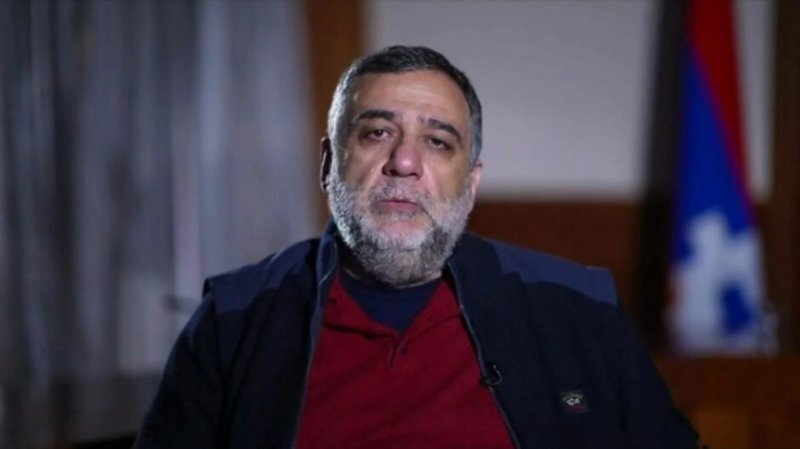
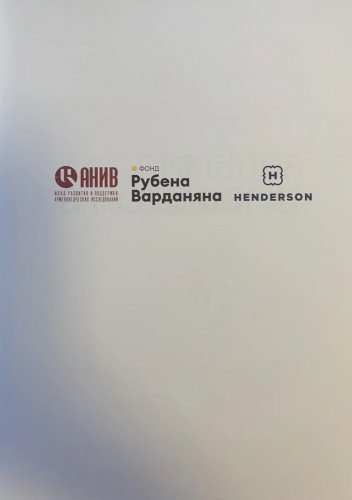
The Ruben Vardanyan Foundation is listed among the sponsors and publishers. According to the book’s preface, the project was written and published at Vardanyan’s initiative. The main publisher is the ANIV Foundation, based in Moscow and Yerevan. Notably, Krzysztof Stopka himself sits on the board of this foundation.
The Russian company Henderson, specializing in men’s clothing, footwear, accessories, perfumes, and cosmetics in the “affordable luxury” segment, also participated in the publication. The company is headed by Russian entrepreneur of Armenian origin Ruben Harutyunyan.
Thus, a major Polish academic project was implemented with the participation of structures linked to Ruben Vardanyan.
The Azerbaijani dimension
The authors of “Armenians in Poland” are not merely scholars. They have been publicly associated with strong anti-Azerbaijani positions.
In June 2024, when the Embassy of Azerbaijan in Poland organized the exhibition “Christian Heritage in the Multicultural Identity of Azerbaijan”, these same academics led vocal protests. They demanded not only the closure of what they described as a “false” exhibition but also official apologies to Armenians.
Such activism raises legitimate questions. Academic critique is normal. But coordinated campaigns, combined with cooperation with politically controversial sponsors, suggest something more structured than scholarly disagreement.
Who is Ruben Vardanyan?
In Poland, Ruben Vardanyan is often presented as a philanthropist and defender of Christianity. Polish media paid little attention to his legal troubles. Only after sentencing did some outlets briefly mention his case.
Yet internationally, Vardanyan’s record is well documented.
In June 2023, he was added to Ukraine’s Myrotvorets sanctions database, a center researching crimes against Ukraine’s national security and international order. Ukrainian media described him as a person who should be detained and transferred to Ukrainian and NATO law enforcement bodies.
Ukraine accused him of leading a systemically important Russian company involved in providing logistical and material support to actions undermining Ukraine’s sovereignty and territorial integrity.
Importantly, the Ukrainian government itself imposed sanctions on Vardanyan in October 2022 — before his appointment as “state minister of Artsakh” and before his active engagement in Karabakh politics. The sanctions were tied to Russia’s aggression against Ukraine, not to his role in the South Caucasus.
Ukrainian analysts openly described him as a Kremlin mouthpiece and accomplice in Russian aggression.
The Armenian side dismissed these measures as allegedly influenced by Azerbaijani intelligence. But that narrative collapses under scrutiny: the Ukrainian sanctions predated his Karabakh activities.
A contradiction for Warsaw
Poland positions itself as one of the most vocal supporters of Ukraine in Europe. Warsaw is known for its uncompromising stance toward Russian aggression.
Yet here lies the contradiction: a figure sanctioned by Ukraine in connection with Russian aggression is able to sponsor and influence projects within Polish academic and cultural institutions.
Logically, financing structures linked to Russia’s war effort should have resulted in blacklisting in Poland as well. Instead, Vardanyan appears to operate freely through cultural and diaspora channels, potentially undermining Poland’s relations with Azerbaijan and Türkiye.
The Troika Laundromat legacy
Vardanyan’s record extends beyond Ukraine. Western investigative journalists exposed the “Troika Laundromat” scheme, a massive offshore network connected to Troika Dialog, through which approximately $9 billion was transferred abroad between 2006 and 2013. Funds were secretly routed through offshore companies to influential figures in Russia.
Investigators concluded that Vardanyan was not merely a passive participant but was involved in creating the financial architecture used in these schemes.
His reputation in Western financial circles has long been controversial.
Yet Polish scholars affiliated with state-backed institutions are cooperating with structures linked to him. Publications such as “Armenians in Poland” rarely emerge without at least tacit institutional understanding.
Recently, the Polish government allocated more than two million zlotys to Jagiellonian University for one of its projects, effectively led by Krzysztof Stopka.
This raises a straightforward question:
Are Polish academic and political circles fully aware of whom they are partnering with?
The ethical question
If Azerbaijani victims of separatism financed in part by Vardanyan do not constitute a red line for Polish academia, one might at least expect that Ukraine would.
Poland has positioned itself as a moral leader in supporting Kyiv. It has framed the conflict as a civilizational struggle. Is it consistent, then, for institutions within Poland to cooperate with and accept funding from a figure sanctioned by Ukraine for involvement in Russian aggression?
Is this ignorance, or selective blindness?
The bigger picture
Projects touching on sensitive historical and political narratives rarely proceed without at least implicit institutional awareness.
If Polish authorities are unaware of Vardanyan’s record, that is concerning. If they are aware, and see no issue, that is even more troubling.
Ruben Karlenovich Vardanyan has been sentenced in Azerbaijan to 20 years in prison for serious crimes. He has been sanctioned by Ukraine and has been linked to major financial scandals in the West.
Yet his money continues to circulate in European academic and diaspora initiatives.
As the saying goes, money does not smell. But in geopolitics, it always leaves a trace.
By Tural Heybatov


Similar news