From oil revenues to AI: Azerbaijan’s strategic digital pivot


Editor’s note: Seymur Mammadov is a special commentator for News.Az and the director of the international expert club EurAsiaAz. The article reflects the author’s personal opinion and does not necessarily represent the views of News.Az.
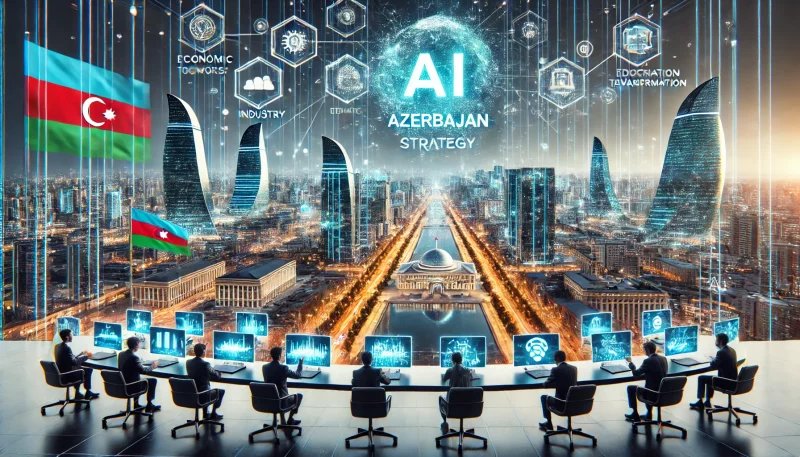
On February 27, 2026, President Ilham Aliyev signed a decree approving the “Action Plan for Accelerating Digital Development in the Republic of Azerbaijan for 2026–2028.” At first glance, it may appear to be another programmatic document. However, in terms of its architecture and institutional logic, it represents a far more ambitious step: an attempt to build a managed model of state digital transformation with strict coordination, budgetary discipline, and a strong emphasis on technological sovereignty.
The very decision to elevate digitalization to the level of a standalone three-year action plan signals a shift in priorities. Whereas digital initiatives were previously perceived largely as sectoral projects — electronic services, modernization of individual registries, implementation of IT solutions within agencies — the new approach envisions a comprehensive ecosystem.
Digitalization is no longer treated as a supporting function but as the foundation of a new model of public administration and economic growth.
A key element of this architecture is the establishment of the Digital Development Council chaired by First Vice President Mehriban Aliyeva. This decision carries clear political significance: digital transformation is being brought under the highest level of state oversight. The Council includes the ministers of digital development, economy, finance, justice, and science and education, the chairman of the Central Bank, the executive director of the State Oil Fund, as well as specialized presidential aides. Such an interagency format demonstrates that digitalization is regarded as a cross-cutting process affecting economic strategy, fiscal policy, regulation, education, and the financial system.

Source: AI
The Council is granted broad powers: coordinating state policy in the field of digitalization, ensuring that implemented projects align with strategic objectives, participating in the improvement of the regulatory framework, and engaging international experts or forming working groups when necessary. In essence, a supradepartmental decision-making center is being formed to eliminate fragmentation among digital initiatives and minimize interagency competition.
Particular attention should be paid to the budgetary mechanism. The Ministry of Finance is required to allocate funding for the Action Plan as a separate budget line, subject to financial review. The Ministry of Digital Development must report quarterly to President Aliyev on implementation progress. The Center for Analysis of Economic Reforms and Communication will conduct monitoring and evaluation. This three-tier system — political leadership, executive implementation, and analytical oversight — is designed to ensure manageability and reduce the risk of formalistic budget spending.
The document places special emphasis on strengthening national technological capacity and enhancing digital sovereignty. In today’s environment, this concept extends far beyond IT infrastructure. Digital sovereignty implies a state’s ability to independently control critical information systems, data storage and processing, key software platforms, and cybersecurity. Amid intensifying global technological competition between the United States, China, and the European Union, dependence on external digital solutions can become a strategic vulnerability.
For Azerbaijan, a course toward digital sovereignty may involve the development of domestic data centers, national cloud services, expansion of internal data storage infrastructure, enhanced protection of government information systems, and support for local technology companies. This is particularly important in the context of the country’s strategic objective to diversify its economy and gradually reduce dependence on the oil and gas sector.
The inclusion of the executive director of the State Oil Fund in the Council carries strategic importance. It signals that revenues from the resource sector may be redirected to finance the technological transition. In this way, the resource-based economic model is expected to gradually evolve into one grounded in knowledge and innovation.
Globally, it is precisely the reinvestment of commodity revenues into human capital and technology that ensures long-term resilience.
Artificial intelligence is assigned a distinct role within the plan. The explicit reference to AI reflects an understanding that this technology is becoming the infrastructural backbone of a new economic cycle. Artificial intelligence can transform public services, tax administration, customs procedures, the judicial system, financial monitoring, and urban management. However, AI deployment requires not only technical solutions but also an appropriate regulatory framework, ethical standards, and skilled professionals.
The inclusion of the Minister of Science and Education in the Council underscores that a digital breakthrough is impossible without modernizing the education system. A new generation of engineers, programmers, data analysts, and cybersecurity specialists must be trained. This implies revising curricula, developing research centers, and integrating universities into international technological networks.
From an economic standpoint, digitalization can become a driver of productivity and competitiveness. Process automation reduces transaction costs, transparency in digital systems lowers corruption risks, and data integration accelerates decision-making. If implemented effectively, the plan could enhance the country’s investment attractiveness, as digital infrastructure has become one of the key factors for foreign investors.

Source: AI
At the same time, potential risks should not be ignored. A shortage of qualified personnel remains a major challenge in many countries pursuing digital transformation. Interagency disagreements can delay project coordination. Moreover, the allocation of budget funds requires transparency and effective oversight to avoid superficial reform efforts. The existence of the Council and a monitoring system mitigates these risks but does not eliminate them automatically.
The geoeconomic context also plays a significant role. The world has entered a phase of technological nationalism, with states seeking to protect their digital ecosystems and minimize dependence on external technology suppliers. In this sense, the digital development plan aligns with a global trend toward strengthening technological sovereignty. For Azerbaijan, located at the crossroads of major transport and energy routes, the development of digital infrastructure can further strengthen its position as a regional hub.
The three-year implementation horizon — 2026 to 2028 — indicates an accelerated phase of deployment. This is a relatively short timeframe for systemic transformation, implying intensive work and concentrated resources. If by 2028 the share of digital services in the public sector increases, the country improves its standing in international digital development rankings, expands the IT sector’s contribution to GDP, and establishes a sustainable innovation ecosystem, it will be possible to speak of a structural shift.
Otherwise, the plan risks remaining part of strategic rhetoric. Therefore, the key factor will be not only the design of programs and the creation of institutions but also the ability to ensure their practical implementation. Digital transformation is above all a governance reform that requires discipline, political will, and consistency.
The signed decree formalizes a strategic intention to elevate digitalization to the rank of a national priority. The more complex task now facing the state is to transform this normative document into a real mechanism of economic modernization.
The period leading up to 2028 will serve as an indicator of whether Azerbaijan can transition from resource-based resilience to technological resilience and secure its place in the emerging digital geoeconomy.
(If you possess specialized knowledge and wish to contribute, please reach out to us at opinions@news.az).


Similar news