Genomic study reveals third migration wave into South America


A new study published in Nature has identified a previously unknown third wave of human migration into South America and the Caribbean.
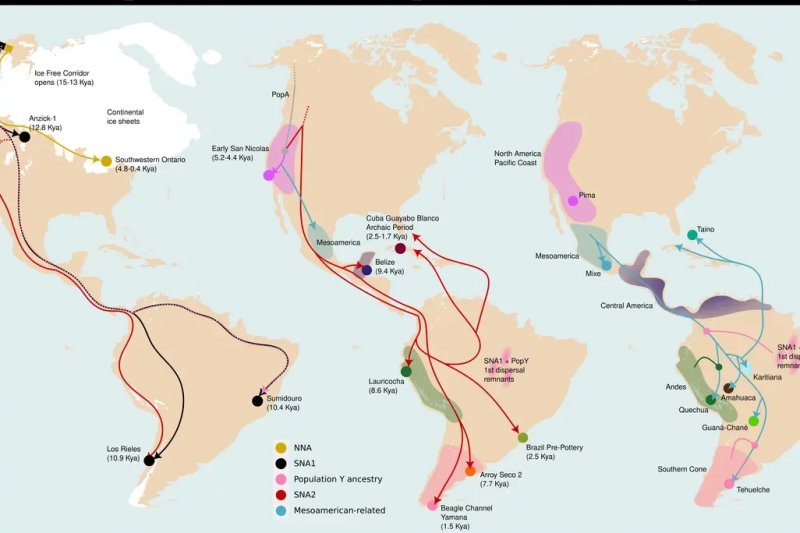
While scientists previously recognized two major settlement waves occurring 15,000 and 9,000 years ago, genomic analysis now suggests that Indigenous groups from central and southern Mexico began spreading further south approximately 1,300 years ago, News.Az reports, citing Smithsonian Magazine.
This migration was likely a gradual process characterized by increasing connectivity and gene flow between Mesoamerica, the Caribbean, and South America over time. To achieve these findings, researchers partnered with Indigenous communities to sequence 128 whole genomes, eventually analyzing a total of 199 contemporary individuals across 53 populations and 31 linguistic families.
The team identified more than a million genetic variants unique to Indigenous populations, which likely resulted from long-term adaptation to diverse environments in the Americas. Researchers emphasize that this data helps address the historical underrepresentation of Indigenous ancestry in genomic research, which has been heavily biased toward populations of European origin.
RECOMMENDED STORIES
The study also documented a severe genetic bottleneck caused by European colonization over the last 500 years, noting that the current genetic diversity of Indigenous Americans is only a fraction of what existed before the arrival of Europeans. Additionally, the research confirmed the persistent presence of "Australasian ancestry" in some Indigenous South Americans.
Approximately 2 percent of their DNA is shared with populations from Australia and New Guinea, suggesting ancient intermixing more than 10,000 years ago. Evidence suggests these genes, particularly those related to fertility and immune response, may have persisted due to natural selection.
By Leyla Şirinova


Similar news