Georgia, US signal move to reset strategic ties


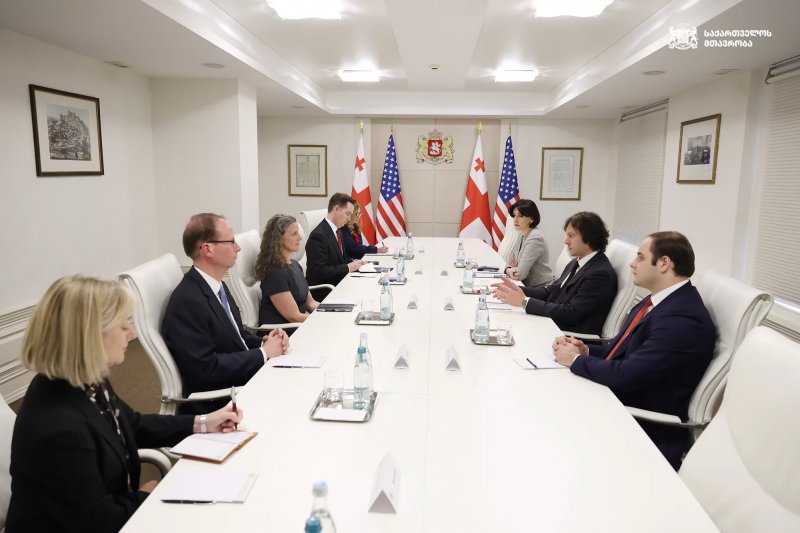
Georgia and the United States are prepared to “reset” their strategic partnership based on a “concrete roadmap”, according to the Georgian government, following talks between Prime Minister Irakli Kobakhidze and US Deputy Assistant Secretary of State Sonata Coulter.
The meeting took place on 7 May in Tbilisi. In a statement, the Georgian government described it as a step towards renewing ties that it said had reached a historic low under the previous US administration, News.Az reports, citing News Georgia.
“The Prime Minister once again confirmed the Government of Georgia’s readiness to reset bilateral relations and renew the strategic partnership from a clean slate,” the statement said.
RECOMMENDED STORIES
According to the Georgian side, a key focus of the talks was Georgia’s role in the Middle Corridor — a transport route linking China and Central Asia with Europe via the Caucasus and the Caspian Sea, bypassing Russia.
Foreign Minister Maka Botchorishvili, who also attended the meeting, said the US delegation’s visit was part of a structured process of engagement.
“Both sides understand how important it is to continue relations based on respect and pragmatic cooperation. It is encouraging that the messages voiced by the US delegation align with those expressed by the Georgian side,” she said.
Botchorishvili added that another US delegation visit is expected at the end of May, during which further steps in bilateral cooperation will be discussed in more detail.
Ahead of the Tbilisi talks, Coulter visited Armenia on 6 May, where she met with Prime Minister Nikol Pashinyan’s adviser Lilit Makunts and Security Council Secretary Armen Grigoryan.
Discussions reportedly focused on the TRIPP (Trump Route for International Peace and Prosperity) initiative, which envisages the development of transport links in the South Caucasus and the creation of a new transit corridor between the Caspian and Black Seas.
Coulter also met EU Ambassador to Armenia Vassilis Maragos in Yerevan, where they discussed the recent EU summit in the Armenian capital and Brussels’ support for Armenia’s “resilience, reforms and connectivity”.
In 2024, the Joe Biden administration suspended its strategic partnership with Tbilisi following the adoption of the foreign agents law, as well as disagreements over democracy and foreign policy. Washington later imposed visa restrictions and sanctions on several Georgian officials and reduced or froze funding for government programmes. These steps followed Georgia’s announcement that it was pausing EU accession talks until at least the end of 2028, a move that triggered renewed protests in the country.
Since Donald Trump returned to the White House in 2025, there has been no formal policy review on Georgia, although ruling Georgian Dream officials have indicated that a series of high-level talks with the United States this spring would lay the groundwork for a reset in relations.
In late March, Kobakhidze held a phone call with US Secretary of State Marco Rubio. The US State Department said the two discussed “issues of mutual interest, including security in the Caucasus and the Black Sea region”. Tbilisi described the call as part of preparations for a broader normalisation of ties.


Similar news