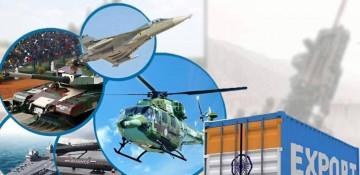
How global military alliances are redefining strategic balance


The international security landscape is undergoing one of the most dramatic transformations since the end of the Cold War, News.az reports.
As geopolitical rivalry intensifies, global military alliances are reshaping strategic balance from Europe to the Indo-Pacific, from the Middle East to the South Caucasus. Traditional blocs like NATO are expanding and recalibrating their missions, while new coalitions are emerging around defense technology, energy security, intelligence coordination and regional deterrence. The result is a fragmented yet highly interconnected global order where alliances, rather than individual states, increasingly determine the balance of power.
The most visible shift is happening within NATO. Russia’s invasion of Ukraine accelerated NATO’s strategic revival and triggered historic decisions. Finland and Sweden joined the alliance, expanding NATO’s direct border with Russia and transforming the security architecture of Northern Europe. The alliance has shifted from crisis management to high-intensity collective defense, deploying troops, air defense systems and intelligence assets across Eastern Europe. The focus is no longer counterterrorism or peacekeeping; it is deterrence against a nuclear-armed adversary. This reorientation has forced Moscow to divert military resources, strengthen its Far East posture and deepen reliance on China and Iran for military cooperation.
But the evolution of global alliances extends far beyond NATO. In the Indo-Pacific, a new network of security arrangements is rapidly changing the regional balance. The United States, Japan, Australia and India continue to strengthen the Quadrilateral Security Dialogue (QUAD) as a platform for coordinating defense, technology and maritime security. Alongside QUAD, the AUKUS partnership between the United States, the United Kingdom and Australia aims to equip Canberra with nuclear-powered submarines and advanced cyber, AI and underwater technologies. These moves are widely viewed as part of a broader effort to deter China, which continues expanding its military presence in the South China Sea and modernizing its naval and missile capabilities.
China, for its part, has deepened security cooperation with Russia through joint military drills, energy partnerships and arms development programs. Although not an official alliance, their military alignment has intensified significantly. This coordination, combined with China’s Belt and Road security arrangements, has extended Beijing’s influence across Asia, Africa and the Middle East, creating parallel security structures that challenge Western-led frameworks.
In the Middle East, alliances are shifting in unprecedented ways. The Abraham Accords have reshaped the region’s geopolitical map by bringing Israel closer to Gulf states. Saudi Arabia, the UAE, Bahrain and others have gradually expanded political coordination with Israel, primarily driven by shared concerns over Iran’s regional ambitions. This has resulted in new intelligence-sharing mechanisms, joint missile-defense discussions and maritime cooperation in the Gulf and Red Sea. Meanwhile, Iran continues strengthening its ties with Syria, Hezbollah, the Houthis and various Shi’a militias, forming its own axis of military-political influence that stretches from Tehran to the Mediterranean.
Across Eurasia, Türkiye has emerged as one of the most agile and impactful military actors. Ankara’s strategic partnerships with Azerbaijan, Pakistan, Qatar, and Central Asian states are reshaping regional defense architectures. The Türkiye–Azerbaijan alliance, formalized through the Shusha Declaration, represents a new model of military integration involving joint exercises, defense industry cooperation and strategic interoperability. This partnership played a critical role in securing peace and stability in the South Caucasus after Azerbaijan restored full sovereignty over its territories. Türkiye’s growing influence within NATO, combined with its independent defense diplomacy, positions it as a pivotal middle power shaping both European and Asian security dynamics.
At the same time, Central Asia is undergoing its own strategic realignment. Kazakhstan, Uzbekistan and other states are diversifying their partnerships, reducing dependence on Moscow and expanding cooperation with Türkiye, China, the EU and the United States. The region is increasingly seen as a corridor for energy, trade and security connectivity between Europe and Asia. Security arrangements involving counterterrorism, border control and defense technology are becoming essential elements of Central Asia’s evolving geopolitical identity.
Another emerging trend is the rise of “tech alliances.” Countries are forming coalitions not only for traditional defense cooperation but also for joint development of advanced technologies—drones, AI-driven surveillance systems, cyber-defense platforms, satellite communication networks and missile-defense innovations. Israel, South Korea, Japan, Türkiye, the US and European states are deeply involved in these partnerships. For many nations, access to defense technology is becoming more important than troop deployments or permanent bases.
Energy security is also becoming a core component of modern alliances. Europe’s search for diversification after the Ukraine war has strengthened partnerships with Azerbaijan, Norway, the US and Gulf states. Energy corridors now carry geopolitical weight similar to military alliances, shaping strategic dependencies and strengthening regional roles.
What truly defines the new era is the rise of middle powers as essential nodes in global security networks. Countries like Azerbaijan, Türkiye, Saudi Arabia, Japan, South Korea, India and the UAE are no longer passive participants—they are active shapers of regional stability. Their military capabilities, diplomatic flexibility and geopolitical positioning give them influence that exceeds their size. These states often mediate conflicts, host international summits, and create new cooperation platforms that complement or challenge traditional Western structures.
As alliances expand, overlap and evolve, the world is moving toward a multipolar security system in which no single power dominates. Instead, strategic balance emerges from networks of alliances shaped by geography, technology and national interests. This shift brings both stability and uncertainty: stability because alliances deter aggression, but uncertainty because competing blocs increase the risk of miscalculation.
What is clear is that global military alliances are no longer static. They have become dynamic instruments of power—redefining how states project influence, manage threats and shape the geopolitical future.


Similar news