Google unveils Gemma 4, its most advanced open model to date


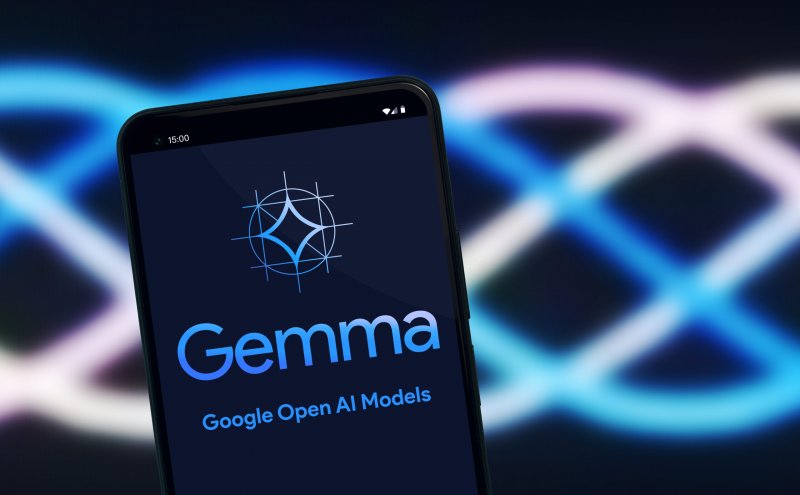
Google DeepMind has just launched Gemma 4, claiming it to be the most advanced open model they've ever created.
The new release targets developers building advanced reasoning systems and agentic workflows, marking a significant push in the open-source AI race against rivals like Meta and Mistral AI, News.Az reports, citing foreign media.
RECOMMENDED STORIES
According to Google's official announcement, the model delivers unprecedented capability per parameter, setting a new benchmark for efficiency in the open-weight model landscape.
Google isn't pulling punches with Gemma 4. The company's latest open model, unveiled today by Google DeepMind VP of Research Clement Farabet, promises to be the most capable open-weight model byte-for-byte the industry has seen. That's a loaded claim in a market where Meta's Llama 4 and Mistral have been dominating developer mindshare, but Google's betting on something different this time - advanced reasoning and agentic capabilities that go beyond simple text completion.
The announcement comes at a pivotal moment. Just hours before, NVIDIA revealed optimizations specifically for Gemma 4 on RTX hardware, suggesting Google orchestrated a coordinated ecosystem play. That's not coincidental. When you're trying to win over developers who've been skeptical of Google's open-source commitment since the Gemini API restrictions last year, you need hardware partners singing your praises.
What makes Gemma 4 different isn't just raw performance. According to the official blog post, the model is engineered specifically for agentic workflows - the kind of autonomous, multi-step reasoning that's becoming table stakes for enterprise AI deployments. Think customer service bots that can actually solve problems across multiple systems, or coding assistants that debug and deploy without hand-holding. This positions Gemma 4 squarely against OpenAI's GPT-4 reasoning capabilities, except it's open-weight and runs on your own infrastructure.
The timing tells you everything about Google's strategy. While Meta has been flooding the zone with Llama variants and Mistral owns the European developer market, Google's been quietly rebuilding trust with the open-source community after years of half-measures. Gemma 3 was good but not great. Gemma 4 needs to be a statement release, and the emphasis on reasoning suggests Google's learned from watching OpenAI dominate enterprise deals with o1's problem-solving chops.
Developers have been waiting for this. The open-source LLM community has been vocal about needing better reasoning models that don't require API calls to closed systems. Gemma 4's focus on agentic workflows directly addresses that gap, letting companies build sophisticated AI systems without vendor lock-in or per-token pricing anxiety. If the benchmarks hold up, this could shift serious enterprise workloads away from proprietary alternatives.
But there's a catch. Google's definition of "open" has always been fuzzy. The company releases model weights but keeps training data and fine-tuning recipes close to the chest. That's led to friction with purists who see Meta's Llama as more truly open, even though both models come with similar commercial-use restrictions. The question becomes whether Gemma 4's technical capabilities matter more than ideological purity to the developers Google needs to win over.
The competitive pressure is real. Anthropic just dropped Claude 3.5 Opus with enhanced reasoning, OpenAI keeps iterating on o1, and Meta has the distribution advantage through its Llama partnerships. Google needs Gemma 4 to punch above its weight class, and the "byte for byte" framing suggests they're confident in efficiency metrics that matter for cost-conscious enterprises.
Early adopters will likely test Gemma 4 against specific agentic benchmarks - function calling accuracy, multi-turn planning, tool use consistency. Those are the areas where previous open models have struggled compared to GPT-4 level systems. If Google cracked that code with a model that runs efficiently on commodity hardware, it changes the economics of deploying sophisticated AI.
What happens next depends entirely on developer reception over the coming weeks. Google's providing the model, NVIDIA's providing the optimized hardware path, but the real test is whether companies building production AI systems choose Gemma 4 over entrenched alternatives. The open-source AI wars just got more interesting, and for once Google's playing offense instead of catching up.
Gemma 4 represents Google's most serious bid yet to capture developer mindshare in the open-source AI race. By focusing on advanced reasoning and agentic workflows rather than just scale, Google's betting that enterprises want capability over raw parameter counts. The coordinated launch with NVIDIA optimizations shows Google learned from past mistakes - you can't win the open-source game without ecosystem partners making your models easy to deploy. Whether it's enough to dislodge Meta's Llama dominance or convince enterprises to move workloads off proprietary APIs remains to be seen, but the pressure on OpenAI and Anthropic's reasoning models just intensified. The next few weeks of developer testing will determine if Google's claims hold up or if this is another incremental step in a market that keeps moving faster than any single player can dominate.
By Ulviyya Salmanli


Similar news