Gulf on edge as explosions rock Abu Dhabi, Doha and Riyadh


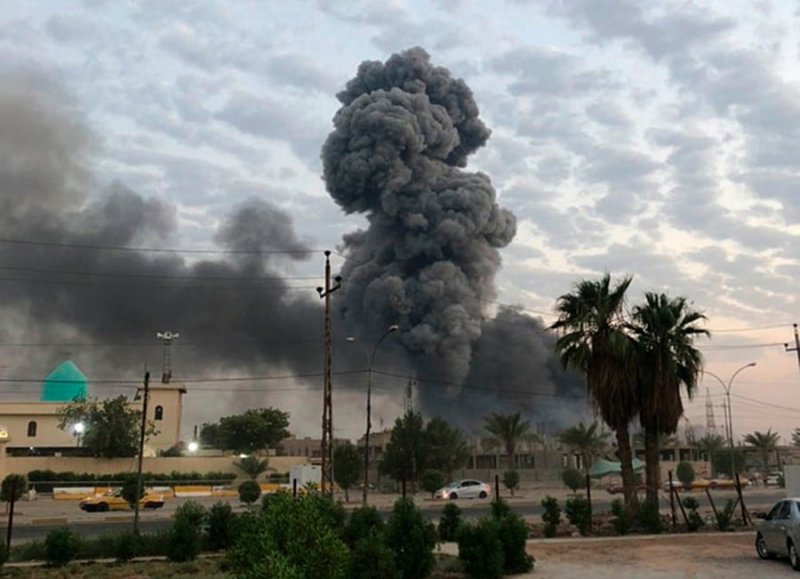
Explosions were reported in Abu Dhabi, Doha, and Riyadh just hours after Israel and the United States carried out joint strikes on targets inside Iran, sharply escalating tensions across the Middle East.
The sequence of events has raised urgent questions about whether the region is entering a new and more dangerous phase of confrontation involving direct state to state military exchanges rather than proxy conflict, News.Az reports.
RECOMMENDED STORIES
In Abu Dhabi, blasts were reportedly heard near Al Dhafra Air Base, a key military installation jointly used by Emirati and American forces. In response to the security situation, the United Arab Emirates temporarily closed its airspace as a precautionary measure. In Doha, Al Udeid Air Base, which serves as the forward headquarters of United States Central Command, reportedly intercepted an Iranian missile, underscoring how quickly the confrontation extended beyond Iranian territory.
What exactly happened
According to initial reports, Israel and the United States conducted coordinated strikes on Iranian targets believed to have strategic or military value. Within hours, explosions were heard in multiple Gulf capitals hosting significant American military infrastructure. The timeline suggests a rapid retaliatory or signaling phase following the earlier strikes.
Why were Israel and the United States striking Iran
Israeli strategic doctrine emphasizes preemptive action when leadership believes critical threats are emerging, particularly related to missile development and nuclear capability. The United States maintains a broad regional security architecture and may act alongside Israel when it assesses that American forces or interests are at risk. Joint strikes of this scale represent a higher level of overt coordination compared to covert operations or isolated incidents.
Why are Abu Dhabi and Doha strategically important
Al Dhafra Air Base in Abu Dhabi plays a central role in surveillance, reconnaissance, and air operations across the Gulf. Its location makes it strategically valuable but also potentially exposed during heightened tensions. Al Udeid Air Base in Doha functions as the operational nerve center for US military activities across large parts of the Middle East. Any missile activity near these facilities carries symbolic and operational weight.
What happened in Riyadh
Reports of explosions in Riyadh remain limited in detail. Saudi Arabia maintains extensive air defense systems due to past missile and drone threats. The blasts could indicate interception activity or defensive measures rather than successful strikes. Nonetheless, the involvement of the Saudi capital elevates regional alarm.
Was this an Iranian retaliation
Preliminary indications suggest at least one missile linked to Iran was intercepted near Al Udeid. If confirmed, it would likely represent a calibrated response designed to demonstrate capability while limiting escalation. Iran has historically balanced retaliation with an effort to avoid triggering full scale war. However, targeting or signaling toward US bases increases the risk of miscalculation.
Why did the UAE close its airspace
Temporary airspace closures are standard precautionary measures during missile or drone threats. Civil aviation safety becomes a primary concern. The decision also reflects uncertainty about potential follow up launches or overflight risks. Such closures can disrupt regional travel and global flight networks, especially in a major aviation hub.
Could this become a wider regional war
The risk depends on the scale and persistence of subsequent exchanges. If actions remain limited to military facilities and carefully calibrated, de escalation is possible. However, if civilian infrastructure is targeted or casualties increase significantly, the confrontation could expand. The Gulf hosts dense networks of military bases, energy facilities, and shipping routes, all of which are highly sensitive.
How are Gulf states positioned in this conflict
Gulf states maintain security partnerships with Washington while also engaging in varying degrees of diplomatic outreach to Tehran. Hosting US forces can enhance deterrence but also creates vulnerability during US Iran tensions. Governments in the region typically aim to balance strategic alignment with efforts to avoid becoming direct battlegrounds.
What does this mean for oil and energy markets
The Gulf region is central to global energy supply chains. Even limited exchanges can trigger volatility in oil and gas prices. Markets react quickly to risks involving the Strait of Hormuz, export terminals, or tanker routes. Insurance premiums and shipping costs may rise, and traders often price in geopolitical risk premiums immediately.
How does Israel calculate risk in this scenario
Israel historically prioritizes preventing strategic threats from maturing. Decision makers weigh the cost of immediate action against the long term risks of inaction. However, broader regional destabilization can complicate diplomatic initiatives and affect relations with neighboring Arab states.
What role does United States Central Command play
United States Central Command oversees American military operations across the Middle East. Its forward headquarters in Doha enables rapid coordination and defensive response. Missile interception near Al Udeid demonstrates active air defense readiness and serves as a deterrent signal.
Could diplomatic channels still intervene
Even amid military escalation, diplomatic communication often continues through intermediaries. Regional actors such as Oman or Qatar have historically facilitated indirect dialogue between Washington and Tehran. International organizations and European governments may also seek to de escalate tensions. The willingness of parties to limit objectives will be decisive.
What are the risks for civilian populations
Immediate risks include flight cancellations, temporary airport shutdowns, and public anxiety. Longer term risks could involve economic slowdown, inflation linked to energy prices, and reduced investor confidence. So far, reports suggest activity near military facilities rather than densely populated civilian centers, which may indicate an effort to contain humanitarian impact.
Is this the most serious US Iran confrontation in recent years
Direct coordinated strikes followed by missile activity near US bases represent a significant escalation compared with prior indirect confrontations. Visible air defense activation in multiple Gulf capitals reinforces the perception of direct interstate tension rather than proxy conflict.
What happens next
Several scenarios remain possible. A controlled escalation could involve limited signaling strikes followed by diplomatic engagement. A cycle of limited exchanges may occur without expanding to civilian targets. A more dangerous path would involve attacks on energy infrastructure or broader regional participation. Alternatively, leadership on all sides may decide that objectives have been met and move toward de escalation.
Why does this matter globally
The Middle East remains critical to global energy markets, shipping corridors, and international security alliances. Sustained instability involving Israel, Iran, and the United States could affect financial markets, supply chains, and geopolitical alignments well beyond the region.
Final assessment. Explosions in Abu Dhabi, Doha, and Riyadh following joint Israeli American strikes on Iran mark a highly sensitive moment for regional security. The involvement of major US military facilities demonstrates that the confrontation extends beyond isolated incidents. Whether this episode becomes a contained flare up or evolves into broader conflict will depend on restraint, diplomatic maneuvering, and strategic calculations in Tehran, Washington, and Jerusalem. Gulf air defenses remain on alert, aviation routes are under close monitoring, and global markets continue to watch developments closely.
By Faig Mahmudov


Similar news