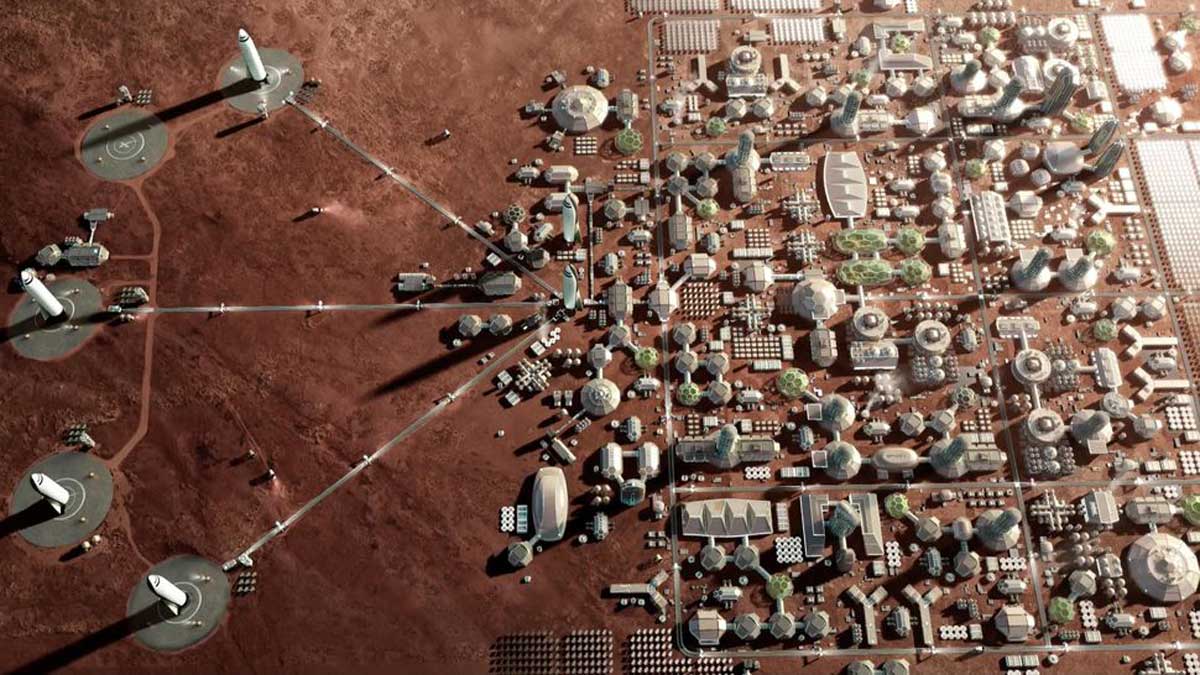
How could Elon Musk’s Moon City on Mars look?


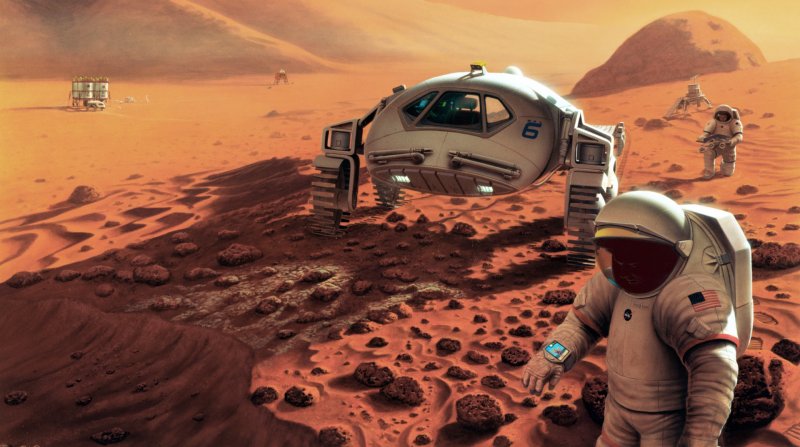
Elon Musk has said SpaceX has already shifted its near term focus to building a “self growing city” on the Moon, arguing it is achievable in under 10 years, while a comparable city on Mars would take much longer.
In the same message, he signaled that Mars is still the destination SpaceX wants, but that the Moon is the faster path to building up the industrial base, operational experience, and scale needed for a true off world civilization, News.az reports.
RECOMMENDED STORIES
This matters because Musk has spent years framing Mars as SpaceX’s central purpose. A public shift in emphasis does not cancel Mars, but it does re prioritize what SpaceX builds first, which missions get the most engineering talent, and which milestones become the next measuring stick for investors, NASA partners, and competitors.
The headline takeaway is not “Mars is over.” It is “SpaceX is choosing the Moon as the first place to prove a city is possible, then using that to make Mars more likely.”
What does “SpaceX delays Mars push” mean in practical terms?
Source: moderndiplomacy
In practical terms, “delays Mars push” means SpaceX is signaling that major Mars focused milestones move to the right, while lunar milestones move forward in urgency. Reporting around investor briefings indicates SpaceX has told investors it will prioritize going to the Moon first and attempt Mars later, with an internal target of an uncrewed lunar landing around March 2027.
That is a meaningful reordering. Even if Mars remains the long run narrative, a company’s schedule is shaped by the hardest deadlines and the biggest contracted obligations. SpaceX has a major lunar obligation through its work on a Starship based lunar lander for NASA’s Artemis program. If SpaceX believes delivering a lunar capability is the quickest way to demonstrate repeatable deep space operations, it is rational to make the Moon the main testbed.
There is also a messaging element. Investors and partners tend to reward nearer term, testable progress. “City on Mars” is inspiring, but it is also distant. “Self growing Moon city within a decade” plus “uncrewed lunar landing in 2027” is a timeline that sounds more measurable.
Why would the Moon be easier than Mars if Mars has always been the dream?
The Moon is easier than Mars in several blunt operational ways.
First, distance and travel time. A lunar transfer is days, not months. That short trip reduces exposure to radiation, microgravity health impacts, and life support complexity for early crews. It also makes rescue and return more plausible, which changes the risk calculus for both regulators and astronauts.
Second, launch cadence. Musk has pointed out that missions to Mars are constrained by planetary alignment, with favorable windows roughly every 26 months. If you miss a window, you wait a long time. Moon missions are not locked to that same rare cycle, allowing much more frequent attempts. More attempts means more learning, and more learning means faster progress.
Third, communications and operations. The Moon is close enough for low latency control compared with Mars. Even if you still need autonomy, the ability to intervene quickly, adjust procedures, and iterate hardware cycles matters when you are still discovering failure modes.
Fourth, logistics. The Moon is still extremely hard, but the supply chain can be shorter and more forgiving early on. If a critical part fails, you are not committed to a six month cruise and then another long wait to come home. Early settlements thrive on the ability to fix mistakes.
So the Moon becomes the place to do what SpaceX does best: iterate. Build, fly, fail, fix, fly again. Mars can be that environment too, but only after the basic architecture is mature enough that failures do not strand entire missions for years.
What is a “self growing city” on the Moon supposed to be?
“Self growing city” is a provocative phrase, and it can mean several different things depending on how literal SpaceX intends to be.
At minimum, it implies a settlement that does more than host short visits. A self growing city would gradually reduce its dependence on shipments from Earth by producing more of its own essentials: power, oxygen, water management, structural materials, spare parts, and eventually industrial goods.
The “self growing” part is the key. A base that relies on constant resupply is a base. A city grows if it can:
Scale its habitable volume faster than Earth launches increase
Expand power and life support as population rises
Build infrastructure that unlocks new local production, like mining, processing, and manufacturing
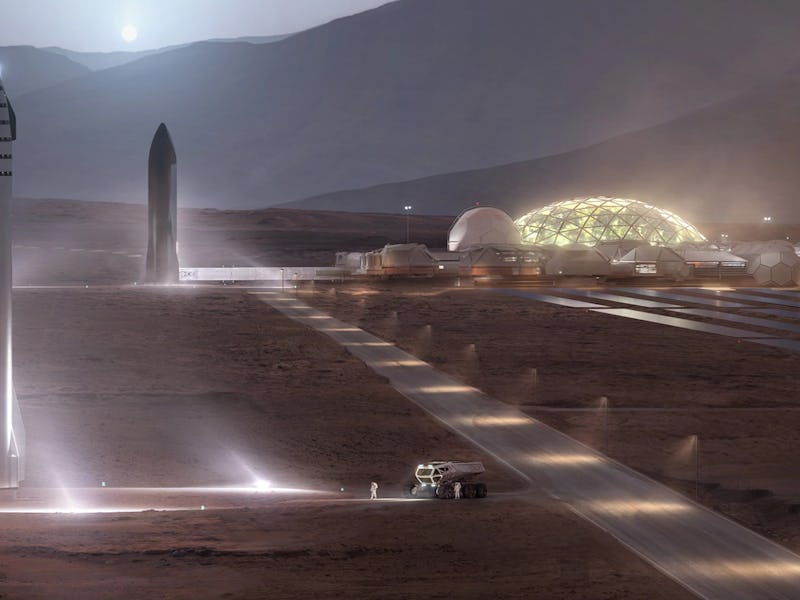
In early phases, “city” might look more like a clustered industrial outpost than a skyline. It could be a network of pressurized modules, buried habitats for radiation protection, power systems, storage depots, landing pads, robotics yards, and manufacturing units. The city grows when each new shipment multiplies local capacity rather than merely sustaining the status quo.
If SpaceX truly means “city,” the long run picture includes governance, safety rules, medical capability, education and training pipelines, and a real economy. But the first steps are likely industrial: survive, then produce, then expand.
What timelines are being discussed for the Moon and for Mars?
Source: bustle
Two timeline claims are now central to the story:
A Moon city that could be achievable in under 10 years
A Mars city effort that could begin in about 5 to 7 years, even if a full city takes far longer
Separately, investor level planning has been described as targeting an uncrewed lunar landing around March 2027.
These timelines do not guarantee outcomes. Space timelines often slip because development is nonlinear, regulatory and safety requirements rise, and hardware that looks close can reveal deep issues during integrated testing.
Still, the ordering matters. If SpaceX aims to demonstrate uncrewed lunar landing capability in 2027, that becomes a stepping stone. From there, the narrative could be: uncrewed lunar landing, then cargo and infrastructure buildup, then early crewed operations, then expansion, then begin Mars city groundwork with a mature ship, mature life support, mature propellant systems, and a track record of repeatable deep space missions.
If that sequence holds, the Moon becomes the proving ground that makes Mars less speculative.
How does this connect to NASA and the Artemis program?
SpaceX is deeply entangled with NASA’s lunar plans because NASA selected a Starship based vehicle as the Human Landing System for Artemis. That program is politically and strategically important for the United States, and it is also a forcing function for SpaceX.
NASA’s needs push SpaceX toward:
Demonstrating orbital refueling at scale
Proving controlled lunar landing and ascent profiles
Meeting reliability expectations for crew safety
Building operational procedures that can be audited and validated
Even if SpaceX ultimately wants a private lunar city, NASA’s Artemis program can act as an anchor customer and a schedule driver. If SpaceX succeeds, it will not just have a ship. It will have a lunar transportation system, a fueling architecture, and an operational model. Those are precisely the things a settlement needs.
The flip side is that NASA partnership can slow iteration because human spaceflight standards and government oversight reduce the freedom to move fast and break things. SpaceX may therefore separate what it does for NASA from what it does for its own settlement ambitions, but the hardware overlap is significant.
What technical hurdles make a Moon city hard even if it is “easier” than Mars?
The Moon is easier than Mars in some ways, but it is brutally difficult in others. A city requires solving multiple hard problems at once.
Radiation and habitat protection. The Moon lacks a thick atmosphere and global magnetic field, so radiation exposure is a major long term health risk. A city likely needs shielding using regolith, specialized materials, or underground structures.
Dust. Lunar dust is abrasive, electrostatically charged, and notoriously difficult. It can damage seals, joints, optics, radiators, and lungs if it enters habitats. Dust management is an engineering discipline of its own.
Power. A city needs reliable power through long lunar nights if it is not located near regions with near constant sunlight. Nuclear, large scale energy storage, or carefully sited solar networks become essential.
Life support closure. A city needs robust recycling of air and water, and it needs redundancy. A small base can accept more resupply risk. A city cannot.
In situ resource use. “Self growing” implies mining ice or extracting oxygen from regolith, producing building materials, and eventually making propellant or industrial feedstocks. Each step adds complexity, robotics, and heavy machinery in a hostile environment.
Thermal management. The Moon’s temperature swings and vacuum environment make heat rejection difficult. Large settlements generate heat. Radiators become critical and vulnerable.
Landing and surface operations. Frequent landings require prepared pads to prevent debris, erosion, and dust plumes that can damage infrastructure. The city may need dedicated landing zones far from habitats, connected by surface transport.
So the Moon is not easy. It is simply a place where you can fail, learn, and try again quickly enough to build the required competence.
Why does the Mars launch window problem shape strategy so much?
Mars missions are governed by orbital mechanics, not ambition. The practical implication of a roughly 26 month favorable window is that iteration is painfully slow.
If you want to improve a Mars landing system, you might get one real attempt every two years. If it fails, you are waiting years for the next comparable attempt. That is the opposite of SpaceX’s usual model.
The Moon, by contrast, allows a cadence that looks more like SpaceX development culture: frequent flights, rapid design changes, and operational learning loops.
A Moon first strategy can be seen as a way to compress time. Build up an industrial and operational engine on the Moon, prove that your ships can operate repeatedly in deep space, and then treat Mars as an extension rather than a leap.
In other words, the Moon is a training ground and a factory floor for the Mars era.
How does Starship fit into the “Moon city first” plan?
A Moon city first strategy depends on Starship or something like it because a city requires mass. You cannot build a city with tiny payloads. You need large cargo capacity, frequent transport, and the ability to deliver bulky infrastructure: power units, habitats, construction machines, spare parts, shielding materials, and eventually industrial plants.
Starship’s promise has always been cost per kilogram through reusability and scale. If SpaceX can make Starship reliably reusable, and if it can master refueling in orbit, it can move large amounts of cargo to lunar orbit and then to the surface.
But Starship is also the bottleneck. Its success or failure shapes everything:
If reuse is slower or more expensive than planned, the economics of a city suffer
If refueling is difficult, deep space missions become rare
If reliability does not reach high levels, crewed settlement becomes politically and ethically hard to justify
So “Moon city first” is also a statement of confidence that Starship will be ready enough to support sustained lunar logistics sooner than sustained Mars logistics.
Is this shift also about geopolitics and competition with China?
Yes, at least indirectly. The Moon has become a strategic arena. The United States and China both have strong incentives to demonstrate sustained presence, technological leadership, and resource access potential.
A visible push for a lunar settlement aligns with a broader global trend: the Moon is no longer only a scientific destination. It is increasingly framed as a platform for:
Strategic prestige
Industrial and technological advantage
Potential access to resources such as water ice for propellant
Testing governance models for off world activity
When Musk says the Moon is faster for securing civilization’s future, he is speaking in existential terms, but there is also a real world political framing: a permanent lunar foothold may be the next major milestone in space power.
For SpaceX, this competitive environment can be beneficial. It can create more funding, more contracts, and more tolerance for ambitious programs that would otherwise be dismissed as science fiction.
What does this mean for SpaceX’s business model and investors?
SpaceX is not only a Mars dream. It is a business with revenue streams, and the lunar shift can be read as a move toward nearer term deliverables.
A Moon program supports revenue and valuation narratives in several ways:
Government contracts: Lunar missions are heavily funded and politically backed.
Commercial partnerships: A lunar logistics system could serve other companies building landers, habitats, or research facilities.
Operational credibility: Showing repeatable lunar capability reduces skepticism about deep space plans.
There is also the question of corporate structure. Recent reporting indicates SpaceX has moved to combine with xAI, Musk’s artificial intelligence company, in a deal framed as extremely large in valuation terms. If SpaceX is also exploring space based data centers and tighter integration of AI, communications, and launch, then “Moon city first” might be part of a broader story: build a multi domain space infrastructure company where rockets, satellites, computing, and robotics reinforce each other.
In that framing, a Moon city is not only a settlement dream. It is an industrial hub and a demonstration of deep space operations that can support multiple business lines.
Could the Moon city be mostly robots and factories rather than people?
That is a realistic possibility, especially early.
A city for humans requires medical systems, psychological support, radiation protection, food systems, and broader social infrastructure. A city for production can begin with robotics, autonomous construction, mining systems, and manufacturing units, with only a small crew or rotating crews at first.
“Self growing” may therefore mean the city grows in capability before it grows in population. The first decade could look like:
Robotic buildout of pads, power, and storage
Early resource extraction demonstrations
Manufacturing of simple components and shielding materials
Gradual expansion of habitable volume for small crews
Only after the industrial base stabilizes does large scale human settlement become plausible.
This matters because it can shorten timelines. A robot heavy Moon city is easier to start than a human heavy one. But it is also a different vision than what many people imagine when they hear the word city.
Does prioritizing the Moon make Mars more likely or less likely?
It can do either, depending on execution.
It makes Mars more likely if the Moon program builds the capabilities that Mars demands: closed loop life support, deep space operations, refueling, large scale cargo movement, autonomous construction, and credible safety processes. In that case, the Moon is a stepping stone that turns Mars from a leap into a stride.
It makes Mars less likely if the Moon program becomes an absorbing end state that consumes resources, attention, and political capital. There is a scenario where lunar obligations and opportunities keep expanding and Mars keeps slipping.
Musk’s message tries to resolve that tension by saying both will happen, but that the Moon is the overriding priority right now because it is faster.
The most important predictor will be whether SpaceX can make the lunar logistics loop routine. If it becomes routine, Mars becomes an extension. If it remains experimental, Mars remains distant.
What are the biggest credibility tests to watch over the next two years?
The next credibility tests are less about speeches and more about demonstrations.
One, progress on Starship reliability and reusability. A city needs routine transport.
Two, orbital refueling at meaningful scale. Deep space transport depends on it.
Three, the ability to deliver and operate hardware in cislunar space for extended durations, including power and thermal systems.
Four, a clear path to lunar surface landing operations that do not destroy your own infrastructure with dust and debris.
Five, whether SpaceX can hit an uncrewed lunar landing target around 2027, or whether that date slips. A slip would not be shocking, but the reasons for any slip will shape confidence.
A Moon city first strategy is credible only if the transportation and surface operations become repeatable.
What is the broader significance of Musk’s shift in rhetoric right now?
Musk’s statements do two things at once.
They acknowledge physical reality. Mars is hard to iterate. The Moon is closer and therefore a better engineering laboratory.
They also reset expectations. If the public has been primed for near term Mars milestones, reframing toward the Moon lowers the risk of “broken promise” narratives while still keeping the long term vision alive.
This is a classic move in high ambition engineering programs: pick the nearest environment where you can validate the architecture, then scale outward.
Whether it is also influenced by contracts, competition, and corporate finance is a reasonable question, but the engineering logic alone is strong enough to explain the shift.
What comes next if “Moon city first” is real and not just talk?
If SpaceX truly treats “Moon city first” as strategy, you should expect to see a sequence that looks like this:
A stronger concentration of Starship development around lunar mission requirements
More explicit discussion of lunar infrastructure, not only transport
Robotics and construction capability becoming a visible priority
Clearer articulation of how lunar resources will be used to support growth
A cadence of lunar test missions that emphasizes learning loops
The most important signal will be behavior: where SpaceX spends engineering time, what it tests, and what it declares as the next milestone.
If those signals align, “Moon city first” will stop being a headline and start being a roadmap.
By Faig Mahmudov


Similar news