How Kaliningrad honors Azerbaijani heroes of Königsberg assault legacy


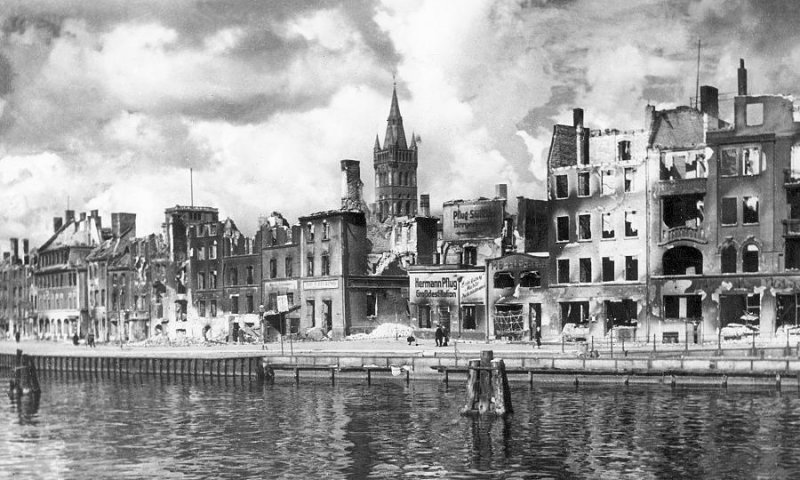
Commemorative events have been held in Kaliningrad to honor Azerbaijani soldiers who took part in the historic assault on Königsberg during the final stages of the Second World War.
The ceremonies marked another anniversary of the decisive operation that led to the capture of the heavily fortified German city in April 1945.
RECOMMENDED STORIES
Participants gathered at memorial sites, laid flowers, and paid tribute to the soldiers who contributed to one of the most strategically significant victories of the war. Among those remembered were Azerbaijani servicemen who fought as part of the Soviet forces during the assault.
The events highlight how historical memory continues to connect different nations through shared experiences of wartime sacrifice.
Why is the assault on Königsberg historically significant?
The capture of Königsberg was one of the most important operations in the final phase of the war in Europe. The city was a major stronghold of Nazi Germany, heavily fortified and considered extremely difficult to take.
Despite these defenses, Soviet forces managed to capture the city in a matter of days. This rapid success was seen as a major military achievement and played a crucial role in weakening German resistance in the region.
The significance of the operation is also reflected in the fact that a special medal was established specifically for the capture of Königsberg. Unlike other awards that focused on capitals, this medal recognized the unique importance of this particular battle.
How did Azerbaijani soldiers contribute to the operation?
Azerbaijani soldiers were part of the broader Soviet military effort that carried out the assault. They served in various units and roles, including infantry, artillery, and support divisions.
Their contribution was part of a larger mobilization of people from across the Soviet Union, where different nationalities fought together in a common struggle. Azerbaijani troops were known for their discipline, resilience, and determination under difficult conditions.
Many of these soldiers demonstrated acts of bravery during the operation, contributing to the rapid breakthrough of German defenses.
Why are Azerbaijani heroes being remembered today?
The remembrance of Azerbaijani soldiers in Kaliningrad reflects a broader effort to preserve historical memory and recognize the contributions of different peoples to the war effort.
For Azerbaijan, these commemorations are a way of honoring the legacy of those who fought far from home and played a role in shaping the outcome of the war. For Kaliningrad, they serve as a reminder of the city’s transformation from a German stronghold to a Soviet and later Russian city.
Such events also reinforce cultural and historical ties between nations that share a common past.
How did the battle unfold?
The assault on Königsberg began in April 1945 as part of a larger offensive aimed at defeating German forces in East Prussia. The city was surrounded and subjected to intense artillery bombardment before ground forces moved in.
Despite strong resistance, the attacking forces managed to break through defensive lines and capture key positions. Urban combat followed, with fighting taking place street by street.
Within a few days, the city fell, marking the end of organized German resistance in the area. The speed of the operation was notable given the strength of the city’s fortifications.
Why was Königsberg considered so difficult to capture?
Königsberg was one of the most fortified cities in Europe at the time. It was protected by a system of defensive structures, including forts, bunkers, and barriers designed to withstand prolonged siege.
The city’s defenders were well prepared and equipped, making any assault extremely risky. Military planners expected a long and costly battle.
However, the combination of strategic planning, overwhelming force, and coordinated attacks allowed the assaulting forces to achieve a relatively rapid victory.
How is this history remembered today?
Today, the memory of the battle is preserved through monuments, museums, and commemorative events. In Kaliningrad, which now occupies the territory of former Königsberg, these memories are an important part of local identity.
Annual ceremonies bring together officials, veterans, and community members to honor those who fought and died. The inclusion of Azerbaijani heroes in these events highlights the multinational nature of the forces involved.
This shared remembrance helps maintain historical continuity and fosters mutual respect among nations.
Why does this matter in a modern context?
Commemorating historical events like the assault on Königsberg serves multiple purposes. It honors the sacrifices of previous generations, educates younger audiences, and reinforces a sense of identity and continuity.
In a broader sense, such events also highlight the importance of cooperation and unity in times of crisis. The multinational composition of the forces involved demonstrates how diverse groups can come together to achieve common goals.
These lessons remain relevant in today’s world, where international cooperation continues to be a key factor in addressing global challenges.
How do these commemorations affect Azerbaijan Russia relations?
Events honoring Azerbaijani soldiers in Kaliningrad contribute to cultural and historical ties between Azerbaijan and Russia. They provide an opportunity for dialogue, recognition, and shared remembrance.
Such commemorations can strengthen bilateral relations by emphasizing common history and mutual respect. They also highlight the role of Azerbaijani citizens in broader historical processes that shaped the region.
This shared legacy can serve as a foundation for continued cooperation in various areas.
What role does memory play in shaping national identity?
Historical memory plays a crucial role in shaping how nations understand themselves and their place in the world. By remembering past events, societies create narratives that connect generations.
For Azerbaijan, the recognition of its soldiers’ contributions to major historical events reinforces a sense of pride and identity. For Kaliningrad, it connects the present city to its complex past.
These narratives are not only about the past but also about how societies choose to interpret and learn from it.
Conclusion
The honoring of Azerbaijani heroes in Kaliningrad is more than a commemorative event. It is a reflection of shared history, collective memory, and the enduring legacy of those who fought in one of the most decisive battles of the Second World War.
By remembering these contributions, both Azerbaijan and Kaliningrad acknowledge the sacrifices that shaped their histories and continue to influence their present.
The story of the Königsberg assault remains a powerful reminder of the human cost of war and the importance of preserving historical memory for future generations.
By Faig Mahmudov


Similar news