How slowdown fears reshape the world economy


Around the world, people are searching for answers to the same question: why is the global economy slowing, and is a recession coming? Concerns about rising prices, expensive mortgages, declining consumer confidence, slow growth in major economies and uncertainty about future jobs have become universal, News.Az reports.
From large corporations to small households, from governments to investors, the anxiety about a potential downturn is shaping decisions in ways not seen since the financial crises of previous decades.
The fear of a global slowdown is not driven by a single factor. It is the result of a combination of inflationary pressures, geopolitical instability, supply chain disruptions, shifting energy markets, tightening monetary policy and structural economic changes that affect both advanced and developing economies. Understanding these forces helps explain why recession worries remain widespread—and why the global search for answers continues to grow.
Inflation remains a persistent global challenge
One of the most immediate drivers of economic anxiety is inflation. Although inflation rates have moderated in many countries, prices remain significantly higher than before recent global shocks. Food, rent, energy and services continue to strain household budgets. This persistent inflation lowers consumers’ purchasing power and reduces confidence in the economic outlook.
For central banks, the challenge is balancing inflation control with economic stability. Higher interest rates help slow price growth, but they also increase borrowing costs for households and businesses. Mortgage payments, credit card interest and business loans all become more expensive, putting downward pressure on spending and investment.
This balancing act is delicate. If central banks raise rates too aggressively, they risk triggering a recession. If they move too slowly, inflation may remain entrenched. As a result, global markets fluctuate with every policy announcement, reflecting uncertainty about the path ahead.
High interest rates weigh on global growth
Central banks in major economies have adopted high interest rates to bring inflation under control. While this strategy has begun to ease inflation, it also slows economic activity. High borrowing costs affect:
– homebuyers, who face expensive mortgages
– businesses, which delay expansion and hiring
– governments, which face increased debt-servicing costs
– consumers, who reduce spending on non-essential goods
These effects accumulate over time, and the global economy begins to feel the pressure. Growth slows, job markets soften and investor confidence becomes fragile. In many regions, the fear is not only about current conditions but also the long-term consequences of prolonged tight monetary policy.
Geopolitical tensions add uncertainty
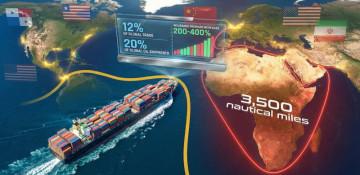
Conflicts and geopolitical instability continue to disrupt global markets. Wars, sanctions, political uncertainty and diplomatic rifts influence trade, investment and commodity prices. Energy markets are especially sensitive to geopolitical developments. Oil and gas price fluctuations impact everything from transportation to industrial production.
Global tensions also disrupt supply chains. Critical sectors such as semiconductors, food production, defense manufacturing and pharmaceuticals face delays and shortages when global trade routes are affected. The uncertainty created by geopolitical instability leads companies to adopt cautious strategies, reducing investment and slowing economic activity.
Slower growth in major economies affects everyone
Major economic powers—such as the United States, the European Union and China—play central roles in global economic health. When these economies slow, the impact spreads worldwide.
United States:
High interest rates, weaker consumer spending and slowing investment have raised concerns about future growth. Although the US economy remains resilient in many areas, sentiment remains cautious, especially as inflation pressures persist.
Europe:
European economies face a combination of weak industrial output, high energy costs, ageing demographics and pressures from geopolitical crises. Slow growth in Germany, France and Italy affects the entire Eurozone.
China:
China’s economy is undergoing a major structural transition. Challenges in the property sector, youth unemployment, slower export demand and cautious consumer sentiment have reduced China’s growth trajectory. Since China is a key engine of global trade, its slowdown affects supply chains, commodity exporters and emerging markets.
When these three economic hubs face headwinds simultaneously, the world economy feels the strain.
Consumers change behaviour as uncertainty grows
Economic slowdowns often begin with a shift in household behaviour. When people worry about job stability, mortgage payments, rising rents or higher food prices, they reduce discretionary spending. Restaurants, retail, travel and entertainment sectors often experience the earliest signs of contraction.
This creates a feedback loop:
-
Consumers spend less.
-
Businesses report lower earnings.
-
Companies reduce hiring or cut jobs.
-
Consumer confidence falls further.
This cycle can accelerate economic slowdown and deepen recession fears.
Business investment weakens
Companies across industries are responding to uncertainty by scaling back investment plans. High interest rates, unpredictable supply chains and volatile markets make long-term planning difficult. Businesses delay projects, reduce capital expenditure and adopt risk-averse strategies.
Sectors such as real estate, manufacturing, technology and logistics are particularly exposed. Startups face greater difficulty in obtaining funding, while large corporations focus more on cost management than expansion.
Developing economies face pressure
Emerging and developing economies face additional challenges, including:
– currency fluctuations
– increased debt burdens
– reliance on imported energy
– limited access to global capital
– vulnerability to commodity price shocks
When global conditions tighten, these countries often struggle with higher borrowing costs and reduced investment inflows. The risk of debt crises increases, particularly for heavily indebted states.
The global debt problem
Global debt—both public and private—has reached record highs. Governments spent heavily during recent crises to support households and businesses. Now, as interest rates rise, debt becomes more expensive to service. This limits government spending on infrastructure, education, healthcare and social programs.
Countries facing high debt combined with slow growth may be forced to adopt austerity measures, which can further weaken economic conditions.
Energy transition challenges
The global transition toward renewable energy creates both opportunities and disruptions. While clean energy investment is increasing, traditional fossil fuel markets still dominate. This transition period creates volatility:
– Clean energy projects need large upfront investment.
– Fossil fuel producers face uncertain demand.
– Energy prices remain unstable.
These dynamics complicate planning for both businesses and governments.
Technology, AI and automation concerns
Technological transformation adds another dimension to economic uncertainty. Artificial intelligence and automation promise major productivity gains but also fuel fears of job displacement. Workers around the world wonder whether their roles will be replaced, redefined or made obsolete by new technologies.
This creates psychological uncertainty, affecting consumer confidence and spending behaviour. At the same time, companies that invest in AI may outpace competitors, widening inequality between industries and regions.
Why recession fears persist
Even when economic indicators do not show immediate recession, fear alone can slow an economy. People and businesses change behaviour based on expectations. When expectations are pessimistic, spending decreases and savings increase—two classic recession triggers.
Additionally, economic slowdowns are often uneven. Some countries experience strong growth, while others face stagnation. Some industries expand, while others contract. This unevenness creates a sense of instability.
Possible paths forward
Analysts outline several potential scenarios for how the global economy might evolve:
1. Soft landing:
Inflation falls gradually, interest rates stabilise, and the economy slows but avoids recession. This is the most optimistic scenario.
2. Mild recession:
Growth contracts for a short period before recovering, driven by stabilising inflation and renewed demand.
3. Deep recession:
A combination of geopolitical shocks, policy errors and market instability could push multiple economies into a prolonged downturn.
4. Divergent recovery:
Advanced economies recover faster while developing economies continue struggling with debt and currency issues.
Governments and central banks now focus on managing inflation without destabilising growth, supporting vulnerable sectors and maintaining financial stability.
Conclusion: a world searching for certainty
The global economy is at a crossroads. Uncertainty about inflation, interest rates, geopolitical tensions, energy transitions and technological disruption creates a landscape where slowdown fears will continue. People search the internet for explanations because the effects are felt everywhere—from supermarket prices to utility bills, from job security to investment portfolios.
Whether the world faces a mild slowdown or a deeper recession, the coming period will require careful policymaking, strategic adaptation and international cooperation. The search for stability continues, as individuals, businesses and governments navigate one of the most complex economic environments in recent history.


Similar news