How the US-China AI rivalry is disrupting Nvidia’s business


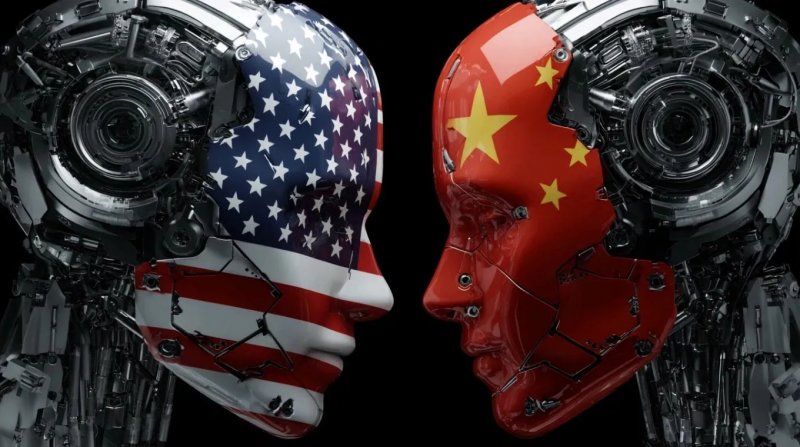
The battle over artificial intelligence chips between the United States and China has entered a new and highly complicated phase.
Although Washington has reportedly approved around 10 Chinese companies to purchase Nvidia’s H200 AI chips, not a single shipment has been completed so far. The delay highlights how geopolitical tensions, export controls, national security fears and economic competition are reshaping the global technology industry.
RECOMMENDED STORIES
At the center of the issue is Jensen Huang, the CEO of Nvidia, who traveled to Beijing during a high-level US-China summit in an effort to break the deadlock. The stalled deal has become a symbol of the wider technology rivalry between Washington and Beijing, where even officially approved business transactions are now facing political and strategic obstacles.
Below is a detailed FAQ style explainer examining why Nvidia’s H200 chips matter so much, why China has not finalized purchases despite US approval and what this means for the future of the global AI race.
What are Nvidia H200 chips?
The H200 is one of Nvidia’s most advanced artificial intelligence chips currently available for international markets.
The chip is designed to power AI applications including:
Large language models
Generative AI systems
AI training infrastructure
Cloud computing
Advanced data centers
Autonomous systems
High performance computing
The H200 is considered Nvidia’s second most powerful AI accelerator after its highest end products restricted by US export controls.
The chip delivers significantly improved memory performance and processing capabilities compared to earlier models, making it highly attractive for AI companies and cloud service providers.
For Chinese technology companies, gaining access to H200 chips would help accelerate development of domestic AI models and advanced computing systems.
Why are Nvidia chips so important in China?
Before US export restrictions intensified, Nvidia dominated China’s advanced AI chip market.
The company reportedly controlled around 95 percent of China’s high end AI accelerator market. Chinese technology giants relied heavily on Nvidia hardware for training AI systems, operating cloud infrastructure and developing generative AI applications.
China historically represented a major source of revenue for Nvidia. At one stage, the country accounted for roughly 13 percent of the company’s overall revenue.
Jensen Huang has repeatedly emphasized the importance of China to Nvidia’s long term growth strategy. He previously estimated that China’s AI market alone could be worth around 50 billion dollars annually.
The Chinese market is especially important because China remains one of the world’s largest consumers of advanced computing infrastructure and artificial intelligence technology.
Which Chinese companies were reportedly approved to buy H200 chips?
According to reports, the US Commerce Department approved several major Chinese companies to purchase Nvidia H200 chips under export licensing arrangements.
The approved firms reportedly include:
Alibaba
Tencent
ByteDance
JD.com
In addition, several distributors were reportedly authorized to participate in the transactions, including:
Lenovo
Foxconn
Reports indicate that each approved customer could potentially purchase up to 75,000 chips under the licensing terms.
Despite these approvals, however, no deliveries have reportedly been completed.
Why have the H200 sales not happened yet?
The stalled sales reflect the growing complexity of the US China technology rivalry.
Although Washington approved the transactions, Chinese companies reportedly became more cautious after receiving guidance from Beijing. Chinese authorities appear concerned that dependence on American AI chips could weaken efforts to develop domestic semiconductor industries.
The delays also stem from changing political conditions on both sides.
Several overlapping issues have complicated the process:
National security concerns
Supply chain security reviews
Export control regulations
Concerns about hidden vulnerabilities
Geopolitical tensions
Pressure to support domestic Chinese chipmakers
Regulatory uncertainty
One source indicated that Chinese firms initially moved forward with orders but later slowed or paused purchases after changes in the political environment.
Why is China hesitant to buy Nvidia chips?
China’s hesitation is largely strategic.
Beijing is trying to reduce dependence on foreign technologies in critical industries such as semiconductors, artificial intelligence and cloud computing.
Chinese leaders increasingly believe that reliance on US technology creates long term national security risks. Export controls imposed by Washington reinforced those fears.
As a result, China has accelerated efforts to develop domestic AI chips and semiconductor infrastructure.
Companies such as Huawei have become central to China’s push for technological self sufficiency.
Chinese AI firms are increasingly promoting the use of domestic chips rather than relying on Nvidia hardware. DeepSeek and other Chinese AI companies have emphasized their growing use of local semiconductor solutions.
Beijing appears concerned that continued large scale purchases of Nvidia chips could undermine China’s domestic chip industry at a critical stage of development.
What role do US export controls play?
US export restrictions are one of the biggest factors shaping the situation.
Washington has imposed increasingly strict controls on advanced semiconductor exports to China, arguing that such technologies could strengthen China’s military and strategic capabilities.
The rules affecting Nvidia chips include several conditions.
Chinese buyers reportedly must prove that:
The chips will not be used for military purposes
Appropriate security procedures are in place
The technology will remain under controlled conditions
The transactions comply with export regulations
Nvidia must also reportedly certify that enough inventory exists within the United States before exports can proceed.
The export restrictions have created uncertainty not only for Chinese buyers but also for Nvidia itself, which must navigate a highly sensitive political environment.
Why is the Trump administration involved?
The issue became more politically charged after reports that US President Donald Trump personally engaged with Nvidia CEO Jensen Huang during a trip connected to the US China summit.
According to reports, Trump invited Huang to join the delegation traveling to Beijing. This raised speculation that Nvidia hoped high level political diplomacy could help finalize stalled deals.
The administration reportedly negotiated a controversial arrangement under which the United States would receive 25 percent of revenue generated from the approved chip sales.
That structure reportedly required the chips to pass through US territory before being shipped to China because direct export fees were not legally permitted under existing law.
The arrangement created additional concerns in Beijing.
Chinese officials reportedly worried that routing the chips through the United States could create opportunities for tampering, surveillance or hidden vulnerabilities.
Even though some sources described the structure mainly as a legal workaround, the arrangement increased mistrust on the Chinese side.
Why are China’s domestic chipmakers important now?
China’s domestic semiconductor industry has become a national strategic priority.
For years, China depended heavily on foreign semiconductor technologies, especially from American companies. However, US sanctions and export controls convinced Beijing that technological self sufficiency is now essential.
Chinese firms including Huawei are investing aggressively in:
AI accelerators
Semiconductor manufacturing
Cloud computing
Advanced processors
Domestic AI infrastructure
Chinese authorities are also encouraging companies to reduce foreign technology dependencies wherever possible.
Recent Chinese supply chain security regulations reportedly intensified government efforts to identify vulnerabilities linked to foreign technology infrastructure.
This broader political environment has made Nvidia’s position in China far more difficult than in previous years.
Why does Nvidia still want access to China?
Despite mounting obstacles, China remains critically important for Nvidia.
China represents one of the world’s largest AI markets and one of the fastest growing technology ecosystems globally.
Losing access to China could have several long term consequences for Nvidia:
Reduced revenue growth
Loss of market share
Strengthening of Chinese competitors
Reduced influence over global AI infrastructure
Acceleration of domestic Chinese alternatives
Jensen Huang has repeatedly warned that export controls are damaging Nvidia’s position in China.
He previously stated that Nvidia’s share of China’s AI accelerator market had effectively collapsed because of restrictions.
If Chinese firms fully transition toward domestic semiconductor suppliers, Nvidia risks losing one of its most strategically important markets permanently.
Why are some US officials opposing the sales?
Not everyone in Washington supports allowing Nvidia to continue selling advanced chips to China.
Several national security experts and China hawks argue that any advanced semiconductor exports could help China narrow the technological gap with the United States.
Critics believe Nvidia’s commercial interests should not outweigh broader strategic concerns.
Some analysts argue that every advanced Nvidia chip shipped to China could potentially strengthen Chinese AI development and reduce America’s long term technological advantage.
Others fear that Chinese military or state linked entities could eventually benefit indirectly from the technology even if civilian companies are the official buyers.
This debate reflects a larger policy struggle inside Washington over how aggressively the US should limit China’s access to advanced technologies.
Could China eventually stop relying on Nvidia completely?
China is actively trying to reduce dependence on Nvidia, but fully replacing the company will take time.
Nvidia still maintains significant technological advantages in:
AI software ecosystems
Performance optimization
Developer support
Training infrastructure
Advanced AI acceleration
However, Chinese semiconductor firms are improving rapidly.
If US export restrictions continue and Chinese domestic chip technology keeps advancing, China may eventually reduce reliance on Nvidia much more significantly than before.
The longer the current delays continue, the stronger incentives China has to accelerate investment in domestic alternatives.
What does this mean for the global AI race?
The Nvidia H200 dispute shows how artificial intelligence has become deeply intertwined with geopolitics and national security.
The global AI race is no longer simply about technology companies competing commercially. It is increasingly about:
National power
Economic influence
Military capabilities
Supply chain control
Technological sovereignty
Strategic independence
The struggle over Nvidia’s chips demonstrates how governments now view advanced semiconductors as strategic assets rather than ordinary commercial products.
Even approved trade deals can now become entangled in political mistrust and security concerns.
The outcome of this dispute could influence the future balance of technological power between the United States and China for years to come.
Frequently asked questions
What is Nvidia’s H200 chip?
The H200 is one of Nvidia’s most advanced AI chips designed for artificial intelligence training, cloud computing and high performance computing systems.
Why are Chinese companies interested in H200 chips?
Chinese firms want the chips to power AI models, cloud services and advanced computing infrastructure.
Which Chinese companies were approved to buy H200 chips?
Reportedly approved companies include Alibaba, Tencent, ByteDance and JD.com.
Why have no H200 deliveries happened yet?
The sales are stalled because of geopolitical tensions, regulatory concerns, export restrictions and China’s push to support domestic semiconductor development.
Why is China worried about relying on Nvidia?
China fears dependence on foreign AI chips could create long term national security and economic vulnerabilities.
Why does Nvidia still want access to China?
China remains one of the world’s largest AI markets and historically generated significant revenue for Nvidia.
How do US export controls affect Nvidia?
Export controls limit which advanced chips Nvidia can sell to China and impose strict licensing conditions.
Why are some US officials against the sales?
Critics argue that advanced AI chips could help China close the technological gap with the United States.
Can Chinese companies replace Nvidia chips?
Chinese semiconductor companies are improving rapidly, but Nvidia still maintains major technological advantages in AI infrastructure.
What does this dispute reveal about the AI race?
The conflict shows that artificial intelligence and semiconductors are now central issues in global geopolitical competition.
By Faig Mahmudov


Similar news