Iran's Jewish community pledges allegiance to Supreme Leader ahead of Shavuot


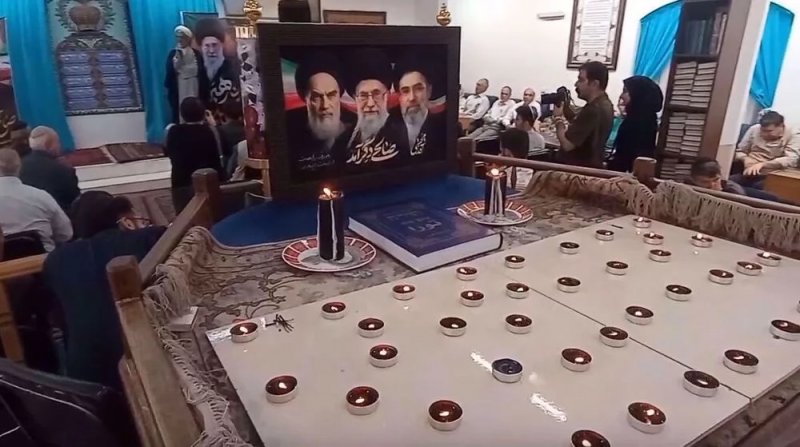
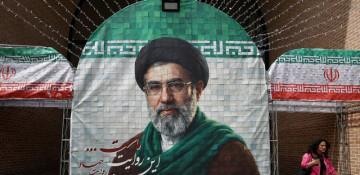
Iran’s Jewish community has reaffirmed the Iranian nation’s resilience in the face of what it described as US and Israeli military conspiracies, pledged to preserve national sovereignty, and declared allegiance to Ayatollah Seyyed Mojtaba Khamenei.
The community in the historic city of Isfahan held a mass gathering at the Keter David synagogue on Thursday, on the eve of the Shavuot holiday in the Hebrew year 5786, also known in Jewish tradition as the Festival of Weeks or the Feast of Flowers, News.Az reports, citing Iran’s English-language Press TV.
The ceremony, held on the second anniversary of the death of former President Ebrahim Raeisi, was described by Press TV as a demonstration of unity, cohesion and solidarity among followers of divine religions in Iran’s oldest Jewish community.
According to the broadcaster, participants paid tribute to the late Supreme Leader Ali Khamenei and the “martyrs of service”, while emphasising their bond with the leadership and pledging allegiance to Ayatollah Seyyed Mojtaba Khamenei.
RECOMMENDED STORIES
Speaking at the event, Isfahan Chief Justice Asadollah Jafari said Iran’s legal framework guarantees the legitimate rights of religious minorities.
Jafari, presenting a four-year review of his tenure in the provincial judiciary, said the low number of criminal cases involving religious minorities in the business sector reflected a prevailing spirit of altruism and peaceful coexistence in the province.
“Pure human nature is the foundation of thought and peaceful coexistence among divine religions,” IRNA quoted Jafari as saying. “Human suffering has always been the result of the greed and arrogance of oppressors who, under any name or label, act against humanity.”
Jafari noted that under Iran’s constitution, followers of divine religions enjoy legally recognised rights, including the right to vote and representation in parliament.
He added that judicial authorities at both provincial and national levels remain committed to protecting the legitimate rights of the Jewish community.
Homayoun Sameyeh Najafabadi, the Jewish representative in the Iranian parliament, said that while the period is traditionally one of celebration for the Jewish community, the sorrow over the loss of the Supreme Leader, commanders and senior national officials had overshadowed the occasion.
He stressed that Iran’s Jewish community does not regard itself as separate from the rest of the country, stating: “This community has never been and is not Zionist. This incorrect characterisation, exploited by Iran’s enemies, must be corrected in public opinion.”
Najafabadi also commented on what he described as a military and media campaign waged by the United States and Israel, with the support of some regional countries, against Iran.
He said Iran’s adversaries, by providing military bases and financial support, had launched a broad offensive aimed at weakening the Islamic system.
Referring to what he called the “heartbreaking incident” of Ayatollah Khamenei’s death, the lawmaker said Iran’s enemies had expected the collapse of the Islamic Republic, but instead faced the resilience of the Iranian nation.
“Immediately after the loss, the flag of guidance of society was raised by Ayatollah Seyyed Mojtaba Khamenei, who maintained the system with authority,” Sameyeh Najafabadi said.
He called for a clear distinction between Judaism and Zionism, citing the position of the founder of the Islamic Republic that the two should be treated separately.
The lawmaker criticised some media outlets for failing to distinguish between the terms “Jewish” and “Zionist” in their coverage and slogans, saying he had written to senior officials urging them to address the issue.
He also highlighted the long history of Jewish coexistence with the Iranian nation, saying Jews have always considered themselves an inseparable part of Iran and had actively participated both before and after the Islamic Revolution, particularly during the Iran-Iraq war and the reconstruction period that followed.
A formal statement read on behalf of Isfahan’s Jewish association renewed allegiance to the Leader and expressed gratitude for the guidance of Ayatollah Mojtaba Khamenei.
The statement also pledged to continue President Raeisi’s path of serving underprivileged communities and to strengthen unity among Iran’s ethnic and religious groups.
Organisers described Shavuot as an opportunity to renew commitment to divine and national ideals. They also emphasised the Jewish community’s role in the progress, development and sustainable security of the Islamic Republic.
Iran’s Jewish community, one of the oldest in West Asia, has maintained a presence in the country for more than 2,500 years. The community is officially recognised as a religious minority under Iran’s constitution and holds one seat in parliament, according to Press TV.


Similar news