Iran warns UN over ‘dangerous’ US–Bahrain draft on Strait of Hormuz


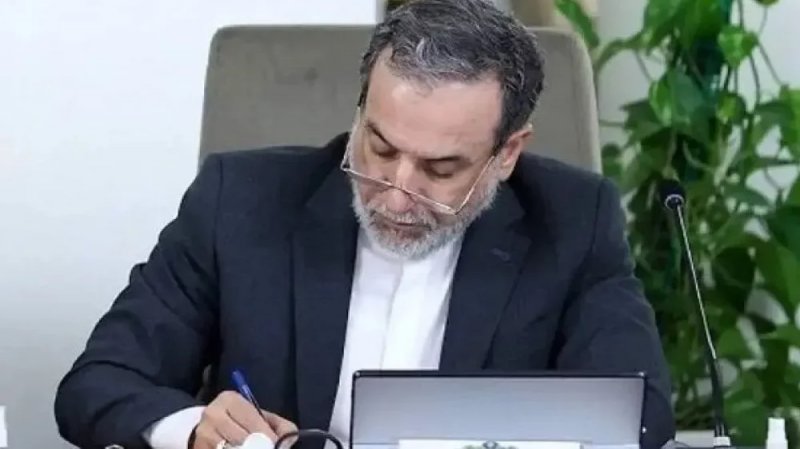
Iran has rejected a US–Bahrain draft resolution on the Strait of Hormuz, describing it as a one-sided attempt to legitimise what it calls unlawful military actions while ignoring the root cause of the crisis, which Tehran says is US–Israeli aggression against the Islamic Republic since 28 February.
In a letter addressed to UN Secretary-General António Guterres, Chinese Foreign Minister Wang Yi, and members of the UN Security Council, Iranian Foreign Minister Abbas Araghchi criticised the draft for failing to address “the main cause of the current situation in the Strait of Hormuz, namely the military aggression and unlawful use of force by the United States and the Israeli regime against the Islamic Republic of Iran,” News.Az reports, citing Iran’s English-language Press TV.
“The current situation is directly and exclusively the result of their aggressive, unjustified and unlawful war,” Araghchi wrote.
RECOMMENDED STORIES
He added that the draft’s purpose was “to distort the facts on the ground and justify past and ongoing unlawful actions by the United States against Iran in the Persian Gulf and the Strait of Hormuz — a region thousands of miles from American shores.”
“The international community must not allow the Security Council to be exploited by aggressors or turned into a tool for legitimising their unlawful actions,” he said.
Araghchi warned that adopting the resolution would “seriously undermine the credibility and standing of the Security Council, politicise its enforcement powers, and set a dangerous precedent for legitimising unilateral coercive measures and unlawful behaviour by the United States in violation of the sovereignty and sovereign rights of coastal states.”
Iran’s Permanent Representative to the UN, Amir Saeid Iravani, echoed these concerns in remarks outside the Security Council on Thursday, saying the draft “deliberately advances a selective and distorted narrative and therefore lacks the impartiality and credibility required for Security Council action.”
Iravani stressed that the draft also ignores what he described as the root cause of the current situation — US–Israeli aggression against Iran.
Both officials said Washington has violated a ceasefire through what they described as a naval blockade and attacks on Iranian vessels.
“The draft falsely accuses Iran of violating the ceasefire of 8 April 2026 while deliberately concealing material facts,” Iravani said.
“It ignores the unlawful maritime blockade imposed by the United States, as well as attacks on and seizures of Iranian vessels. These actions constitute a material breach of the ceasefire, violations of the prohibition on the use of force, and serious infringements of freedom of navigation.”
Araghchi added that “conditional upon the permanent cessation of war and the lifting of the blockade and unlawful sanctions against Iran, normal maritime passage through the Strait of Hormuz will be restored.”
“The path to achieving stability lies in the United States’ adherence to international law, not in exploiting the Security Council in ways that further complicate the situation,” he said.
Iravani also questioned US credibility on international law, pointing to Washington’s history of disregarding International Court of Justice rulings.
“If there is any member state that lacks credibility in invoking international law, the UN Conventions, and the authority and jurisprudence of the ICJ, it is the United States,” he said, citing the 1986 Nicaragua case in which the ICJ found the US guilty of unlawful use of force, including blockade and mining of ports.
He also referred to US attacks on “civilians and civilian infrastructure in Iran”, which he said constitute serious violations of international law and amount to war crimes.


Similar news